
-
by sayum
26 August 2026 1:49 PM







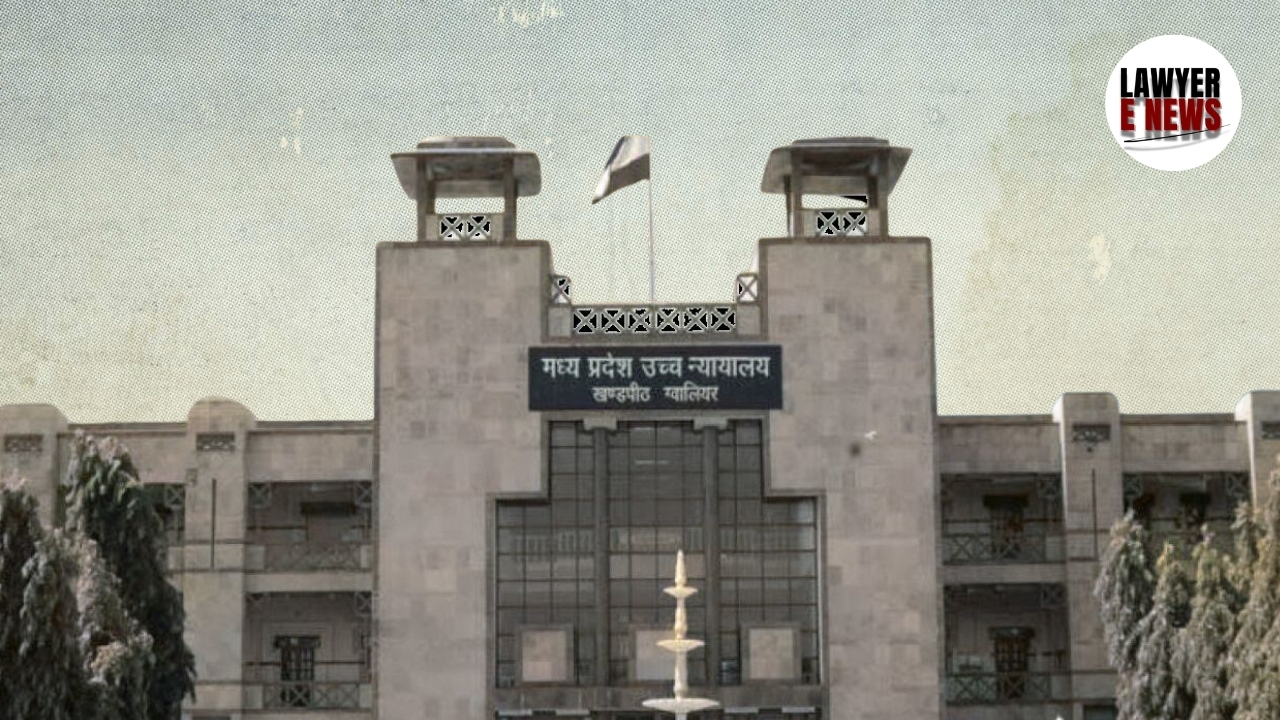
“Equality in marital tie-up does not mean development of only one and only restrictions for the other, especially wife.” – In a significant judgment delivered by Madhya Pradesh High Court set aside the Family Court’s denial of maintenance to a qualified doctor-wife who had been ousted from her matrimonial home following allegations of dowry harassment.
Justice Gajendra Singh, hearing Criminal Revision No. 793 of 2025 (Vaishali v. Sunil Sonar), ruled that the Family Court erred in concluding that the wife was living separately without sufficient cause, and restored her right to maintenance under Section 125 of the Code of Criminal Procedure, 1973.
The court awarded ₹15,000 per month to the wife, effective from the date of her application, except for the period during which she earned a stipend under COVID-19 healthcare deployment.
“She Did Not Walk Out – She Was Forced Out” – Dowry Allegations Were Ignored, Says Court
Reversing the Family Court's conclusion that the petitioner left the matrimonial home without cause, the High Court held that the wife’s version of events – that she was driven out due to persistent dowry demands – was supported by both circumstantial facts and lack of action from the husband.
As Justice Singh noted: “The wife who is not desirous to live with the husband will not come to the residence of husband in the hope of reconciliation.”
The Court pointed out that the husband filed for restitution of conjugal rights only after receiving notice of the maintenance petition, revealing his lack of genuine intent to resume cohabitation.
“He exhausted his energy to demonstrate that the revision petitioner is earning... but made no personal effort to reconcile or bring her back.”
“Temporary COVID Work Is Not Stable Income” – No Justification to Deny Maintenance
The husband’s claim that the petitioner earned ₹45,000 per month as a Homeopathy doctor was rejected. The Court examined the record and concluded she had worked only during the COVID-19 pandemic on short-term contracts and was currently unemployed while pursuing her MD (Homeopathy).
Justice Singh clarified:
“The so-called service of the revision petitioner was temporary to address the COVID-19 situation and that came to an end on 01.04.2022.”
Renewal of her medical registration did not equate to income. The brief stint of stipend-based employment could not be used to deny long-term maintenance under Section 125 CrPC.
"Wife’s Education Is a Right, Not an Excuse to Deny Support" – Court Slams One-Sided Marital Expectations
The judgment struck a powerful blow against patriarchal expectations, criticising the respondent’s stance that his wife’s pursuit of higher studies was irrelevant or selfish.
In a statement that underlines the modern view of marital equality, the Court declared:
“Entering into marital tie-up does not mean end of personality of the wife.”
“If the husband has a duty towards his parents, then he has also the duty to complete the course that would enhance the capability of the wife and to empower her.”
Allegations that the wife wanted to live separately from the husband’s parents were found to be unsupported by any evidence.
"₹74,000 Salary Cannot Translate to ₹0 Responsibility" – Court Fixes ₹15,000 as Monthly Maintenance
While noting the husband’s public sector employment at ONGC with a monthly salary of ₹74,000, the Court observed that his obligations to his wife were no less important than his obligations to his parents.
The judge held:
“The respondent/husband is serving in a public sector undertaking of ONGC Ltd. and getting handsome salary... Thus, an amount of ₹15,000/- per month is quantified as maintenance payable.”
The maintenance was awarded from the date of application, with an exception carved out for the one-year period of stipend-based work during the pandemic. The court clarified that interim maintenance paid would be adjusted, and that the parties were free to seek modification under Section 127 CrPC (now Section 146 of BNSS, 2023) upon change in circumstances.
“You Cannot Deny Support and Also Deny Her Progress” – Court Restores Dignity, Independence and Legal Protection for Estranged Wife
This judgment is a powerful reminder that maintenance under Section 125 CrPC is a protective provision, meant to prevent destitution and uphold the constitutional values of dignity and equality in matrimonial relationships.
Justice Gajendra Singh concluded: “The findings of the trial court in rejecting the maintenance cannot be sustained and are hereby set aside.”
By recognising a wife’s right to both safety and self-improvement, the Madhya Pradesh High Court has reiterated that marriage is not a one-way street, and legal protection does not end with the wedding vows.
Date of Decision: 15 October 2025





