-
by sayum
27 July 2026 3:39 PM







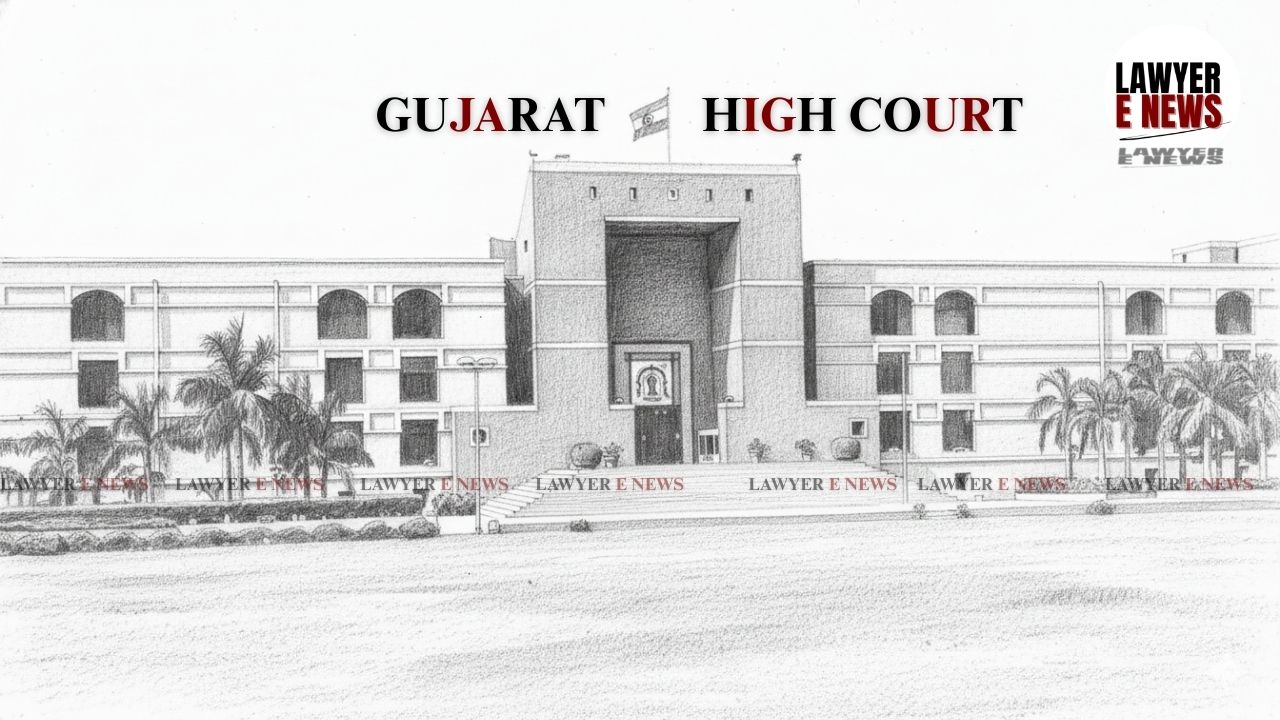
"Mahant's status cannot be more than a Poojari and cannot become the owner of the deity's property; it is his mortal greed and insatiable desire which carries this long lasting litigation," Gujarat High Court, in an exhaustive judgment, held that properties gifted by devotees or granted by the State for the maintenance of a temple belong to the public trust and cannot be treated as the Mahant's personal secular property.
A bench of Justice J. C. Doshi observed that once a temple is declared a public trust, the Mahant acts merely as a manager or administrator, and his natural heirs cannot claim ownership or succession rights over such assets under personal law.
The case involves a marathon legal battle originating in 1952 regarding the Shri Narsinhji Temple in Dhaman. While the Mahants claimed the idol and its properties were private, devotees successfully argued before various authorities that it was a public trust. After a remand from the High Court in 1977, the District Court in 1978 identified specific properties as trust assets, a decision challenged by the heirs of the late Mahant Dayaramdas in appeals spanning over four decades.
The primary question before the court was whether properties held in the name of a Mahant, acquired through state grants or devotee gifts, constitute personal secular property or public religious endowments. The court also examined whether the son of a Mahant can claim succession rights over trust management when the established tradition is Guru-Chela succession.
Public Nature Of Temple And Deity Is No Longer Res Integra
The Court noted that a Division Bench of the High Court had already concluded in 1977 that the Narsinhji Temple is a public trust and the deity is a public deity. This finding remained unassailed as a Special Leave Petition against it was withdrawn in 1979. The Court emphasized that once the institutional character is established as public, any claim by the Mahant or his heirs to treat the temple as private property is legally untenable.
Mahant Is A Manager, Not An Owner Of Trust Property
Court Defines Status Of Mahant Under GPT Act
Referring to the 'GPT Act' and various precedents including Dhaneshwarbuwa Guru v. Charity Commissioner, the Court observed that a Mahant is essentially a custodian. The Bench noted that a person who becomes a Mahant is deemed to have renounced worldly affairs for spiritual service. Consequently, all properties acquired from the income of temple assets or through the Mahant's position are considered accretions to the trust.
Barkhali Lands And State Grants Clothe Property With Religious Character - Nature Of State Grants For Religious Purposes
The Court analyzed the "Barkhali" lands granted by the erstwhile State of Baroda, noting they were intended for the "seva-pooja" and maintenance of the temple. Relying on the recent Supreme Court ruling in AP State Wakf Board v. Janaki Busappa, the Court held that grants for rendering religious services clothe the property with a charitable character. Even if the tenure of such lands was later converted to "Khalsa" (government land) in the Mahant’s name, the underlying religious endowment remains unchanged.
Guru-Chela Tradition Excludes Natural Inheritance Under Personal Law - Succession Rights Over Public Trust Management
The Court highlighted that the management of the temple historically devolved from Guru to Chela, a spiritual lineage. Since the appellant, Mr. Vijay, was the natural son of the late Mahant and not a legally appointed "Chela" or "Pujari" through recognized rituals, he had no locus standi to claim management rights under the Hindu Succession Act, 1956. The Bench remarked that trust properties do not pass to natural relatives but remain vested in the trust.
Burden Of Proof Lies On Mahant To Prove Secular Title - Application Of Evidence Act In Trust Disputes
Regarding the principle of burden of proof under Sections 101 and 102 of the Evidence Act, the Court held that since the institutional trust was established, the burden shifted to the Mahant to prove that specific properties were his personal gain. The Court found that the Mahant failed to produce any evidence of independent income, such as books of account, to justify the purchase of properties in his own capacity.
Litigation Used As A Weapon Of Attrition To Delay Finality - Court Condemns Strategic Procrastination By Appellants
In a scathing observation, the Bench noted that the appeals had been stretched for over forty years through deliberate tactics. The Court stated that such "strategic procrastination" weaponizes the judicial process to wear down the purpose of declaring the temple a public trust. The Bench characterized the litigation as an "egregious abuse of the process of law" driven by mortal greed rather than any genuine legal claim.
The Gujarat High Court dismissed all three appeals, confirming the District Court's order declaring the properties as part of the Shri Narsinhji Temple Public Trust. The Court vacated all interim reliefs and directed the immediate implementation of the scheme for the appointment of new trustees to manage the temple's affairs.
Date of Decision: 22 June 2026