
-
by sayum
16 July 2026 8:07 AM







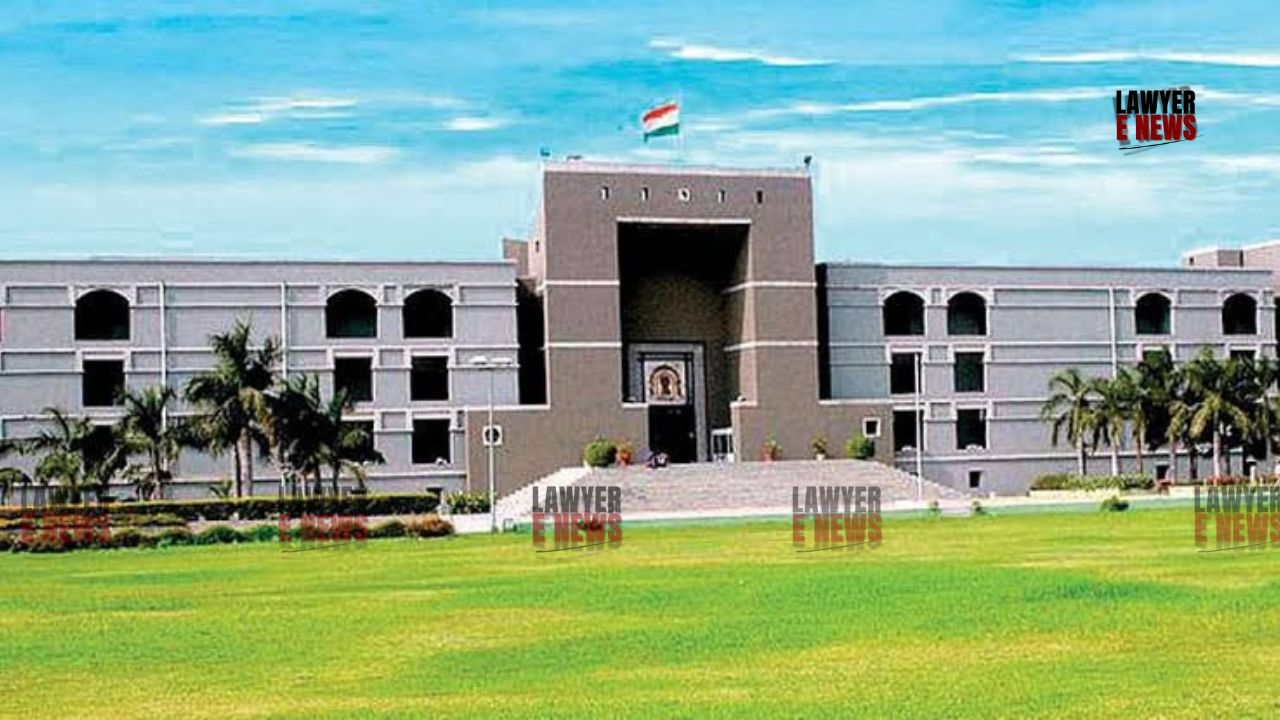
"The step to be taken by the CMM/DM under Section 14 of the SARFAESI Act, is a ministerial step. While disposing of the application under Section 14 of the SARFAESI Act, no element of quasi-judicial function or application of mind would require. The Magistrate has to adjudicate and decide the correctness of the information given in the application and nothing more." Gujarat High Court, in a significant ruling, held that a Magistrate exercising powers under Section 14 of the SARFAESI Act performs a purely ministerial act and possesses no adjudicatory jurisdiction to decide disputes regarding the classification of a loan account as a Non-Performing Asset (NPA).
A bench of Justice Nikhil S. Kariel observed that the Magistrate is only required to satisfy himself that the formal requirements of the Act are complied with, rather than resolving merits-based disputes between the borrower and the bank.
The Petitioner, State Bank of India (SBI), challenged an order passed by the 3rd Additional Chief Judicial Magistrate, Ahmedabad (Rural), which had rejected the bank's application under Section 14 of the SARFAESI Act. The bank had sought assistance to take physical possession of secured assets following the respondents' default on credit facilities and the subsequent classification of their account as an NPA in March 2025. The Magistrate had rejected the application after entertaining objections from the borrowers concerning the validity of the NPA classification and alleged violations of RBI guidelines.
The primary question before the court was whether a Magistrate, while dealing with an application under Section 14 of the SARFAESI Act, has the jurisdiction to adjudicate upon the merits of the loan account's NPA classification. The court was also called upon to determine whether the power exercised by the Chief Metropolitan Magistrate or District Magistrate under this section is mandatory or discretionary in nature.
Magistrate’s Role Under Section 14 Limited To Ministerial Assistance
The Court noted that the issue is no longer res integra as it stands covered by the Supreme Court's decision in Balkrishna Rama Tarle Dead Thr. Lrs. Vs. Phoenix Arc Private Limited (2023). Justice Kariel emphasized that the statutory obligation of the Magistrate is to immediately move into action after receiving a written application to assist the secured creditor in taking possession of secured assets. The Court held that this function is ministerial and does not involve the resolution of complex legal disputes.
"Thus, the powers exercised by the CMM/DM is a ministerial act. He cannot brook delay. Time is of the essence. This is the spirit of the special enactment."
No Scope For Adjudication Of Disputed Questions Between Parties
Referring to the scheme of the SARFAESI Act, the Court explained that the Magistrate is only required to verify compliance with the formalities referred to in the proviso to Section 14(1). The Court clarified that the Magistrate is not required to apply their mind to the correctness of the information beyond the requirements set out in the affidavit filed by the secured creditor. Any adjudicatory process regarding the points raised by the borrower is explicitly excluded from the Magistrate's purview under Section 14.
"Section 14 does not involve an adjudicatory process qua points raised by the borrower against the secured creditor taking possession of secured assets."
Borrower's Remedy Lies Under Section 17 Before Debt Recovery Tribunal
The High Court clarified that if a borrower is aggrieved by any measures initiated by the secured creditor under Section 13(4) of the SARFAESI Act, the appropriate legal option is to approach the Debt Recovery Tribunal (DRT) under Section 17. The Court observed that the respondents were not entitled to seek adjudication of their issues before the Magistrate, and the Magistrate erred by adjudicating on whether the NPA declaration violated RBI guidelines.
"The respondents were not entitled to seek for adjudication of their issues before the learned Magistrate and certainly, the learned Magistrate ought not to have adjudicated on the issue with regard to the loan account being declared as NPA."
Grant Of Relief Under Section 14 Is Not Discretionary
The Court further observed that the Magistrate appeared to be under the mistaken impression that granting relief under Section 14 is a discretionary power. Justice Kariel held that once the requirements of Section 14 are fulfilled by the financial institution, the Magistrate is under a mandatory obligation to pass orders to assist the bank. There is no discretion left with the Magistrate to refuse assistance if the statutory criteria are met.
"Once the borrower fulfills the requirement under Section 14 of the SARFAESI Act, the Magistrate is under an obligation to pass appropriate orders... There is no discretion left with the Magistrate in exercise of powers in that regard."
The High Court quashed the order passed by the 3rd Additional Chief Judicial Magistrate dated April 18, 2026. The Magistrate was directed to adjudicate the bank's application under Section 14 within the statutory time limit of 30 days from the receipt of the order. The ruling reinforces the principle that Section 14 is an enforcement mechanism designed for speed, leaving substantive challenges to the specialized jurisdiction of the Debt Recovery Tribunal.
Date of Decision: 10 July 2026