-
by sayum
14 August 2026 3:21 PM







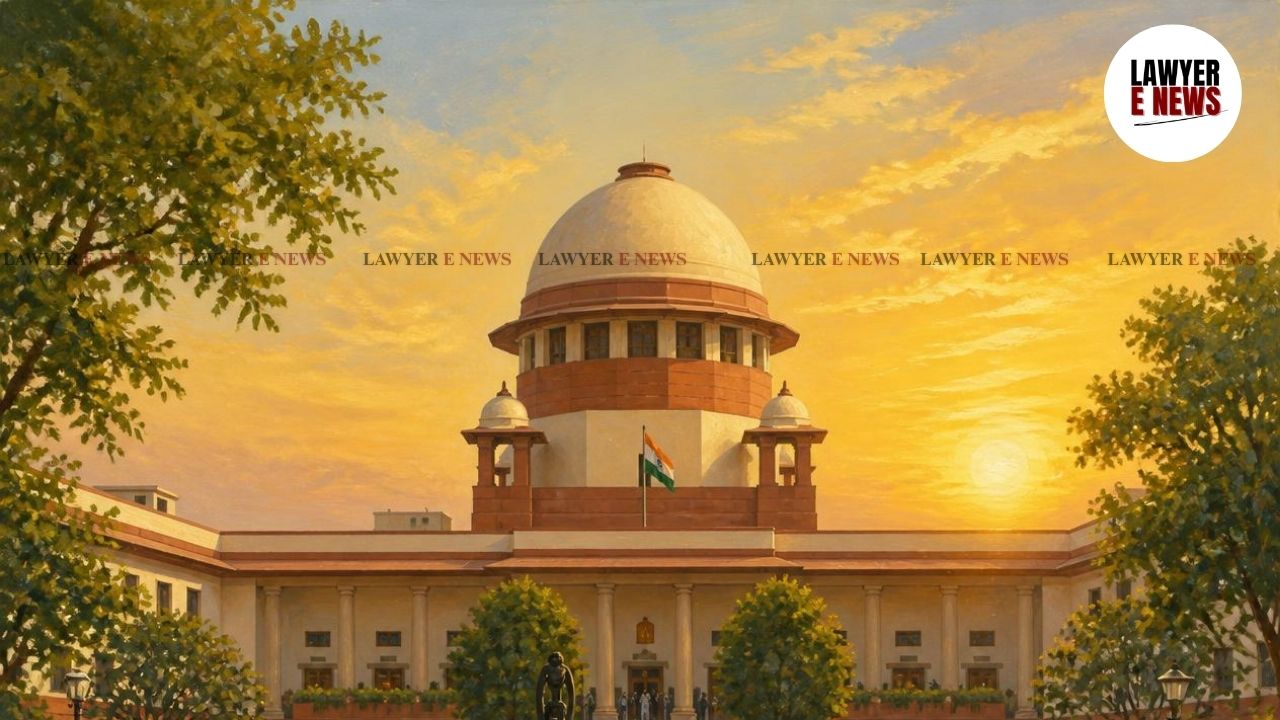
"Continuous right that can be exercised at any time so long as the object of the Will survives. The right to apply would therefore accrue from the date that it becomes necessary to apply." Supreme Court, in a significant ruling dated July 15, 2026, held that the period of limitation for filing a probate application does not necessarily commence from the date of the testator's death.
A bench comprising Justice Sanjay Karol and Justice Vipul M. Pancholi observed that the right to apply for probate is a continuous right under Article 137 of the Limitation Act, 1963, and the "right to apply" accrues only when it becomes necessary to seek the court's permission.
The case arose from an application filed in 2005 for the probate of a Will executed in April 1995. The testator had passed away in June 1995, nearly a decade before the application was initiated. The District Judge, Deoghar, rejected the application under Order VII Rule 11 of the CPC, citing an unexplained delay, a view subsequently upheld by the Jharkhand High Court.
The primary question before the court was whether the application for probate was barred by the law of limitation under Article 137 of the Limitation Act. The court was also called upon to determine whether, under Order VII Rule 11 CPC, it is permissible for a court to return findings on the suspicious nature or merits of a Will at the threshold stage.
Article 137 Of Limitation Act Governs Probate Applications
The Court noted that the Indian Succession Act (ISA) does not prescribe a specific time limit for filing a probate or revocation application. Consequently, the residuary provision under Article 137 of the Limitation Act, 1963, applies, which provides a three-year period starting from when "the right to apply accrues."
Right To Apply Accrues Only When Necessity Arises
The bench clarified that the assumption that the right to apply necessarily accrues on the date of the death of the deceased is unwarranted. Relying on established precedents, the court emphasized that such an application is for the court's permission to perform a legal duty or for recognition as a testamentary trustee.
Court Distinguishes Delay From Absolute Bar Of Limitation
The Court observed that while a delay of more than three years after the testator's death might arouse suspicion, such delay cannot be equated with an absolute bar of limitation. Once the execution and attestation of the Will are proved, the suspicion arising from the delay no longer operates to defeat the application at the threshold.
Hostile Acts Trigger The Limitation Period
In the present case, the court found that the need to apply for probate commenced only when the respondents took actions hostile to the position established by the Will. Specifically, the execution of a General Power of Attorney by the testator’s wife in August 2005 created the necessity for the executor to seek probate, making the filing on August 31, 2005, well within time.
Court Cannot Decide Suspicious Nature Of Will Under Order VII Rule 11 CPC
The Supreme Court took strong exception to the lower courts adjudicating the "suspicious nature" of the Will during summary proceedings. The bench held that whether or not a particular Will is suspicious comments directly upon the sanctity of the document itself, which cannot be decided without appreciating evidence.
Limitation Is Often A Mixed Question Of Law And Fact
The bench reiterated that the power to reject a plaint under Order VII Rule 11 is a drastic measure and must be exercised stringently. When a plaintiff claims they gained knowledge of essential facts at a specific point in time, that plea must be accepted at the threshold stage, making limitation a triable issue.
Rejection Of Plaint Without Evidence Is Legally Unsustainable
The Court held that once the date of knowledge is specifically pleaded and forms the basis of the cause of action, the issue of limitation cannot be decided summarily. Rejection of the plaint on the ground of limitation without permitting the parties to lead evidence is legally unsustainable and constitutes a plain error of law.
The Supreme Court allowed the appeal and set aside the orders of the District Court and the Jharkhand High Court. The matter has been restored to the concerned Civil Court to proceed in accordance with the law, affirming that the merits of a Will and the question of limitation based on accrual of right are matters for trial.
Date of Decision: July 15, 2026