-
by sayum
27 July 2026 10:58 AM







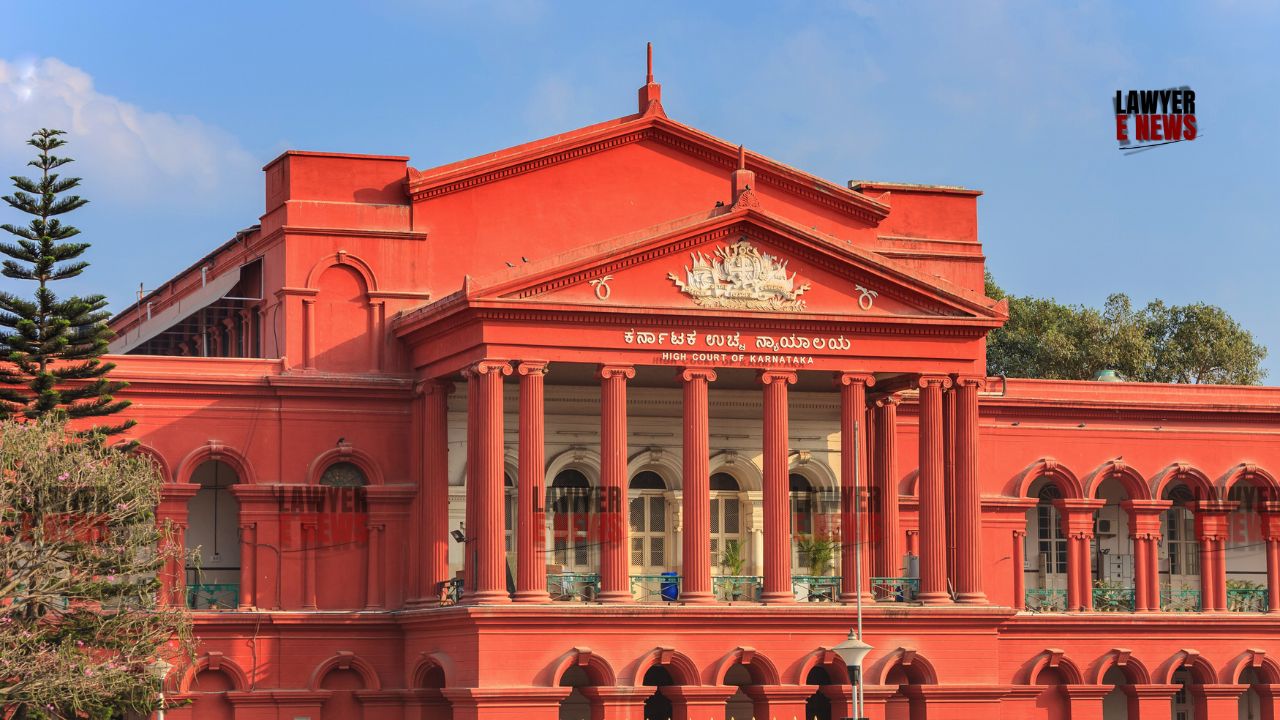
"It is settled principle of law that the litigant who attempt to pollute the stream of justice or who touches the pure fountain of Justice with tainted hands is not entitled to any relief, interim or final." High Court of Karnataka, in a significant ruling dated July 06, 2026, held that litigants who suppress material facts or resort to tampering with court records to claim properties not originally part of a decree are not entitled to any equitable relief.
A division bench comprising Justice D.K. Singh and Justice G. Basavaraja observed that "suppressio veri, expressio falsi" (suppression of truth is equivalent to expression of falsehood) attracts the forfeiture of the right to seek judicial remedies.
The court made these observations while allowing appeals filed by the State of Karnataka and the South Western Railway, setting aside a Single Judge's order that had previously favored private respondents claiming ownership over land abutting the Cantonment Railway Station in Bengaluru.
The dispute centered on property bearing CTS No. 1047, which the Railways claimed to have possessed since the British era following acquisitions in 1880 and 1900. The private respondents, however, contended that this land was part of Survey No. 2 of Bilekalli Village, which they had acquired through a sale deed following a suit for specific performance (OS No. 2977 of 2006).
While the original decree in the civil suit only mentioned Survey No. 2, the respondents allegedly inserted the words "and part of CTS No. 1047" by handwriting in the Execution Petition (No. 432 of 2013) without the court's permission. This led to the bailiff delivering possession of Railway property to the private parties, a move later challenged by the State and Railway authorities.
The primary question before the court was whether the respondents were guilty of suppressing material facts regarding earlier failed litigations and injunction orders. The court was also called upon to determine if the unilateral insertion of a new property description in an execution schedule, which was absent in the original decree, constituted a fraud upon the court.
Court Slams Tampering Of Execution Records
The bench noted with concern that the description of the schedule property in the original suit (OS No. 2977 of 2006) and the resulting decree did not contain any reference to CTS No. 1047. It was only during the execution proceedings that the respondents surreptitiously added the Railway property into the schedule through manual handwriting.
The Court observed that this insertion was malafide and was a calculated attempt to tamper with records to give a misleading impression that the decree of the Civil Court also covered the Railway land. It criticized the trial court for "mechanically" issuing a delivery warrant without verifying the schedule against the original decree.
Insertion Of Property In Execution Schedule Without Court Permission Is Fraudulent - Suppression Of Previous Litigation History
The High Court found that the respondents had deliberately failed to disclose a previous suit (OS No. 10987 of 1994) where the Civil Court had specifically rejected their claim of ownership over CTS No. 1047 and held the Railways to be the lawful owner. By hiding this history of failed litigation, the respondents breached the doctrine of clean hands.
The bench emphasized that the respondents had misled the learned Single Judge by suppressing these vital facts. It noted that the respondents had approached the court with "unclean hands" in an effort to grab valuable public property belonging to the Railway Department.
Doctrine Of Clean Hands And Suppression Of Material Facts - Reliance On Supreme Court Precedent Regarding Disclosure
Citing the legal maxim "suppressio veri, expressio falsi," the court referred to the Supreme Court's decision in Zeba Khan v. State of Uttar Pradesh (2026). The bench reiterated that any suppression or selective disclosure of material facts amounts to an abuse of the process of law and strikes at the very root of the administration of justice.
The court held that the duty of a litigant to make a fair and candid disclosure is a solemn obligation. When a party attempts to "pollute the stream of justice," they lose the entitlement to any relief, whether interim or final, as such conduct constitutes a fraud upon the court.
Suppression Of Truth Amounts To Abuse Of Process Of Law
The Division Bench concluded that the learned Single Judge had not properly appreciated the facts regarding the fraud played by the respondents. It held that the respondents were not entitled to any equitable relief under Article 226 of the Constitution of India due to their fraudulent conduct and suppression of material facts.
Consequently, the High Court allowed the writ appeals filed by the State and the Estate Officer of the South Western Railway. The court set aside the Single Judge’s order dated April 25, 2025, and dismissed the original writ petition filed by the private respondents.
The ruling reinforces the principle that judicial processes cannot be used as a tool for land grabbing through the manipulation of court records. It serves as a stern reminder that the High Court’s extraordinary jurisdiction is reserved for those who approach the court with honesty and transparency.
Date of Decision: 06 July 2026