-
by sayum
28 August 2026 12:24 PM







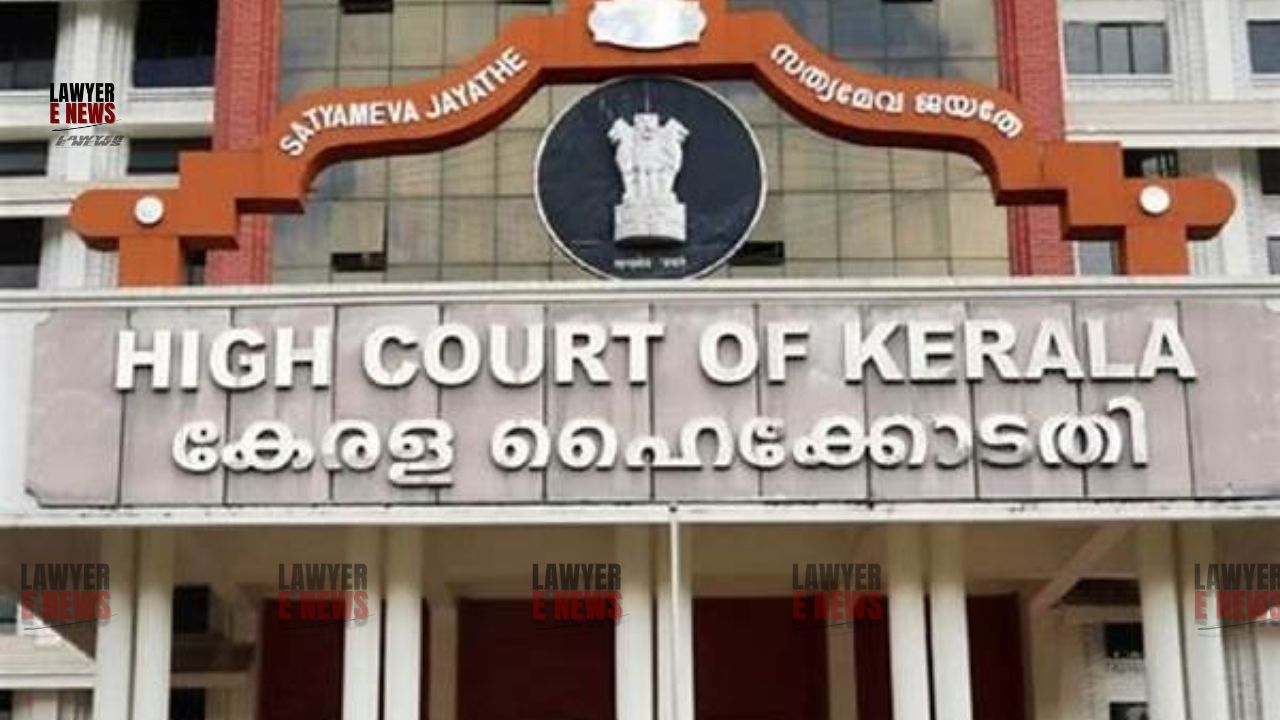
“Courts Cannot Catch Parties by Surprise — Access to Justice Must Never Become a Gamble,” On October 6, 2025, the Supreme Court of India delivered a sharp reminder on judicial restraint and procedural fairness. The bench comprising Justice Dipankar Datta and Justice K.V. Viswanathan held that the Kerala High Court had overstepped its jurisdiction by issuing directions that went far beyond the pleadings in a writ petition, thereby violating the basic tenets of natural justice.
The Court ruled that “a litigant cannot be rendered worse off merely for approaching the court,” a warning that reaffirms one of the oldest judicial principles — that the temple of justice cannot become a trap for the seeker of relief.
“A Court’s Power Ends Where Natural Justice Begins to Suffer”
The controversy revolved around a modest parcel of temple land in Thrissur. The Cochin Devaswom Board had, by a royal order of 1974, allotted a few cents of land near the Vadakkumnathan Temple to the Chinmaya Mission Educational and Cultural Trust for building a hall to host marriages, religious and cultural events. The Trust was to pay a symbolic annual licence fee of ₹101, later revised to ₹227.25 by 1977.
Four decades later, the Board unilaterally hiked the licence fee to ₹1,50,000 per annum — an astronomical jump — and demanded arrears exceeding ₹20 lakh. The Trust challenged this in the Kerala High Court, seeking quashing of the fee order. The High Court, while upholding the hike, went further and ordered a Vigilance inquiry into the land allotment and directed the Board to refix the fee afresh by applying a precedent it itself introduced — T. Krishnakumar v. Cochin Devaswom Board (2022).
The Supreme Court found this approach deeply problematic. Justice Viswanathan observed that “the High Court’s directions were far beyond the scope of the writ petition,” and that “the appellants could not have been rendered worse off in their own case.”
“Courts Must Not Take Parties by Surprise — Law Is Not a Game of Ambush”
The judgment takes a firm stand against judicial adventurism. Quoting from V.K. Majotra v. Union of India (2003) 8 SCC 40, the Court cautioned:
“The writ courts would be well advised to decide the petitions on the points raised in the petition… The parties cannot be taken by surprise.”
Justice Viswanathan reminded that fairness is the first duty of any judge. Even if a court finds it necessary to go beyond the pleadings, it must ensure the affected party is first put to notice. “Directions of this nature for a fishing and roving enquiry can seriously impinge upon reputation and character of the parties,” the judgment said.
The Court drew from State of U.P. v. Mohammad Naim (1964 2 SCR 363), observing that judicial pronouncements must be “guided by considerations of justice, fair play and restraint.” Sweeping directions and generalisations, it warned, may “defeat the very purpose for which they are made.”
“Litigants Seek Justice, Not Peril — They Cannot Leave Court Worse Than They Entered”
The Court was particularly disturbed by the fact that the High Court’s directions, instead of offering closure, created new liabilities for the petitioners. Citing Ashok Kumar Nigam v. State of U.P. (2016) 12 SCC 797, the Bench held:
“The appellant could not be placed in a worse-off situation because of his having sought redress… The petitioner cannot be punished for coming to court.”
Reinforcing this, the Court referred to Pradeep Kumar v. Union of India (2005) 12 SCC 219, noting that “a writ petitioner cannot be put in a worse position by coming to court.”
Justice Viswanathan warned that such practices could have a “chilling effect on access to justice,” observing:
“If without putting parties on notice the court travels beyond the scope of the petition and makes strong directions, it will create a chilling effect… People will be left to wonder whether, by going to court, they will be rendered worse off than before.”
He added that such consequences “seriously impact the rule of law itself.”
“Judicial Power Must Be a Shield, Not a Sword”
The Supreme Court therefore partly allowed the appeal, striking down the High Court’s additional directions that ordered:
(1) Refixed licence fee based on the T. Krishnakumar case, and
(2) A vigilance inquiry by the Chief Vigilance Officer into the land allotment to the Trust.
Declaring these directions “absolutely unjustified and made in violation of natural justice”, the Court nonetheless clarified that the Devaswom Board retains the right to revise the licence fee independently in accordance with law.
The appellants, having already deposited ₹10 lakh under interim orders, were directed to pay the remaining arrears within three months.
“Access to Justice Must Never Punish the Seeker”
In its concluding words, the Court sounded a profound warning for all levels of the judiciary:
“Litigants go to court for vindication of their rights. Courts must ensure they do not leave worse off than they came. The rule of law depends upon the citizen’s faith that justice will not turn punitive for the innocent seeker.”
This judgment stands as a testament to judicial discipline — a reminder that while courts possess great power, its exercise must always be tempered by restraint, fairness, and humanity.
Date of Decision: October 6, 2025