-
by sayum
24 August 2026 3:22 PM







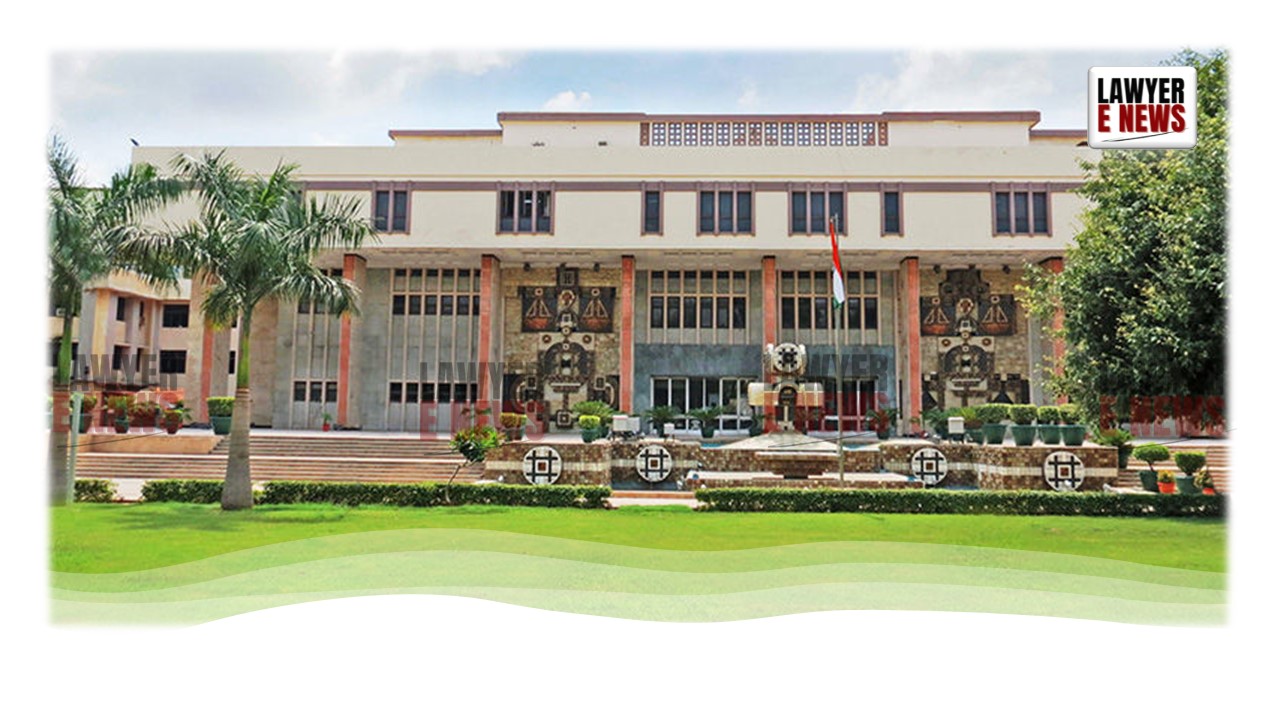
In a significant ruling, the Delhi High Court dismissed an appeal (RFA 140/2025) filed by Jan Chetna Jagriti Avom Shaikshanik Vikas Manch & Ors. challenging a money recovery decree passed in favor of Sh. Anand Raj Jhawar, sole proprietor of M/s RR Agrotech. The court refused to condone a 565-day delay in filing the appeal, rejecting the appellants' argument that their previous lawyer’s negligence had prevented them from filing the appeal on time.
Justice Girish Kathpalia, while delivering the judgment, emphasized: "A litigant cannot merely sign a fee cheque and then absolve themselves of all responsibility for their case. The law expects a reasonable degree of diligence from every litigant, especially one that is an educated entity such as an NGO."
The court made it clear that blaming an advocate without taking any disciplinary action against them cannot be a valid excuse for delay.
The case stemmed from a money recovery suit filed by the respondent, which had been pending before the Trial Court since 2016. The Trial Court delivered its final judgment and decree on April 27, 2023, ruling in favor of the respondent.
The appellants, a registered NGO and its office bearers, claimed that they had been unaware of the judgment because their previous counsel failed to inform them. They argued that as laypersons unfamiliar with legal procedures, they had trusted their lawyer to protect their interests.
However, when they eventually learned of the decree, they sought to challenge it. By then, they were 565 days late, well beyond the prescribed limitation period.
The appellants contended that the delay was neither willful nor deliberate but was solely due to "grave professional misconduct and lack of diligence" on the part of their former counsel. Their plea stated: "Due to this deliberate concealment of material facts, the Appellants were completely unaware of the passing of the decree and could not exercise their statutory right to file an appeal within the stipulated time frame."
The Delhi High Court, however, refused to accept this explanation. It categorically rejected the argument that the appellants were deprived of a fair hearing, pointing out that they had been given ample opportunities to present their case before the Trial Court.
Justice Girish Kathpalia remarked: "The suit culminating into the impugned judgment and decree was pending since the year 2016. The appellants had multiple opportunities to present their case, yet they failed to do so. Even the order dated 13.04.2023 reflects that the Trial Court allowed them the liberty to address arguments on any working day before the final order was passed. Despite this, the appellants chose not to appear."
On the issue of lawyer negligence, the court took a firm stance, ruling that simply blaming an advocate without taking action against them was insufficient to establish "sufficient cause" under Section 5 of the Limitation Act, 1963.
"For the fault of counsel, a litigant should not suffer—but that cannot be a blanket rule. Each case must be examined on its own facts. When a litigant attributes delay to their counsel’s misconduct yet fails to initiate any disciplinary action, their explanation cannot be accepted."
The court pointed out that the appellants had taken no action against their previous counsel, such as filing a complaint before the Bar Council.
"In the absence of any complaint against the lawyer, believing such allegations would be tantamount to condemning the counsel unheard, that too on judicial record," the court held.
Citing Ramlal vs. Rewa Coalfields Ltd. (AIR 1962 SC 361), the court underscored that limitation laws exist for a reason: "The expiration of the period of limitation gives rise to a right in favor of the decree-holder to treat the decree as binding. This legal right should not be lightly disturbed."
The court also referred to Balwant Singh vs. Jagdish Singh (2010) 8 SCC 685, where the Supreme Court held: "The purpose of limitation laws is to ensure substantial justice, but this does not mean that every delay should be condoned. A party who has been thoroughly negligent cannot expect the court to set aside procedural rules merely for their benefit."
Additionally, in Salil Dutta vs. T.M. & M.C. Pvt. Ltd. (1993) 2 SCC 185, the Supreme Court had made it clear that: "An advocate is an agent of the litigant. His acts and omissions within the scope of his authority bind the litigant. A party cannot disown its advocate at any time and seek relief without consequence."
Rejecting the plea for delay condonation, the Delhi High Court ruled: "The appellants are not illiterate individuals who had no means of tracking their litigation. They are a registered NGO and its functionaries, well aware of legal processes. It is incomprehensible that they would remain ignorant of their own case for over a year and a half."
The court further held that condoning the delay would set a dangerous precedent and unfairly prejudice the successful litigant.
"With the expiration of the period of limitation and an additional year and a half, a reasonable expectation arose in favor of the decree-holder that the litigation had reached finality. Condoning such an inordinate delay would amount to reopening settled issues, causing undue hardship to the respondent."
Accordingly, the application for condonation of delay was dismissed, and the appeal was rejected as time-barred.
This ruling serves as a strong reminder that litigants must actively monitor their cases and cannot shift the blame onto their legal representatives without taking appropriate action. The judgment upholds the strict application of limitation laws and reinforces that finality in litigation is crucial for justice.
Date of Decision : February 14, 2025