-
by sayum
04 August 2026 1:39 PM







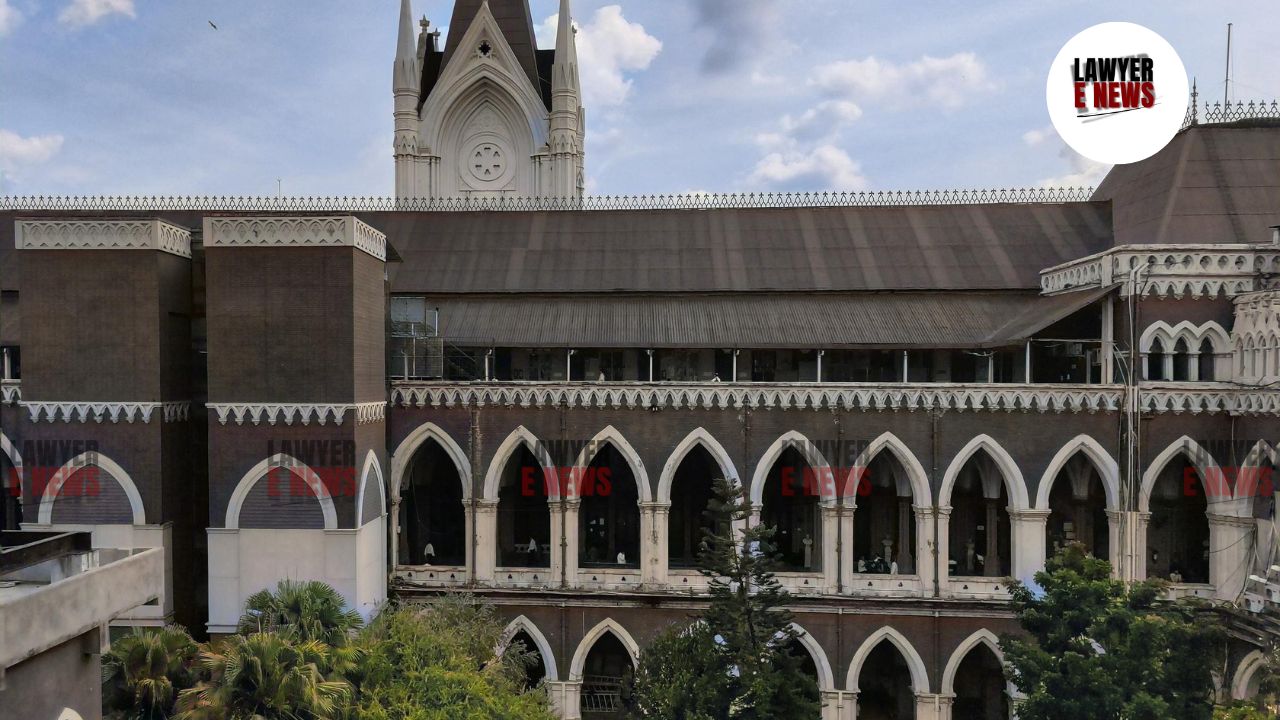
Regulation 4.4 clothes the licensee with unbridled and unfettered power, which is inherently unjust and self-contradictory”— In a landmark judgment Calcutta High Court declared Regulation 4.4 of the West Bengal Electricity Regulatory Commission (Terms and Conditions of Tariff) Regulations, 2011 as ultra vires and unconstitutional, for granting arbitrary and unguided discretion to power licensees to restrict electricity drawal and levy penal charges. Justice Sabyasachi Bhattacharyya held that such a provision, which empowers the licensee to act without accountability or guidelines, violates Articles 14 and 19(1)(g) of the Constitution of India.
“Penalty Without Justification or Proportionality Violates Rule of Law”—Court Slams Disproportionate Double Tariff for Overdrawal
The petitioner, Metsil Exports Pvt. Ltd., a High Tension electricity consumer, was aggrieved by arbitrary restrictions imposed by the Damodar Valley Corporation (DVC) on power drawal and the imposition of penal charges at double the normal rate for exceeding those restrictions. The Court noted:
“There is no proportionality in a standard and blanket doubling of the charges payable for overdrawal, although no harm at all has been done to the grid.”
The Court rejected the idea that a licensee can impose such penalties without showing actual damage, and called the regulation "unconstitutional and arbitrary".
“Contractual Rights Cannot Be Undone by Executive Fiat”—Court Reaffirms Enforceability of Contracted Load
Highlighting that the consumer had a legitimate expectation to draw power up to the contracted demand, the Court declared:
“The right of a consumer to receive electricity to the extent of contracted demand… flows directly from the statute and cannot be denied at the whims of the licensee.”
The Court held that the regulation violated the sanctity of contract, as it allowed unilateral restriction of supply even where the consumer had paid for higher capacity.
“Delegated Power Must Have Boundaries”—Court Calls Out Unconstitutional Sub-Delegation to Licensee
The Court invoked the principle that sub-delegation without express authority is impermissible. Citing Krishna Mohan (P) Ltd. v. MCD and Ram Krishna Dalmia v. S.R. Tendolkar, it observed:
“If powers are granted to the Executive by a statute, there should be guidelines imposed for exercise of such discretion… In the absence of the same, the licensee is empowered to determine its own tariff, which is palpably a sub-delegation.”
The Court further stated that Regulation 4.4 failed even the test of reasonableness and intelligible differentia under Article 14.
Justice Bhattacharyya quashed the impugned provision with the declaration: “Regulation 4.4 is struck down as ultra vires the Constitution and the Electricity Act, 2003.”
While the ruling was made prospective to prevent chaos in past billing cycles, the Court also directed WBERC to frame fresh regulations, laying down:
Restrictions must be justified by actual grid condition.
Consumers must be given at least 24 hours’ notice.
Any penalty must be proportional and based on demonstrable impact.
Consumers must have a right to be heard before any such penalty is enforced.
This judgment establishes a constitutional checkpoint against unregulated power of electricity licensees, restoring balance between consumer rights and administrative discretion.
Date of decision: 2 May 2025