-
by sayum
13 August 2026 1:48 PM







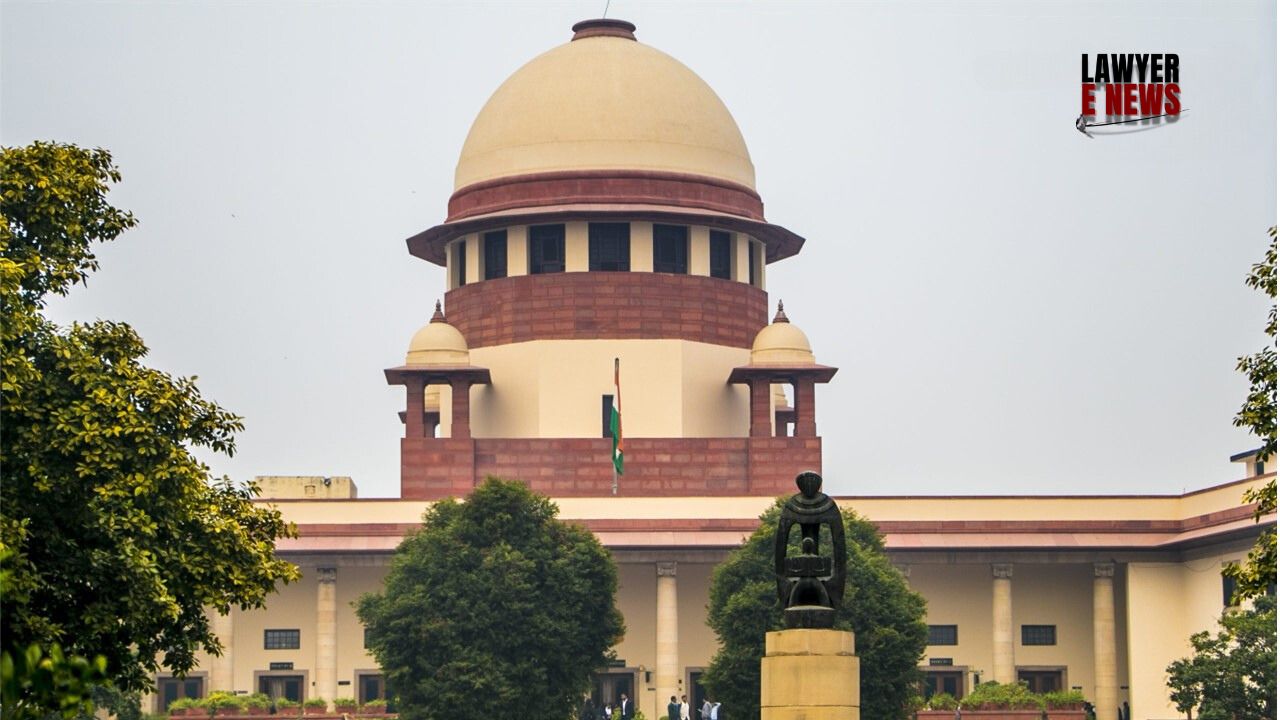
Bail Should Be Denied Only in Serious Offenses Like Murder or Rape, Not for Minor Allegations - Supreme Court overturned the Allahabad High Court’s decision and granted bail to the petitioner accused of unlawful religious conversion of a mentally challenged minor under the Uttar Pradesh Prohibition of Unlawful Conversion of Religion Act, 2021. The Court criticized the High Court for failing to exercise its judicial discretion in granting bail, emphasizing that the alleged offense was not as grave as murder or rape and that prolonged custody of over 11 months was unwarranted.
The Bench, comprising Justice J.B. Pardiwala and Justice R. Mahadevan, observed that the petitioner’s guilt or innocence would be determined solely through trial proceedings, and the bail order should not influence the outcome of the case.
"Discretion in Granting Bail Must Be Exercised Courageously and Consistently": Supreme Court Criticizes Lower Courts
The petitioner, Maulvi Syed Shad Kazmi, was accused of violating Section 3 read with Section 5 of the Uttar Pradesh Prohibition of Unlawful Conversion of Religion Act, 2021, along with Sections 504 and 506 of the IPC, for allegedly converting a mentally challenged minor to Islam. According to the prosecution, the petitioner, a Maulvi at a local Madrasa, forcibly converted the minor and kept him under his custody.
The trial court and subsequently the High Court denied bail, citing the seriousness of the offense and its social implications. However, the Supreme Court found these reasons insufficient, holding that the High Court’s refusal lacked judicial balance and legal reasoning.
Justice Pardiwala, in a strongly worded observation, remarked: “Discretion does not mean that the judge on his own whims and fancy declines bail saying conversion is something very serious. The petitioner is going to be put to trial, and ultimately, if the prosecution succeeds in establishing its case, he would be punished. Until then, the presumption of innocence prevails.”
The Court expressed dismay over the tendency of trial courts and High Courts to routinely deny bail, leading to an overwhelming number of bail petitions reaching the Supreme Court:
“This matter should not have reached the Supreme Court. The trial court itself should have been courageous enough to exercise its discretion and release the petitioner on bail. The High Court also failed to exhibit judicial courage in a matter where the principles governing bail are well-settled.”
"Bail Is the Rule, Jail Is the Exception": Supreme Court Balances Custody Duration and Presumption of Innocence
The petitioner had been in custody for more than 11 months. Arguing for bail, the petitioner’s counsel contended that the minor in question was abandoned by his parents and was taken in by the petitioner on humanitarian grounds. The counsel further asserted that there was no concrete evidence of forceful conversion or coercion.
The Supreme Court noted that while allegations of conversion involving minors may attract societal concern, the offense alleged in the present case did not warrant prolonged custody. It emphasized the fundamental principle of presumption of innocence and observed:
“Grant of bail is a matter of discretion, but that discretion has to be exercised judicially. The offense alleged is not that serious or grave like murder, dacoity, or rape. At times, when High Courts decline bail in such matters, it gives an impression that considerations other than legal principles weighed with the presiding officer.”
The case involved allegations under Section 3 (Prohibition of Unlawful Religious Conversion) and Section 5 (Punishment for Violations) of the Uttar Pradesh Prohibition of Unlawful Conversion of Religion Act, 2021. Section 5 provides stricter punishments for conversions involving minors, mentally challenged individuals, and women, with imprisonment ranging from 5 to 14 years and fines of not less than Rs. 1 lakh.
The prosecution argued that the case fell within the stricter proviso to Section 5, as the alleged conversion involved a mentally challenged minor. The petitioner, however, maintained that no force, coercion, or undue influence had been used, and the child had been abandoned by his parents.
Granting bail, the Court directed the trial court to impose appropriate terms and conditions for the petitioner’s release and ensure the trial proceeded expeditiously without undue delay. Justice Pardiwala clarified that the bail order should not prejudice the trial proceedings:
“We clarify that the guilt or innocence of the accused shall be determined on the strength of the substantive evidence that may come on record, without being influenced in any manner by the observations made in this bail order.”
The Court emphasized that the observations in the order were limited to the bail proceedings and should not affect the prosecution’s case.
The Supreme Court’s judgment reinforces the principle that bail is the rule and jail is the exception, particularly for non-heinous offenses. It highlights the importance of judicial discretion being exercised courageously, fairly, and in line with established legal principles.
The Court also underscored the need to balance societal concerns with individual rights, cautioning against arbitrary denials of bail that result in unnecessary incarceration.
Date of Decision : January 27, 2025