
-
by sayum
27 July 2026 3:39 PM







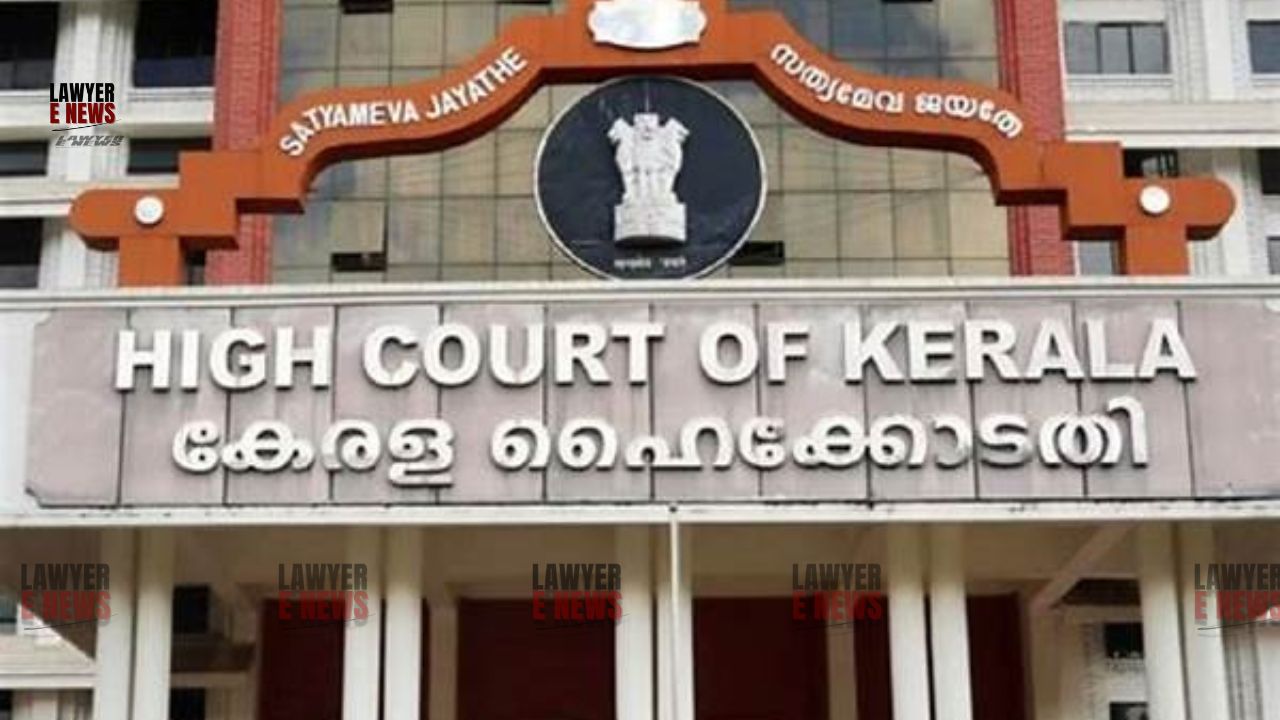
"Requirement to have the complaint accompanied by an affidavit, cannot be given strict interpretation as in the case of election petitions, to say that the affidavit filed by the complainant after six days from the filing of the complaint has to be eschewed for non-compliance of statutory requirement," Kerala High Court, in a significant ruling, has held that the mandatory requirement of filing an affidavit alongside a private complaint under Section 156(3) of the CrPC is satisfied through substantial compliance.
A bench of Justice G. Girish observed that the primary purpose of such an affidavit is to ensure the bona fides of the complainant and to prevent the abuse of the judicial process, rather than to serve as a hyper-technical bar to prosecution.
The court further clarified the interplay between Section 406 (Criminal Breach of Trust) and Section 420 (Cheating) of the IPC, noting that these two charges are generally antithetical and cannot co-exist on the same set of facts. However, the court maintained that the presence of a civil dispute or a breach of contract does not automatically absolve an accused of criminal liability if the ingredients of forgery and breach of trust are clearly established from the record.
The matter reached the High Court through a revision petition filed by the second accused, who challenged a Magistrate's order dismissing his application for discharge. The case involved allegations that the accused persons whisked away a lorry and forged documents to transfer its ownership while the petitioner was residing abroad. The petitioner sought parity with a co-accused whose proceedings had been quashed previously by the court.
The primary questions before the court were whether the delay of six days in filing the mandatory affidavit vitiated the investigation and whether the principle of parity could be extended to the petitioner. The court was also called upon to determine if a criminal prosecution could be sustained when the accused was admittedly abroad during the commission of a portion of the alleged offences.
Substantial Compliance Of Filing Affidavit Under Section 156(3) CrPC
The court rejected the petitioner's argument that the proceedings were void due to the delayed filing of the affidavit required under the Supreme Court's mandates in Priyanka Srivastava and Babu Venkatesh. It noted that the complainant had filed the required affidavit six days after the complaint, and the Magistrate only forwarded the matter to the police after satisfying himself of its existence.
The bench emphasized that the purpose of the affidavit is to ensure that only genuine complainants approach the Magistrate for invoking police powers. Since the Magistrate acted only after the affidavit was on record, the court found that the spirit of the law had been followed. The court held that this did not constitute a terminal defect in the prosecution's case.
Principle Of Parity Inapplicable Where Roles Of Accused Are Distinct
The petitioner sought discharge on the ground of parity, noting that the High Court had already quashed proceedings against the first accused. The court, however, clarified that the principle of parity applies only when similarly situated persons stand on the same footing regarding the criminal liability attributed to them.
In this instance, the court found that the first accused was absolved because the allegations pertained specifically to transactions between the petitioner and the complainant. Since the role played by the petitioner was distinct and central to the dispute, the court held that the acquittal or quashing of proceedings against a co-accused would not automatically benefit the petitioner.
"The role played by the petitioner herein is totally distinct from the role attributed to the first accused... Therefore, there is absolutely no scope for applying the principle of parity."
Section 188 CrPC Sanction Not Required For Offences Partially Committed In India
Addressing the petitioner's contention that the prosecution was bad for want of sanction under Section 188 CrPC as he was abroad, the court noted that the vehicle was entrusted in India and the ultimate transfer of ownership occurred within the country. It observed that even if part of the forgery occurred while the petitioner was abroad, a major portion of the offence took place inside India.
The bench held that where a portion of the offence or its consequences occur within Indian territory, the requirement for prior sanction from the Central Government is not attracted. The court noted that specific allegations regarding phone calls made in 2019 to facilitate the transfer of the vehicle were sufficient to proceed with the trial without such sanction.
Sections 406 And 420 IPC Are Antithetical In Nature
The court agreed with the petitioner's legal contention, based on the Supreme Court's dictum in Arshad Neyaz Khan v. State of Jharkhand, that charges of cheating and criminal breach of trust are often mutually exclusive. While cheating involves a dishonest intention at the very inception of a transaction, criminal breach of trust involves a subsequent dishonest misappropriation of property that was initially entrusted lawfully.
However, the bench clarified that this legal distinction does not warrant the termination of the entire criminal proceeding. It noted that the records clearly made out a prima facie case for criminal breach of trust and forgery. Consequently, the court directed the Trial Court to look into this aspect specifically at the stage of framing charges rather than dismissing the case at the revision stage.
"It is common knowledge that in many cases involving criminal breach of trust, cheating etc., the offenders would also incur civil liability... But, it is not possible to wind up criminal prosecution against such offenders for the reason that there is a colour of civil dispute."
The High Court ultimately dismissed the revision petition, finding no reason to interfere with the Magistrate's decision to proceed with the trial. The court directed the Trial Court to proceed with framing charges under Sections 406, 465, and 471 of the IPC, emphasizing that the evidentiary value of the petitioner’s alibi is a matter for the trial stage.
Date of Decision: 23 June 2026