-
by sayum
27 August 2026 7:40 AM







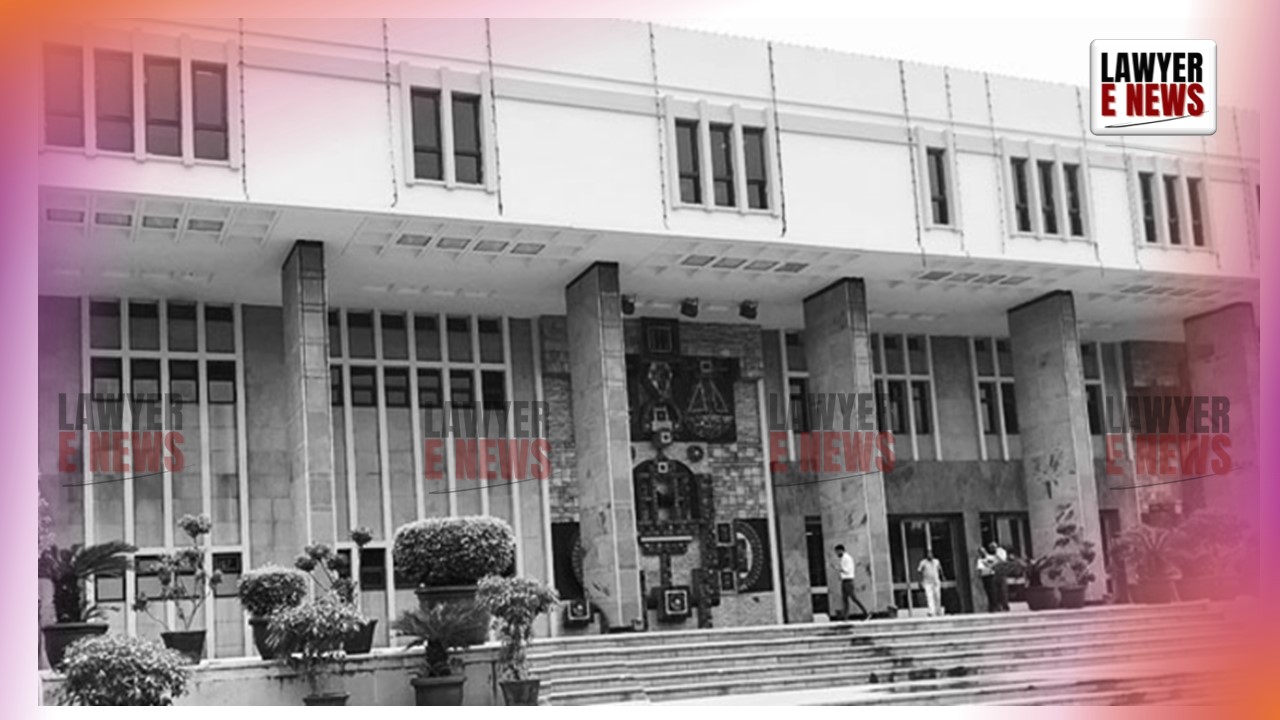
“Rule 109 Does Not Recognise Interview Session Timing As A Determinant Of Seniority”, In a decisive ruling on seniority disputes in recognised aided schools, the Delhi High Court has held that “interview session timing” cannot be elevated into a legal criterion for fixing seniority under the Delhi School Education Rules, 1973.
On 27 February 2026, Justice Sanjeev Narula dismissed a writ petition challenging the seniority list of Post Graduate Teachers (PGTs) and the consequential recommendation of the Departmental Promotion Committee (DPC) for promotion to the post of Vice Principal. The Court upheld the seniority list dated 14 March 2022 and vacated the interim stay against implementation of the DPC recommendation.
The controversy revolved around Rule 109 of the Delhi School Education Rules, 1973, and the extent to which “date of selection” or interview timing could influence inter se seniority between a direct recruit and a promotee in the PGT grade.
The Petitioner, a direct recruit PGT (Commerce), was interviewed on 12 June 2008 and joined service on 13 August 2008. Respondent No. 7, who had been serving as TGT since 1988, was promoted to the PGT (Maths) grade through a duly constituted DPC held on 14 July 2008.
For over a decade, seniority lists from 2008 to 2019 consistently placed Respondent No. 7 above the Petitioner. However, a seniority list prepared on 9 October 2020 reflected the Petitioner as senior, drawing from columns such as “date of selection” and even “SSC/DPC time (AM/PM)”.
Subsequently, the Managing Committee approved a revised seniority list dated 14 March 2022, restoring the earlier position and ranking Respondent No. 7 above the Petitioner. When a DPC met on 28 November 2024 to consider promotion to Vice Principal, Respondent No. 7 was recommended as the senior-most eligible PGT. The Petitioner challenged both the 2022 seniority list and the DPC recommendation.
“The Court Cannot Create A Proxy For Merit By Judicial Craft”
Rejecting the foundational premise of the petition, the Court held that Rule 109(ii) speaks of “order of merit” and not the time slot in which an interview was conducted.
Justice Narula observed, “Rule 109(ii) uses ‘order of merit’ of selection as the determinant for those selected on the same occasion. The rule does not recognise interview session timing as a proxy for merit, and the Court cannot create that proxy by judicial craft.”
The Court noted that the October 2020 list mixed various columns such as “marks obtained”, “date of joining”, “date of selection” and “SSC/DPC time”, but such internal formatting cannot override the statutory framework. Administrative markers cannot be substituted for statutory criteria.
“Seniority Cannot Be Manufactured From Dates On Which The Employee Was Not Yet In Service”
A central pillar of the ruling is the reaffirmation of settled service law principles. The Court categorically rejected the Petitioner’s attempt to claim seniority based on the recruitment cycle or the timing of interview, despite having joined service later than the promotee.
The judgment records, “The law, as consistently applied, does not support seniority being manufactured from dates on which the employee was not yet in service.”
Referring to K. Meghachandra Singh v. Ningam Siro and this Court’s decision in Jagmohan Vishwakarma v. UOI, the Court reiterated that seniority cannot be claimed from a date when the incumbent was not borne in the cadre. Since Respondent No. 7 entered the PGT grade on 14 July 2008 and the Petitioner joined only on 13 August 2008, the latter could not claim precedence.
The reliance on N.R. Parmar was held to be misplaced in view of its overruling in K. Meghachandra Singh, and the Court clarified that the Petitioner’s seniority had never been legally finalised on the basis of that doctrine.
“Long-Settled Seniority Cannot Be Unsettled Absent Clear Statutory Breach”
The Court declined to treat the October 2020 list as a vested or final determination. It noted that earlier lists had consistently placed Respondent No. 7 above the Petitioner and that the Petitioner had not objected for over a decade.
The October 2020 list was found to lack approval of the Managing Committee, carried caveats, and was prepared without formal resolution of objections. The Directorate of Education clarified that the Managing Committee is the competent authority under Rule 109, and the 2022 list was duly approved in its meeting dated 5 March 2022.
Justice Narula emphasised institutional stability, observing that “a writ court does not unsettle such a long-settled seniority position, with its ripple effects on third-party rights, unless the Petitioner demonstrates a clear statutory breach.” No such breach was demonstrated.
“Natural Justice Does Not Mean A Mistaken Seniority Position Must Be Perpetuated”
On the allegation of lack of notice before issuance of the 2022 list, the Court found no procedural unfairness. The record showed that the 2020 list itself had triggered objections and representations, and the Petitioner had refused to sign the 2022 list while pursuing her representations.
The Court clarified that principles of natural justice ensure an opportunity to object but do not require perpetuation of an erroneous seniority position.
“Once The Seniority Challenge Fails, The DPC Challenge Has No Independent Legs”
The DPC held on 28 November 2024 was convened after approval from the Directorate of Education and proceeded on the seniority list approved by the Managing Committee. Respondent No. 7 was found to be the senior-most eligible PGT and to have met the benchmark.
The Court held that the challenge to the DPC was purely derivative. “Once the challenge to the 2022 seniority list fails, the challenge to the DPC recommendation has no independent legs.”
Accordingly, the interim order dated 4 December 2024 restraining implementation of the DPC recommendation was vacated.
The Delhi High Court’s ruling sends a clear message in service jurisprudence governing recognised aided schools. “Interview timing” cannot substitute statutory criteria. “Vacancy year” arguments cannot override actual entry into the cadre. And long-standing seniority positions will not be disturbed in the absence of a clear violation of Rule 109.
The writ petition was dismissed, and the Respondents were granted liberty to proceed in accordance with law on the basis of the DPC recommendation.
Date of Decision: 27 February 2026