-
by sayum
04 August 2026 1:39 PM







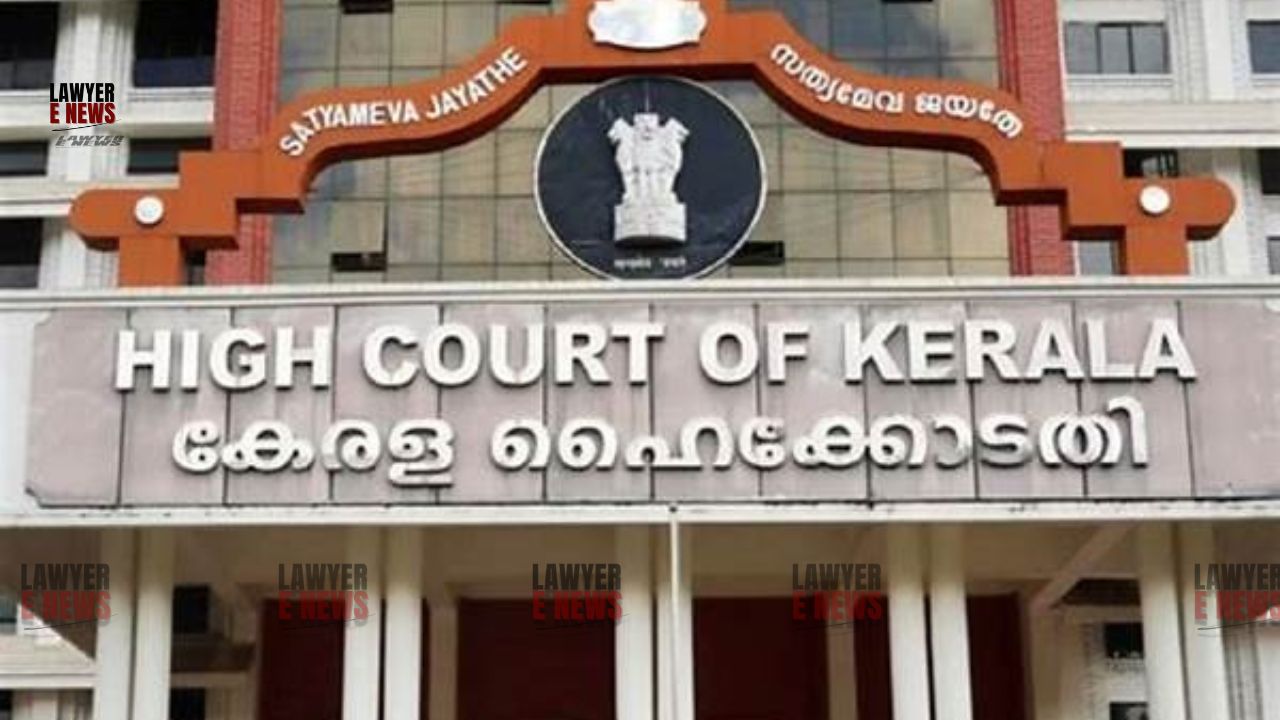
High Court affirms lower court's decision awarding 18% interest per annum for delayed bill payments in PWD contract case. The Kerala High Court has upheld the right of a Public Works Department (PWD) contractor to claim interest on delayed bill payments, emphasizing that a suit for interest alone is maintainable. In a significant ruling, the court restored the trial court's decision, which had awarded 18% interest per annum on the delayed payments, reversing the appellate court's judgment that had dismissed the claim.
The appellant, P.T. Thomas, a PWD contractor, completed a road construction project for the State of Kerala. Despite completing the work on July 5, 1997, and submitting a bill for ₹4,81,078, the payment was delayed until March 31, 1998. Thomas subsequently filed a suit demanding ₹84,895 as interest for the delayed payment at 24% per annum. The trial court partially allowed the claim, granting ₹56,932 at an 18% interest rate. However, the first appellate court reversed this decision, prompting Thomas to appeal to the High Court.
Maintainability of Suit for Interest Alone: Justice C. Pratheep Kumar, while delivering the judgment, addressed the fundamental question of whether a suit for interest alone is maintainable under Section 3(1) of the Interest Act, 1978. The court held that such suits are indeed maintainable, citing a precedent where the Division Bench of the Kerala High Court had allowed similar claims.
"The Court is empowered to award interest in any proceeding for recovery of any debt or damages or in any proceeding in which a claim for interest in respect of any debt or damages already paid is made," the judgment noted.
The court also addressed the issue of whether the plea of accord and satisfaction, raised by the respondents for the first time in the appellate stage, could be considered. The court concluded that this plea could not be upheld since it was not part of the initial pleadings and no evidence was provided to substantiate this claim.
"Evidence adduced without the support of pleadings cannot be relied upon," stated Justice Kumar, reinforcing the necessity of proper procedural adherence.
The High Court extensively referenced the Interest Act, 1978, and relevant precedents to support its decision. The court noted that the appellant was entitled to interest as there was a significant delay in payment beyond the one-month period stipulated for such government contracts.
"When a work is entrusted to a contractor, he is supposed to complete it within the stipulated time, and when the work is completed, the department is also bound to effect payment," the judgment emphasized.
Justice Kumar highlighted the principle that contractors should not suffer due to delays caused by administrative inefficiencies:
"The Government cannot be permitted to violate the solemn contracts," he remarked, underscoring the importance of honoring contractual obligations.
The Kerala High Court's decision reinforces the legal framework protecting contractors from financial losses due to delayed payments. By affirming the contractor's right to claim interest on delayed payments, the judgment sends a strong message about the importance of timely disbursements and adherence to contractual terms. This ruling is expected to have a significant impact on future contractual disputes involving government payments.
Date of Decision: May 21, 2024