-
by sayum
28 July 2026 6:56 AM








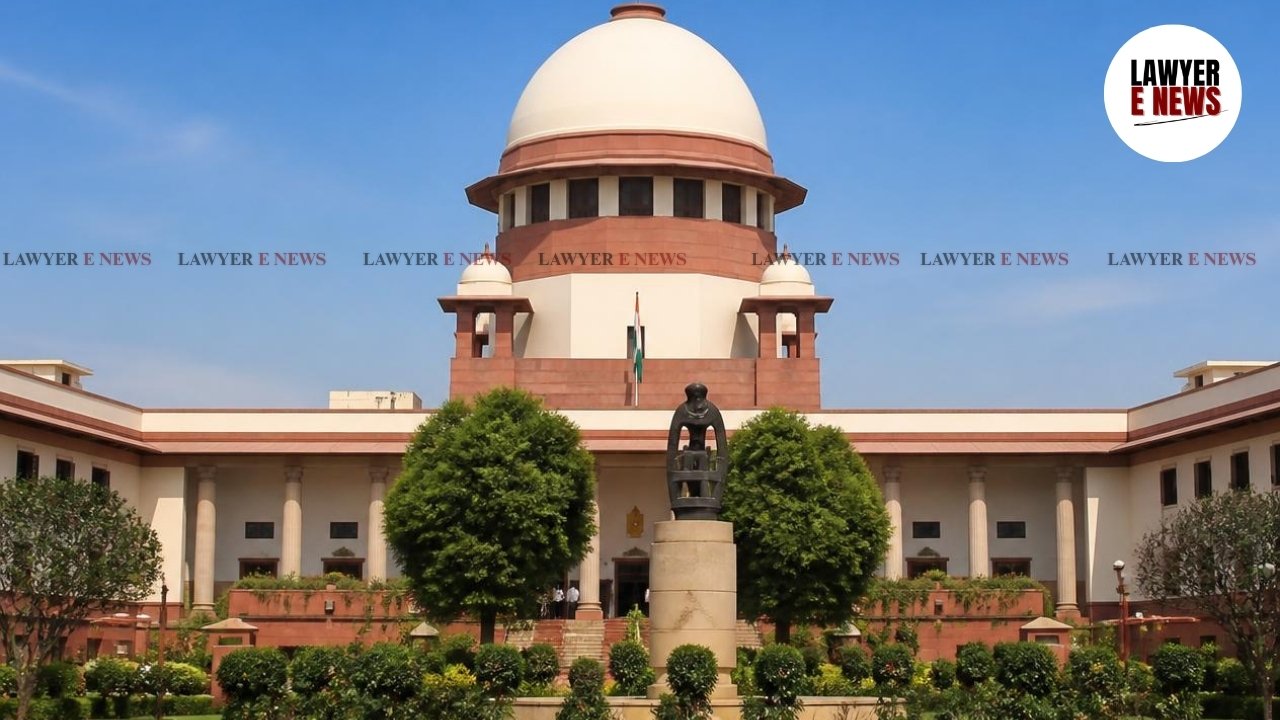
"Permitting invocation of the Code in cases such as the present one, would amount to converting insolvency proceedings into a coercive mechanism for recovery which is impermissible," Supreme Court, in a significant ruling dated May 7, 2026, held that the Insolvency and Bankruptcy Code (IBC) must not be utilized as a tool for coercion or a recovery mechanism by individual creditors.
A bench comprising Justice Pamidighantam Sri Narasimha and Justice Alok Aradhe observed that the Code operates as a collective insolvency resolution mechanism and is not intended to serve as a forum for the adjudication of individual contractual claims. The Court emphasized that where the objective behind the invocation of the Code is to compel payment rather than address genuine financial distress, such an action constitutes an abuse of the process of law.
The dispute arose from a quadripartite agreement involving Dhanlaxmi Bank (Appellant), Emerald Mineral Exim Pvt. Ltd. (Corporate Debtor), a builder, and a state infrastructure corporation for the purchase of a property. The Bank disbursed a loan of ₹1.50 crores directly to the builder at the instruction of the Corporate Debtor. Following a default and subsequent transfer of the property to a third party by the builder, the Bank initiated recovery proceedings before the Debt Recovery Tribunal (DRT). The Bank later filed a petition under Section 7 of the IBC, which was admitted by the NCLT but subsequently set aside by the NCLAT, prompting this appeal.
The primary question before the court was whether a Section 7 petition under the IBC is maintainable in a scenario involving complex multi-party contractual obligations. The court was also called upon to determine whether the direct disbursement of a loan to a third-party builder, as part of a larger property transaction, qualifies as a straightforward financial debt-default scenario warranting the initiation of the Corporate Insolvency Resolution Process (CIRP).
IBC Is A Collective Resolution Mechanism, Not A Recovery Forum
The Supreme Court began by reiterating the fundamental scheme of the IBC, noting that while the existence of a 'financial debt' and 'default' are conditions precedent for Section 7, the Code's purpose is collective resolution. The bench noted that the Code operates as a mechanism for addressing financial distress rather than a forum for resolving individual contractual disputes.
"The Code operates as a collective insolvency resolution mechanism and not as a forum for the adjudication of individual contractual claims," the Court observed, while cautioning against using the IBC as a tool for coercion.
Direct Disbursement To Builder Creates Complex Contractual Linkages
Analyzing the facts, the Court noted that the loan amount was directly disbursed to the builder under a quadripartite agreement. This structure meant that the Bank’s disbursement was intrinsically linked to the builder’s performance of obligations, such as construction and delivery of the property. The bench found that the transaction could not be viewed in isolation as a simple financial lending arrangement between the Bank and the Corporate Debtor.
"The structure of transaction reveals that Bank’s disbursement was intrinsically linked to performance of Builder’s obligation. In such circumstances, the transaction cannot be viewed in isolation as a simple financial lending arrangement," the judgment reads.
Dispute Characterized As Predominantly Contractual
The Court observed that the obligations arising out of the transaction were intertwined with the builder’s performance. It held that the dispute between the parties was predominantly contractual in character, involving competing claims related to the transfer of property and associated obligations. The bench highlighted that the matter was already being actively adjudicated before the DRT, which it deemed the appropriate forum for such recovery.
"The facts disclose a dispute which is predominantly contractual in nature and is subject matter of the proceedings before the DRT-the appropriate forum for recovery," the Court stated.
Ratio Decidendi: Preventing Coercive Misuse Of The Code
The Court underscored that the present case did not involve a "straightforward financial debt-default scenario." It held that allowing the invocation of the IBC in such complex contractual settings would amount to converting insolvency proceedings into an impermissible coercive mechanism. The bench emphasized that the deposit of funds already made before the DRT indicated that the matter was being addressed in the proper legal channel.
"Permitting invocation of the Code in cases such as the present one, would amount to converting insolvency proceedings into a coercive mechanism for recovery which is impermissible," the Court held.
The Supreme Court concluded that it was not inclined to interfere with the NCLAT's decision to set aside the CIRP admission. The Court found that the NCLAT was correct in determining that the Bank could not use the IBC for what was essentially a contractual recovery dispute. Consequently, the appeal was dismissed, and the initiation of CIRP against the Corporate Debtor was stalled.
Date of Decision: May 7, 2026