-
by sayum
04 August 2026 1:39 PM








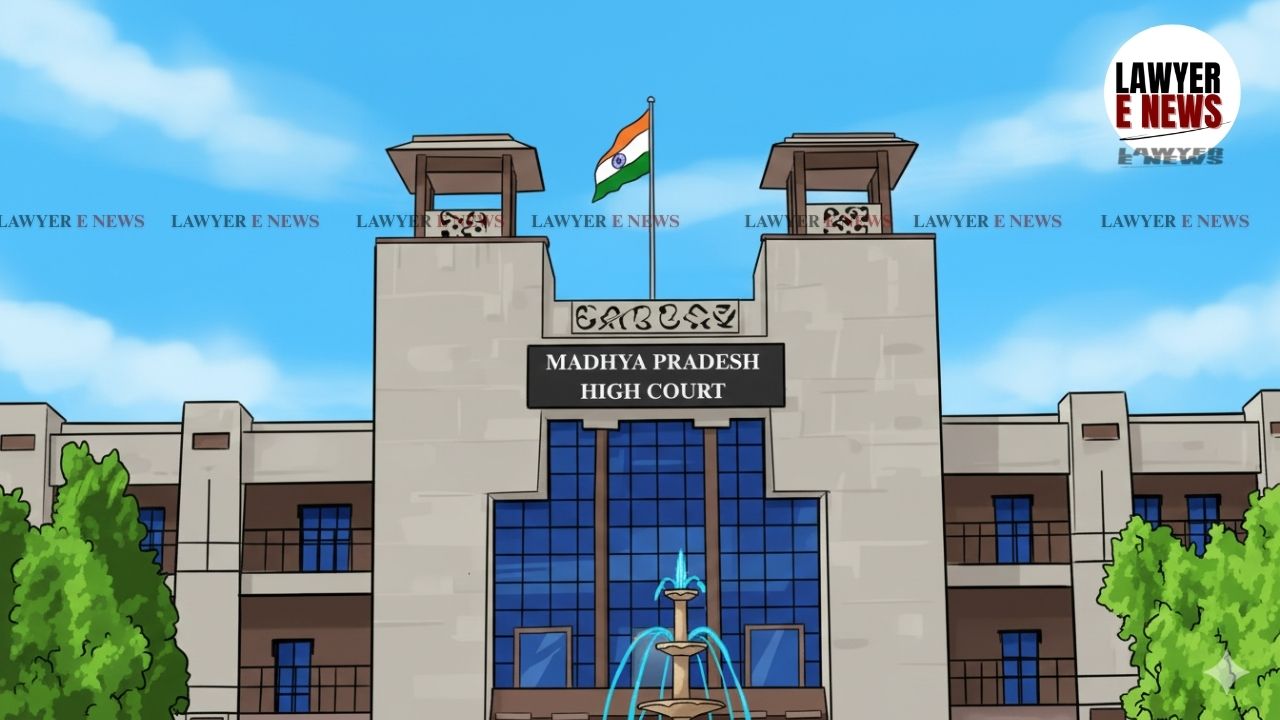
“Reinstatement Without Back Wages Does Not Mean Right to Earn Increments for Period of Absence”— In a crucial clarification on service jurisprudence, the Madhya Pradesh High Court (Indore Bench) held that notional increments cannot be granted for the period during which an employee was out of service unless there is a specific judicial direction to that effect. The Division Bench of Justice Vijay Kumar Shukla and Justice Binod Kumar Dwivedi allowed a writ petition filed under Article 227 of the Constitution, setting aside the order of the Central Administrative Tribunal (CAT) which had directed the Union Government to grant notional increment to a reinstated daily wager driver.
“Increment is not automatic like back wages on reinstatement unless there is a specific direction. The increment can only be earned when an employee is actually in service and not notionally,” the Court ruled, holding that the CAT's direction to grant one notional increment and pay arrears was contrary to settled law.
“Continuity of Service Does Not Automatically Bring Monetary Benefits”—Court Reiterates Limited Scope of Reinstatement Without Back Wages
The case arose from a service dispute where the respondent, Sohanlal Upadhyay, who was working as a daily wager light motor vehicle driver with the Ministry of Textiles since 1985, was terminated in 1997. After a protracted legal battle, the Labour Court ordered his reinstatement in 2010, but without back wages. This reinstatement was upheld by the High Court in 2012.
After rejoining in 2012, the respondent sought pay fixation with effect from 1985 and grant of notional increments for the entire intervening period of absence. The request was rejected by the department on the ground that he was not in service between 1997 and 2012, and thus not eligible to earn increments. However, CAT allowed the application, granting notional increment and arrears, prompting the Union Government to challenge the order before the High Court.
The High Court clarified that reinstatement without back wages or specific consequential benefits does not confer a right to retrospective pay fixation or increments.
“It would be incongruous to suggest that an employee, having been held guilty and remained absent from duty for a long time, continues to earn increments though there is no payment of wages for the period of absence,” the Court observed, quoting the Supreme Court in Andhra Pradesh SRTC v. Abdul Kareem (2005) 6 SCC 36.
“Increment Accrues Only When Earned in Service with Good Conduct”—CAT’s Order Granting Arrears Set Aside
The Court heavily relied on the Supreme Court's settled position that increment is a benefit linked to actual service and conduct, and cannot be assumed to accrue during a period of non-employment. It referred to the judgment in Director (Admin. & HR), KPTCL v. C.P. Mundinamani, (2023) 14 SCC 411, where the Court held:
“Increment accrues from the day following that on which it is earned... It is not a passive right that matures by the mere passage of time.”
In the present case, the High Court found that the Central Government Industrial Tribunal (CGIT) had only ordered reinstatement without back wages, and had not granted consequential benefits like pay fixation or increment. The Court underscored that continuity of service, as mentioned in reinstatement orders, is generally for limited purposes like pension or seniority, and does not translate into monetary entitlements unless explicitly ordered.
“In the absence of specific direction for notional increments, no such claim can be sustained merely on the basis of continuity of service language used in a reinstatement order,” the Bench held.
“Deepali Gundu Does Not Overrule Abdul Kareem”—Court Resolves Conflict in Precedents
The respondent had relied on the landmark ruling in Deepali Gundu v. Kranti Junior Adhyapak Mahavidyalaya, (2013) 10 SCC 324, arguing that once reinstated, the employee should be deemed to have continuity of service and entitled to all consequential benefits. However, the Court distinguished the said precedent.
After a detailed analysis, the High Court observed that Deepali Gundu addressed the issue of back wages and continuity, but did not overrule Abdul Kareem, which specifically dealt with increments during absence from service. The Court also clarified that Deepali Gundu does not create an automatic right to financial benefits, especially when a court or tribunal has specifically denied back wages.
“The judgment in Deepali Gundu only lays down that reinstatement with continuity is the norm unless the employee was gainfully employed... However, even that judgment acknowledges that back wages are not automatic and depend on factual proof,” the High Court noted.
Further, the Court cited V.V.G. Reddy v. A.P. SRTC, (2009) 2 SCC 668, to reinforce the position that employees not actually in service are not entitled to increment.
“No Service, No Increment”—Court Cautions Against Overreach of Tribunals in Service Matters
Concluding that the CAT had exceeded its jurisdiction by directing revision of pay and granting notional increment and arrears, the High Court quashed the order dated 5 January 2023 passed by the Tribunal and dismissed the Original Application filed by the employee.
“Increment is not a compassionate grant nor an automatic consequence of reinstatement. It must be earned during actual service and is conditional on presence and conduct,” the Court reiterated, allowing the Union Government’s writ petition.
Date of Decision: 18 November 2025