
-
by sayum
22 October 2026 11:50 AM







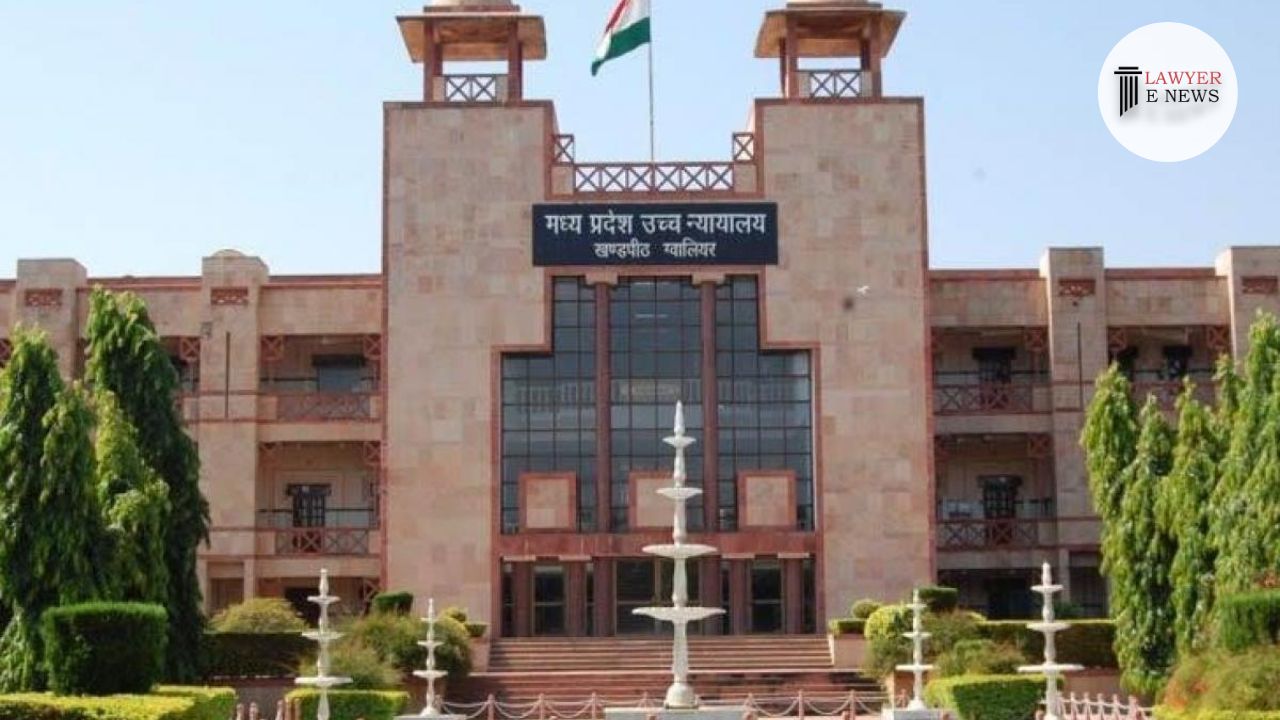
In a significant development, the High Court of Madhya Pradesh at Gwalior has quashed the First Information Report (FIR) registered in a case involving the death of a student during a sports event. The court, in its order passed by Hon’ble Shri Justice Deepak Kumar Agarwal on July 6, 2023, cited the absence of a direct causal link between the alleged negligence of the accused and the unfortunate incident.
The petitioners, Thomas Anam, Devasahayam Nakka, and Suweg Singh, were charged under Section 304-A of the Indian Penal Code (IPC) for allegedly failing to provide proper medical arrangements during the sports event, resulting in the death of the deceased student, Ashutosh. However, the court found that the negligence of the accused was not the direct or proximate cause of the student’s demise.
Justice Agarwal, in his order, emphasized the requirement of a direct causal link to establish guilt under Section 304-A of the IPC. He stated, “Though the petitioners were negligent in not arranging a medical team, it was not the direct or proximate cause of Ashutosh’s death.” The court also relied on several precedents, including Supreme Court decisions, to support its interpretation of the law.
Furthermore, the court referred to the decision in Ambalal D. Bhatta v. The State of Gujarat, where the Supreme Court observed, “The mere fact that an accused contravenes certain rules or regulations does not establish that the death was the result of a rash or negligent act.” This reinforces the court’s stance that the negligence of the accused must be the direct cause of the death to warrant conviction under Section 304-A of the IPC.
The judgment also highlighted the inherent powers of the court under Section 482 of the Criminal Procedure Code (Cr.P.C.) to ensure justice. “Section 482 Cr.P.C. is a guarantee against injustice. The High Court is invested with tremendous powers thereunder to pass any order in the interest of justice,” stated the court.
This decision by the High Court brings clarity to the legal understanding of negligence leading to death under Section 304-A of the IPC. It underscores the importance of establishing a direct causal connection between the alleged negligent act and the resulting fatality. The judgment sets a precedent for similar cases where the absence of a direct or proximate cause may merit the quashing of an FIR.
Date of Decision: 6th July, 2023
THOMAS ANAM vs THE STATE OF MADHYA PRADESH