-
by sayum
21 October 2026 5:27 PM







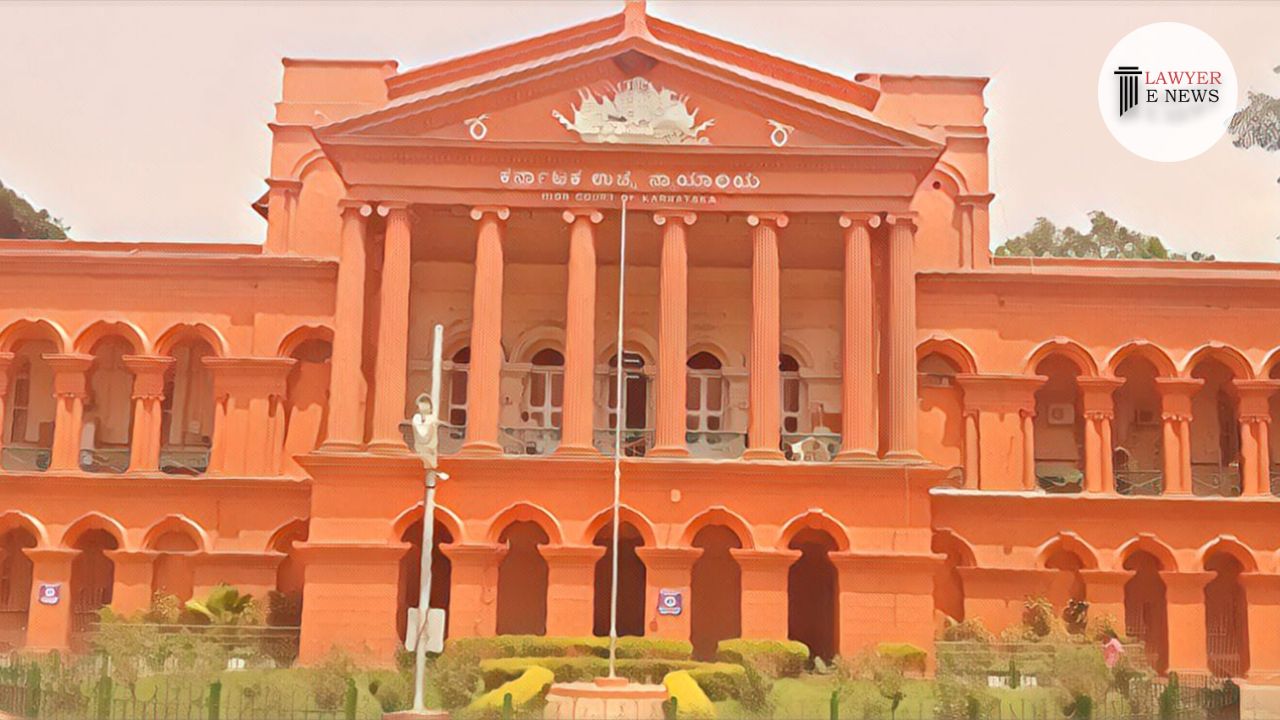
The appeal filed by the appellant, who is a candidate for the positions of Chief Information Commissioner and Information Commissioner in response to the State Government's notification, was being handled by the bench of Justices B. Veerappa and K.S. Hemalekha. The appellant was challenging the Order made by the single Judge dismissing the petition he had filed.
In this case, the appellant is the one who published the notice inviting applications for the position of Chief Information Commissioner and two posts of State Information Commissioners from the qualified individuals in order to fill the open positions at the Karnataka Information Commission.
In the matter of Anjali Bhardwaj and others v. Union of India and others, the appellant claims that respondent No. 1 disregarded the general instructions provided by the Supreme Court and arbitrarily chose the candidates without confirming the validity of their applications.
Whether the appellant has put out a cause to overturn the impugned Order passed by the sole Judge dismissing the writ petition was the question up for discussion before the bench.
The bench noted that the appellant had been dismissed from his position as a judge after being found unable to hold the position. The aforementioned truth is concealed by the appellant and is not included either in the writ petition or writ appeal memoranda. As a result, the appellant did not come to the court in a good faith manner, and the writ petition may be dismissed for concealing of key information.
The High Court ruled that although technical proficiency alone is sufficient for entrance into the profession, members must uphold the profession's honour by acting honourably both within and outside of the courtroom. The carelessness with which some members of the profession do it is undoubtedly not intended to accomplish that goal or raise the status of the profession or the organisation they work for.
The bench ruled that the appellant, who is a working attorney, should be aware of his limitations and that he cannot waste the time of the public in the current intra-court appeal. Due to the appellant's attitude, the entire day was wasted. There is absolutely no material in this instance. According to Section 15(5) of the Right to Information Act of 2005, the Selection Committee chose the respondent Nos. 2 through 4 based on their prominence in public life as well as their depth of knowledge and experience in law, science and technology, social service, management, journalism, mass media, or administration and governance. The appellant cannot claim that the choice of respondent Nos. 2 to 4 is poor since he has any superior qualifications. According to the requirements of the Right to Information Act, 2005, the appellant is unduly harassing the respondents who have been appointed properly.
Given the foregoing, the High Court dismissed the appeal and assessed costs of $5,000,000. (Rupees Five Lakhs only).
Mohan Chandra P. VS The State of Karnataka