-
by sayum
27 July 2026 3:39 PM







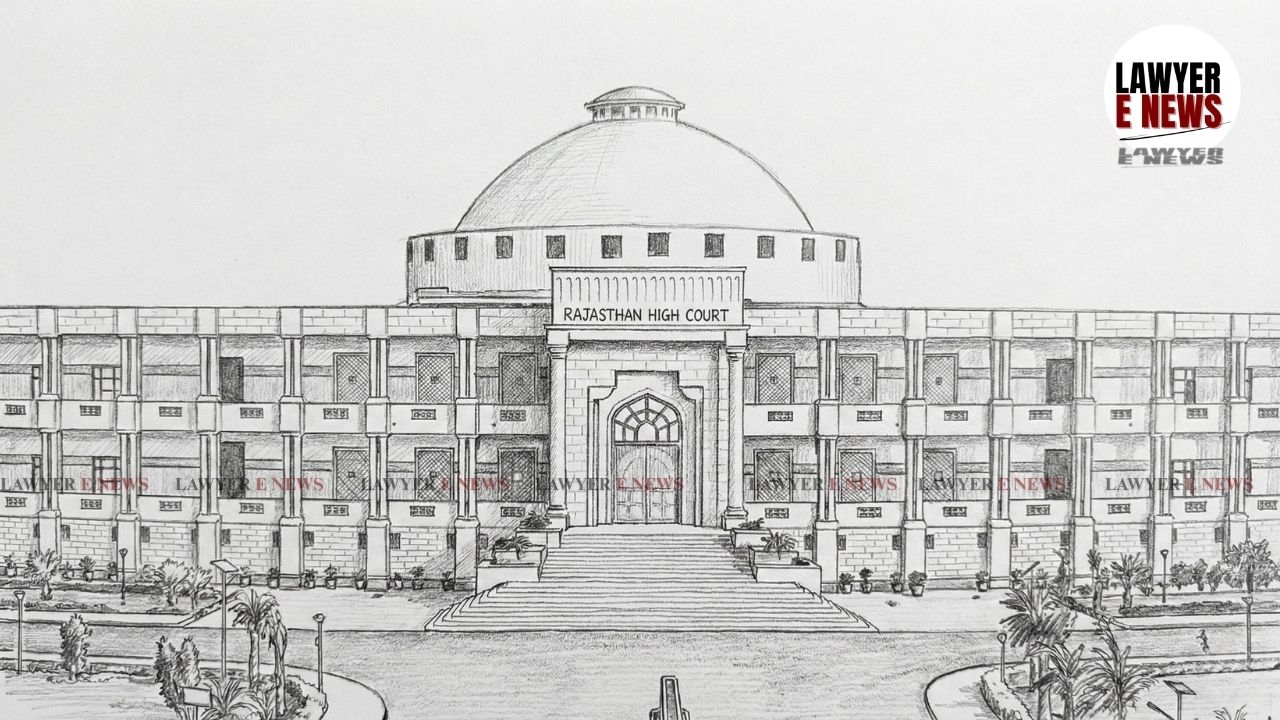
"A common thread running through all the judgments is that a payment made through Form GST DRC-03 during the course of search proceedings cannot, merely by reason of such deposit, be presumed to be voluntary," High Court of Judicature for Rajasthan at Jodhpur, in a significant ruling, held that any tax payment made via Form GST DRC-03 during the course of search and seizure proceedings cannot be presumed to be voluntary in nature.
A Division Bench comprising Justice Arun Monga and Justice Sunil Beniwal observed that the surrounding circumstances, such as the timing of the deposit and the absence of prior ascertainment of liability, are critical factors in determining whether a taxpayer acted out of free will or was subjected to departmental coercion.
The petitioner, M/s. Baba Contractors and Engineers, approached the High Court seeking a refund of Rs. 2,35,23,506/- which was deposited during a search operation conducted by GST intelligence officers on July 11, 2025. While the department contended that the payment was a voluntary self-ascertainment of tax liability under Section 74(5) of the CGST Act, the petitioner alleged that the amount was extracted under threat and coercion during the search. The petitioner further highlighted that the department failed to issue an acknowledgment in Form GST DRC-04 and did not serve any show-cause notice prior to the recovery.
The primary question before the court was whether the payment made through Form GST DRC-03 during search and seizure proceedings could be conclusively treated as a voluntary payment under Section 74(5) of the CGST Act. The court was also called upon to determine whether the failure of the department to adhere to CBIC Instructions and the non-issuance of Form GST DRC-04 rendered the retention of the deposited amount illegal.
Court Examines Statutory Framework For Voluntary Payments Under CGST Act
The court began by analyzing Section 74(5) and Section 74(6) of the CGST Act, which allow a taxable person to discharge liability before the service of a show-cause notice. The bench noted that this mechanism is intended to facilitate early resolution of disputes where a taxpayer voluntarily accepts and discharges liability. However, the court emphasized that such a payment must be based on the taxpayer's "own ascertainment" or the liability as "ascertained by the proper officer."
Mere Filing Of Form GST DRC-03 Does Not Foreclose Plea Of Coercion
The bench observed that the mere act of filing Form GST DRC-03 does not automatically prove that the payment was voluntary. Referring to the Supreme Court’s observations in Radhika Agarwal v. UOI, the court noted that "the mere filing of Form GST DRC-03 does not, by itself, foreclose an assessee from contending that the payment was obtained under coercion." The court held that voluntariness is a question of fact to be determined by the attending circumstances of each case.
"The question as to whether a payment was voluntary or otherwise is essentially a question of fact, which is required to be determined on the basis of the attending circumstances and the material available on record."
Absence Of Prior Ascertainment Weakens Department's Claim Of Voluntariness
The court found that the respondents failed to produce any contemporaneous material to demonstrate that the petitioner had independently evaluated or quantified the alleged wrongful availment of Input Tax Credit (ITC) before the search. The bench remarked that the search proceedings were ongoing, and the petitioner's records were under the control of the authorities, making it "highly improbable" for the petitioner to undertake an independent exercise of self-ascertainment as contemplated under the law.
Non-Issuance Of Form GST DRC-04 Reflects Lack Of Procedural Compliance
A critical factor in the court's reasoning was the admitted non-issuance of Form GST DRC-04 by the tax authorities. Under Rule 142(2) of the CGST Rules, the proper officer is obliged to issue an acknowledgment accepting a voluntary payment. The court held that the failure to issue this form, coupled with the department’s argument that the payment was incomplete due to non-payment of interest, actually weakened the department's claim that a valid self-ascertainment had taken place.
Failure To Adhere To CBIC Instructions And Judicial Guidelines
The bench placed heavy reliance on CBIC Instruction No. 01/2022-23, which was issued following the Gujarat High Court’s directions in Bhumi Associate v. Union of India. These guidelines mandate that taxpayers should not be subjected to recovery during search or investigation and that voluntary payments should ordinarily be made after the search concludes and officers leave the premises. The court noted that these safeguards were ignored in the present case, as the deposit was made while the search was still in progress.
"The failure of the respondents to adhere to the safeguards envisaged in Bhumi Associate, which formed the basis of the CBIC Instruction, constitutes an additional circumstance supporting the petitioner's contention."
Court Orders Refund But Declines Interest Pending Final Adjudication
While the court concluded that the retention of the deposited amount was unsustainable and directed a refund within eight weeks, it declined the petitioner's prayer for interest at this stage. The bench reasoned that since the investigation had not attained finality and the actual tax liability was yet to be adjudicated, it would be premature to grant interest. The court clarified that the respondents are free to proceed with assessment and adjudication in accordance with the law.
The High Court partly allowed the writ petition, directing the respondents to refund the amount of Rs. 2,35,23,506/- to the petitioner. The court reiterated that the power of search and investigation does not include the power of recovery without adjudication, unless the payment is demonstrably voluntary and compliant with statutory safeguards.
Date of Decision: June 22, 2026