-
by sayum
23 August 2026 2:56 PM







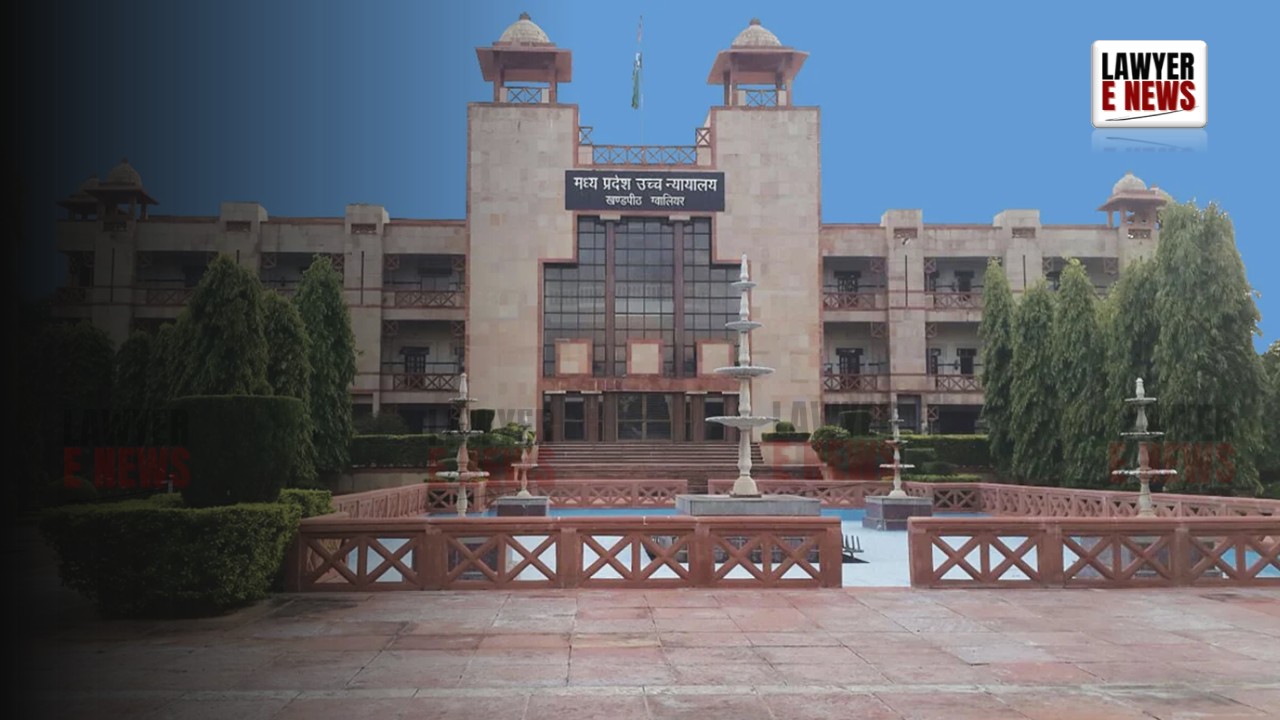
“Camouflaged Contracts Cannot Defeat Statutory Rights of Workers Who Served 20 Years”, In a significant ruling that reinforces the constitutional and statutory protection of gratuity as a vested right, the Madhya Pradesh High Court on 6 January 2026 dismissed a batch of petitions filed by Cement Corporation of India, challenging the award of gratuity and interest to retired contractual workers who had served continuously for over two decades. The Court held that neither delay in filing nor the so-called contract arrangements could override the workers’ entitlement under the Payment of Gratuity Act, 1972.
Justice Vivek Jain, in a detailed and emphatic judgment, declared that “gratuity is not a bounty or charity but a constitutional property right under Article 300A”, and an employer—whether principal or contractor—cannot deny it based on technicalities or contract clauses.
No Time Limit Can Undermine a Statutory Right Under a Welfare Legislation
The common order passed in Misc. Petition Nos. 3996, 3998, 4001, and 4005 of 2025 arose from petitions filed by Cement Corporation of India—a PSU—against different retired employees who had sought gratuity and interest under the Payment of Gratuity Act, 1972.
All the workers had filed their gratuity claims 2–3 years after retirement, which the PSU objected to on the ground of delay and non-impleadment of contractors. Dismissing these contentions, the High Court held:
“The claim of the respondent workmen could not have been defeated on the ground of delay... no jurisdiction has been conferred on the Controlling Authority to adjudicate any dispute of limitation because such provision runs directly in conflict with the substantive provisions of the Act of 1972, which is a social security welfare legislation.”
Workers Served for Over 20 Years Despite Rotating Contractors
The respondents were engaged as security guards at Cement Corporation’s facilities since 1997–1999 and continued to serve till their retirement between 2018–2021. Though the contractors providing manpower changed every year, the same individuals continued working without interruption.
The Controlling and Appellate Authorities under the Payment of Gratuity Act, 1972 found the “contract system a camouflage”, and ordered the PSU to pay gratuity and statutory interest. The PSU then approached the High Court.
“No Limitation Under Gratuity Act – Rules Cannot Defeat Substantive Rights”
The principal argument of the PSU was that claims were barred by Rule 7 of the Central Rules, which requires filing within 30 days. The Court categorically rejected this, citing consistent judicial interpretation, including a Division Bench decision in W.A. No. 563/2023, holding:
“No claim for gratuity under this Act shall be invalid merely because the claimant failed to present his application within the specified period… The Act does not contemplate defeating such claim by any law of limitation.”
Quoting further: “It is trite in law that limitation does not curtail substantive right but curtails a remedy to claim substantive right.”
The Court clarified that gratuity becomes payable the day employment ends, not on the date of application, and that interest accrues from the same day, as per Section 7(3A) of the Act.
“Contractors Were Only a Smokescreen – Liability Falls on Principal Employer”
Cement Corporation had argued that gratuity was the contractor's liability, referring to Clause 21 of its agreement. The Court rejected this submission, observing: “Contractors kept on changing every year or after every couple of years and the respondents continued in employment for more than 20 years… the contract was only a camouflage.”
Invoking Section 21(4) of the Contract Labour (Regulation and Abolition) Act, 1970, the Court reiterated that principal employers are statutorily bound to pay wages, including gratuity, when the contractor fails, and may recover the amount from contractors later.
“The respondents were in fact working with the petitioner, and the contract was only a camouflage.”
Gratuity Forms Part of “Wages” Under Labour Law – Wide Definition Applies
The Court also relied on Section 2(vi)(d) of the Payment of Wages Act, 1936, read with Section 2(h) of the Contract Labour Act, to hold that gratuity is part of wages, which a principal employer is bound to pay.
Quoting the Madras High Court’s judgment in Superintending Engineer v. Appellate Authority, the Court held: “Gratuity which is payable under the Payment of Gratuity Act is well covered under Clause (d)... and, therefore, it amounts to wages.”
Thus, the PSU’s liability was both statutory and inevitable.
“Gratuity Is Property Under Article 300A – Cannot Be Denied Except by Law”
Reinforcing the constitutional angle, the Court observed:
“Gratuity or retiral dues can be withheld or reduced only as per provisions of law. In the present case, there is no enabling provision which permits the employer to deprive the employee from the right of gratuity, only on the ground of delay.”
The judgment cited the Supreme Court's ruling in State of Jharkhand v. Jitendra Kumar Shrivastava (AIR 2013 SCW 4749), which held:
“A person cannot be deprived of his pension or gratuity without the authority of law… administrative instructions cannot override this.”
Interest on Delayed Gratuity Payable From Retirement Date, Not Application Date
On the question of interest, the Court held: “The Controlling Authority has not erred in awarding interest from the date of exit from employment till actual date of payment/deposit of gratuity.”
This was in line with Section 7(3A) of the Act, which provides for simple interest on delayed gratuity from the date it becomes payable, not from the date of claim.
Contractual Arrangement Cannot Defeat Fundamental Entitlement
Dismissing all the petitions filed by Cement Corporation of India, the Madhya Pradesh High Court reiterated that welfare legislations like the Payment of Gratuity Act must be interpreted liberally in favour of workers. The statutory right to gratuity cannot be subverted by employer-contractor arrangements, nor defeated by technical pleas of delay.
The respondents were permitted to withdraw deposited gratuity amounts and recover any outstanding balance, while Cement Corporation was left to pursue recovery against the contractors, if applicable.
Date of Decision: 06.01.2026