-
by sayum
26 August 2026 8:37 AM







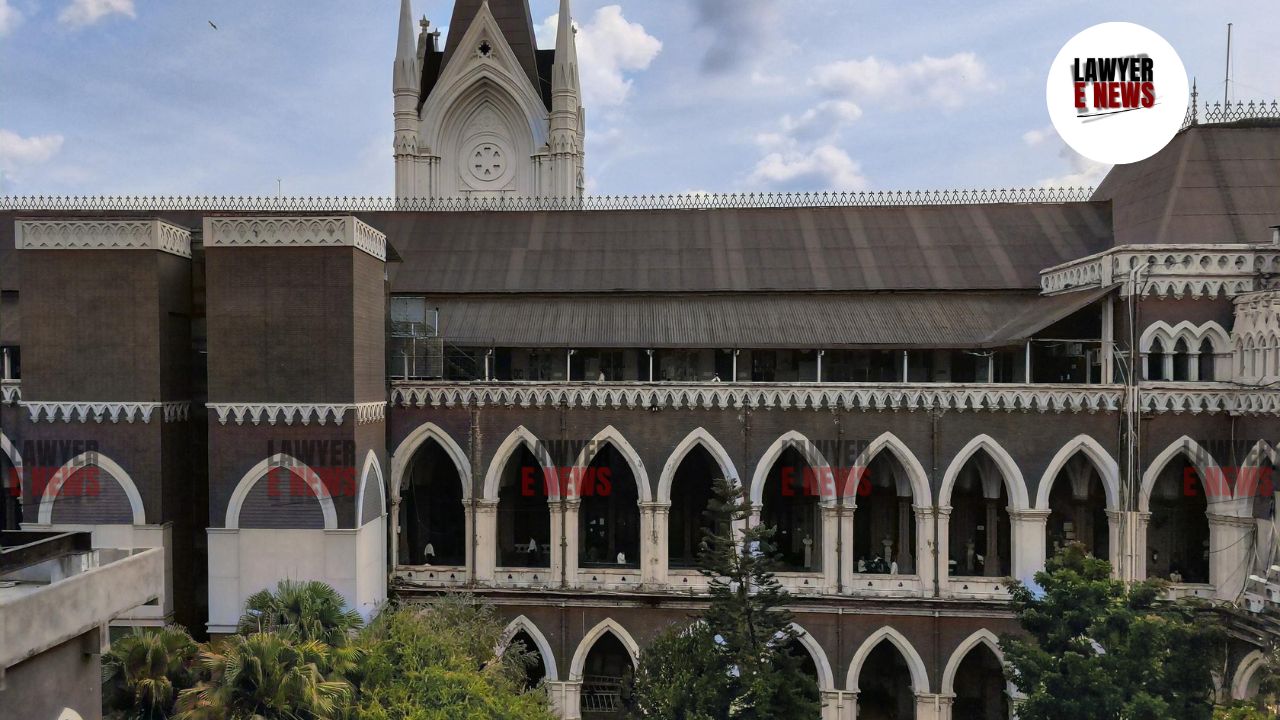
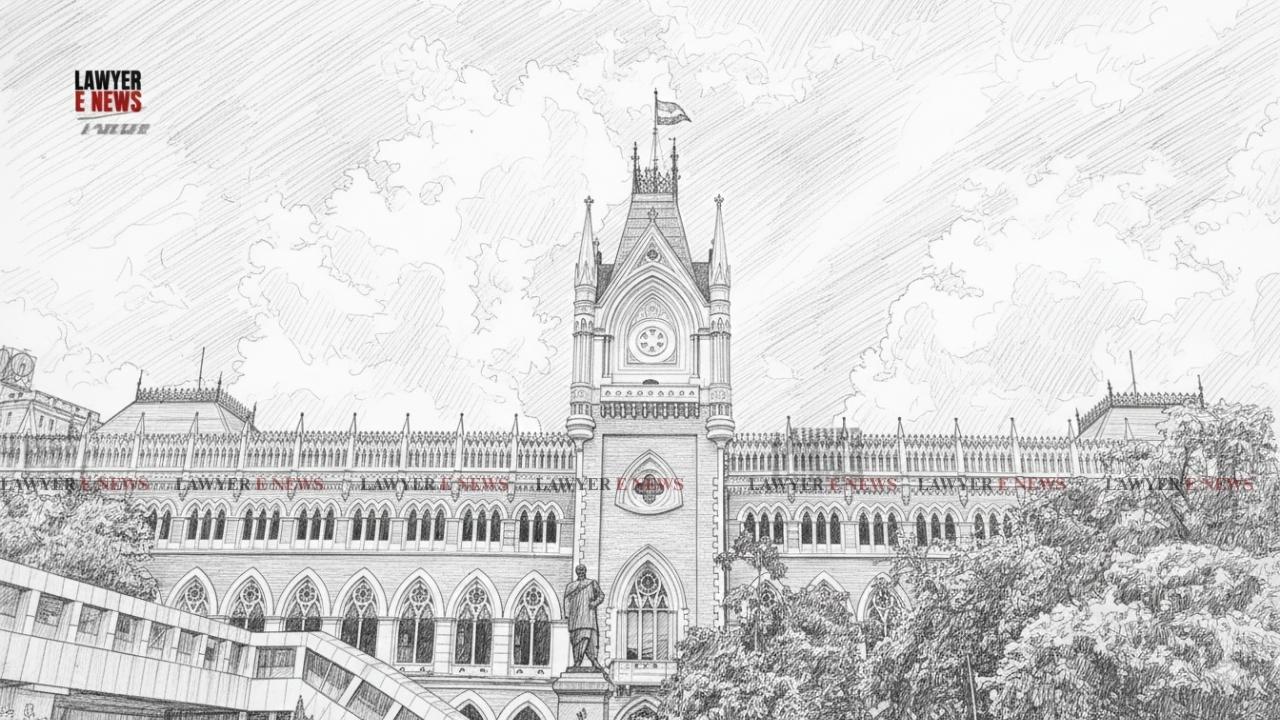
Employer Cannot Impose Resignation as a Condition for Deputation—Service Continuity Must Be Maintained - Calcutta High Court quashed the decision of the Howrah Municipal Corporation (HMC), which had treated Nalinaksha Chatterjee’s absence from January 28, 1999, to November 18, 1999, as a break in service. The Court ruled that when an employer forces an employee to resign as a condition for deputation, such resignation cannot be considered voluntary or unconditional, and service continuity must be maintained.
Setting aside the Corporation’s order, the Court held, "No public authority can arbitrarily insist on resignation as a precondition for deputation. Such coercion is unlawful, and any loss suffered by the employee due to such an act must be remedied by restoring full service benefits."
The Court directed Howrah Municipal Corporation to recognize Chatterjee’s continuous service from his original date of appointment and grant him all consequential financial and retirement benefits within six weeks.
"Municipal Engineer Compelled to Resign, Loses Service Benefits—Court Intervenes"
Nalinaksha Chatterjee, an Assistant Engineer in Howrah Municipal Corporation since 1987, applied for the post of Executive Engineer (Roads and Bridges) under the Ministry of Surface Transport (MoST), Government of India, through transfer on deputation. The Corporation, initially raising no objections, issued a No Objection Certificate (NOC) confirming that no vigilance case was pending against him.
However, when Chatterjee was selected, the Corporation insisted that he submit his resignation before being relieved for deputation. Left with no option, he resigned and joined the MoST as Executive Engineer on deputation on October 28, 1998.
On January 27, 1999, the Ministry of Surface Transport terminated his deputation, stating that since he had resigned from Howrah Municipal Corporation, his deputation automatically ceased. This left Chatterjee without employment from January 28, 1999, to November 18, 1999.
When he returned to the Corporation, he was reappointed as an Assistant Engineer on November 18, 1999, but the authorities treated the gap as a break in service, leading to denial of continuity and financial benefits.
The Court, rejecting the Corporation’s stance, ruled, "When an employer imposes a resignation condition that results in wrongful termination of deputation, the burden of such a break in service must fall on the employer, not the employee."
"Resignation Under Coercion Has No Legal Sanctity—Service Continuity Must Be Recognized"
Chatterjee argued that he never intended to resign permanently but was forced to do so because the Corporation insisted on it. His counsel, citing Supreme Court rulings in Dr. Prabha Atri v. State of U.P. (2003) 1 SCC 701 and Moti Ram v. Param Dev (1993) 2 SCC 725, submitted, "A resignation must be voluntary and unconditional to be legally binding. If an employee is coerced into resigning as a mere formality to secure deputation, it does not constitute a valid resignation."
Rejecting the Corporation’s claim that Chatterjee resigned voluntarily and was later reappointed, the High Court observed, "The resignation was a forced act, extracted under duress. An employee cannot be made to suffer consequences for an action that was not of his own free will."
"Employer’s Arbitrary Actions Cannot Deprive an Employee of Their Lawful Benefits"
Analyzing the facts, the Court ruled that: "The Corporation was fully aware of the petitioner’s deputation request and initially supported it. However, at the time of releasing him, it wrongfully imposed a resignation condition, knowing that it would have severe consequences for his employment status."
"The loss of service continuity was a direct result of the Corporation’s coercive tactics. It defies logic that an employee selected for deputation would voluntarily resign from his parent department, knowing that it would jeopardize his future service."
Applying the Supreme Court’s ruling in Sushil Kumar Yadunath Jha v. Union of India (1986) 3 SCC 325, the High Court held that when an employee is left with no choice but to accept unfair conditions, courts must intervene to prevent unjust consequences.
"An employee compelled to resign should not suffer the burden of a break in service. The petitioner must be treated as continuously in service, and all consequential benefits must follow."
"Break in Service Declared Invalid—All Benefits to Be Restored"
Setting aside the Corporation’s decision, the High Court ordered: "The period from January 28, 1999, to November 18, 1999, cannot be treated as a break in service. The petitioner shall be considered in continuous service from his original date of appointment, with full financial and retirement benefits."
Directing the Corporation to compensate Chatterjee within six weeks, the Court stated: "The authorities of Howrah Municipal Corporation are directed to release all arrears of financial and retirement benefits, adjusting amounts already paid, within six weeks of receiving this order."
"A Landmark Ruling Against Forced Resignation and Administrative Coercion"
This judgment serves as a strong precedent against forced resignation tactics used by employers, ensuring that:
An employee cannot be compelled to resign as a condition for deputation.
If resignation is forced, service continuity must be preserved.
Financial and retirement benefits cannot be denied due to an employer’s wrongful actions.
The Calcutta High Court has sent a powerful message that no authority can impose arbitrary conditions that disrupt an employee’s service continuity and financial security.
Date of decision: 17/03/2025