
-
by sayum
27 July 2026 3:39 PM







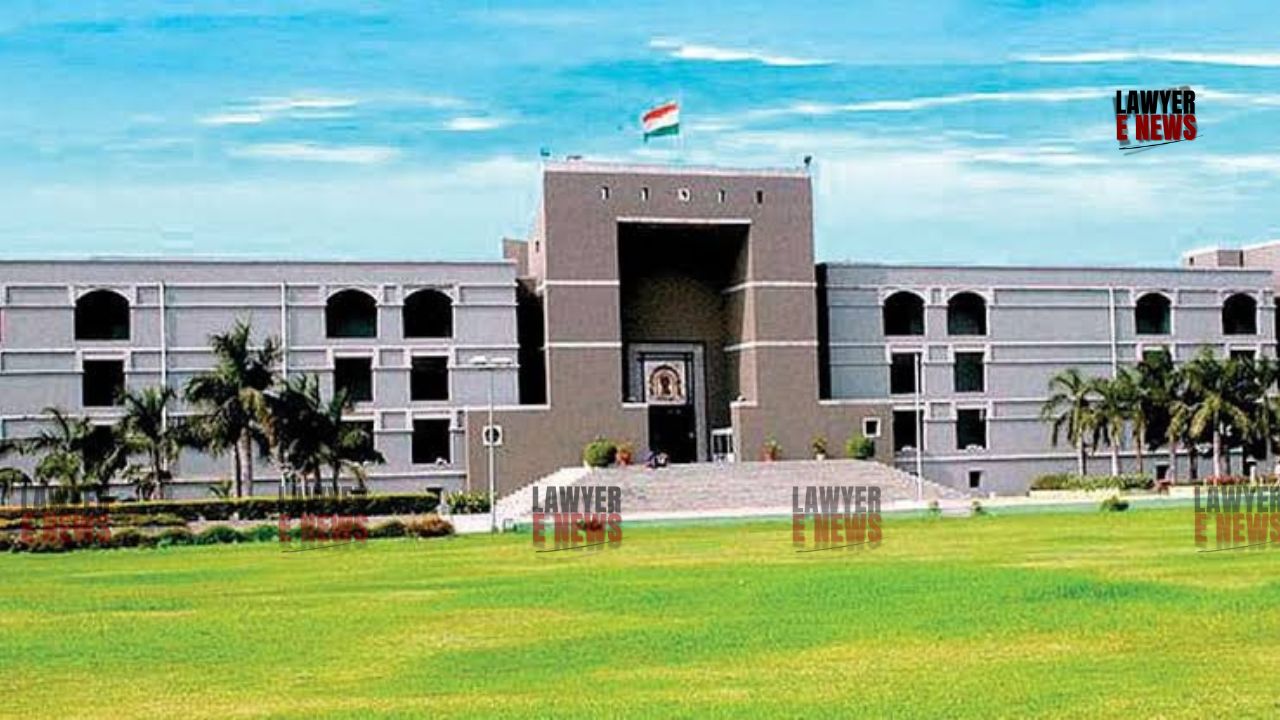
"Requirement of denial of the opposite party as a condition precedent for cause of action under Section 34 of The Specific Relief Act, does not apply to matrimonial declaration sought under the special jurisdiction conferred under The Family Courts Act," Gujarat High Court, in a significant judgment, has ruled that Family Courts cannot reject a suit for declaration of marital status merely because the defendant has admitted to the divorce.
A Division Bench comprising Justice Ilesh J. Vora and Justice R. T. Vachhani observed that when a marriage is dissolved through extrajudicial modes like 'Mubara’at' (mutual consent) under Muslim Personal Law, the parties are entitled to a judicial declaration to update official records, regardless of whether there is an active dispute between them.
The appellant (husband) and respondent (wife), both belonging to the Muslim community, were married in 2015. Due to irreconcilable differences, they executed a notarized divorce deed and a 'deed of understanding' in July 2024, settling alimony and custody issues. Seeking a formal judicial recognition of their changed status, the husband filed a suit under Section 7 of the Family Courts Act, 1984. However, the Family Court at Ahmedabad rejected the suit under Order 7 Rule 11 of the CPC, holding that since the wife admitted the divorce, there was no "cause of action" or "denial of status" to warrant a declaratory decree.
The primary question before the High Court was whether the Family Court was right in rejecting the plaint on the ground that it lacked a cause of action due to the absence of a dispute. The court also examined whether the requirement of "denial of right" under Section 34 of the Specific Relief Act is a condition precedent for seeking a declaration of matrimonial status under the special jurisdiction of the Family Courts Act.
Family Court Misdirected Itself On Cause Of Action
The High Court noted that the Family Court had misdirected itself by holding that the plaint disclosed no cause of action. The Bench clarified that the cause of action in such cases arises from the legal right of a party to obtain a formal declaration of their matrimonial status for purposes such as government records, future marriage, passport, or visa applications.
The Court emphasized that the legislative intent behind Explanation (b) to Section 7 of the Family Courts Act was to provide a judicial mechanism for declarations regarding the validity of a marriage or the matrimonial status of any person. This mechanism is distinct from the general law of declarations.
"The need for judicial certification itself gives rise to cause of action, even without any dispute between the parties for filing the suit."
Section 34 Specific Relief Act Not Applicable To Matrimonial Declarations
The Bench found that the Family Court committed a legal error by importing the requirements of Section 34 of the Specific Relief Act into the Family Courts Act. Under the Specific Relief Act, a declaration is usually sought when a right is denied. However, the High Court held that the special jurisdiction under Section 7 of the Family Courts Act is broader and does not require a prior "denial" by the opposite party.
The Court observed that it was a misconception to think that parties cannot approach the Family Court just to get affirmation of a 'Talaaq' or 'Mubara’at' executed under Islamic Law. The Bench held that the Family Court is empowered to pass such decrees even if the foundational facts are admitted.
"The explanation (b) of Section 7(1) of the Family Courts Act authorize the Family Court to pass any decree for a declaration as to the validity of the marriage or as to the matrimonial status of any person."
Duty To Recognize Extrajudicial Dissolution By Mubara’at
The High Court highlighted that under Muslim Personal Law, 'Mubara’at' is a valid form of extrajudicial divorce based on mutual consent. It noted that since this form of dissolution is recognized and protected under the Shariat Act, Family Courts are duty-bound to accept such agreements and declare the dissolution of the marriage as agreed between the parties.
Citing precedents from the Karnataka and Madras High Courts, the Bench reiterated that once a 'pursis' (written statement) is filed by the respondent wife admitting the execution of the divorce deed, nothing remains for adjudication except passing the decree on admission under Order 12 Rule 6 CPC.
"When the marriage between two persons, who are governed by the Shariat Law, is dissolved by Mubara’at Agreement, the Family Courts are duty bound to accept the agreement of the parties and to declare the dissolution of the marriage."
The High Court concluded that the rejection of the plaint had resulted in a denial of a statutory remedy, causing hardship to both parties. Consequently, the High Court set aside the Family Court’s order dated December 21, 2024. Instead of remanding the matter, the Division Bench allowed the appeal and formally declared the marriage between the parties dissolved from the date of their mutual agreement.
Date of Decision: 16 June 2026