-
by sayum
04 August 2026 1:39 PM







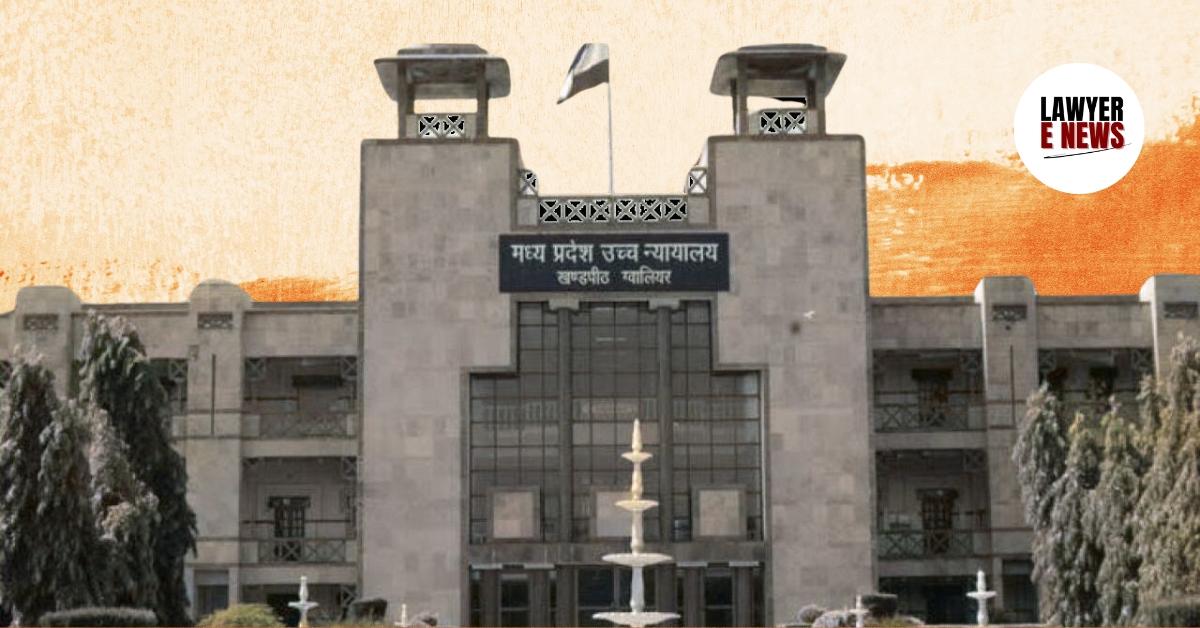
“When misconduct is established but punishment shocks the conscience of the Court, it is open for judicial review to ensure proportionality of penalty” — In a judgment Madhya Pradesh High Court at Jabalpur intervened to modify the punishment imposed on a Class IV government employee, holding that removal from service for delay and alleged drunkenness, without medical corroboration, was shockingly disproportionate. Division Bench comprising Justices Sanjeev Sachdeva and Vinay Saraf upheld the findings of misconduct but quashed the penalty of removal, remitting the matter to the disciplinary authority for imposition of a lesser, proportionate punishment.
“Proof of Delay Is Not Proof of Intoxication”: Court Questions Lack of Medical Evidence
The petitioner, a peon-cum-driver, was assigned VIP duty to transport a sitting judge of the Allahabad High Court from a Bhopal guest house to the railway station at 1:30 AM. He reached late by 45 minutes, causing the judge to miss his train. The disciplinary authority removed the petitioner from service, relying primarily on a written complaint by the judge, which alleged that the petitioner appeared to be drunk.
The petitioner challenged the punishment, arguing that no medical examination was conducted and that no independent witness had proved the allegation of intoxication. He explained his late arrival by stating that his bicycle had a punctured tyre, which delayed him in reaching the vehicle parked at Shyamla Hills.
The High Court observed: “Only on the basis of written complaint of the High Court Judge of Allahabad, this allegation cannot be accepted… the petitioner was not sent for medical examination and no witness was examined to prove he was in a drunken state.”
“Judicial Review Cannot Re-Appreciate Facts but Can Examine Proportionality”: High Court’s Reasoning
The Court made it clear that the findings of the disciplinary authority were not perverse. The charge of late arrival was proved through inquiry, including testimony of the Railway Magistrate and the Assistant Protocol Officer, who stated that the petitioner did not appear to be in a normal condition and confirmed the delay.
Yet, the Court found that the punishment of removal from service was outrageously harsh. It ruled: “The punishment of dismissal appears to be disproportionate… the allegation is not sufficient for dismissal of the delinquent from the service.”
Citing principles of judicial conscience and fairness, the Court invoked the test of “shocking the conscience”: “The punishment imposed by the Disciplinary Authority shocks the conscience of the Court… it would be appropriate to direct reconsideration of the penalty.”
“Reinstatement Ordered, But Without Back Wages”: Relief Granted with Conditions
While refraining from reinstating full service benefits, the Court ruled that: “Petitioner will be reinstated with immediate effect, however, he will not be entitled for back wages applying the principle of ‘no work no pay’.”
It further directed the disciplinary authority to reconsider the quantum of punishment in light of the misconduct proved, stating: “The matter is remitted to the Disciplinary Authority to reconsider the penalty… the said exercise be completed within three months from the date of receipt of this order.”
This ruling reaffirms that disciplinary penalties must bear a rational relationship to the gravity of the misconduct proved. A minor dereliction of duty, even when admitted or proven, does not automatically justify the harshest punishment available under service rules. The Court’s conscience serves as the final check when punishment descends into arbitrariness.
“Judicial review under Article 226 is limited, but where the punishment imposed outrages judicial conscience, interference becomes a constitutional necessity.”
Date of Decision: 06 May 2025