-
by sayum
27 July 2026 3:39 PM







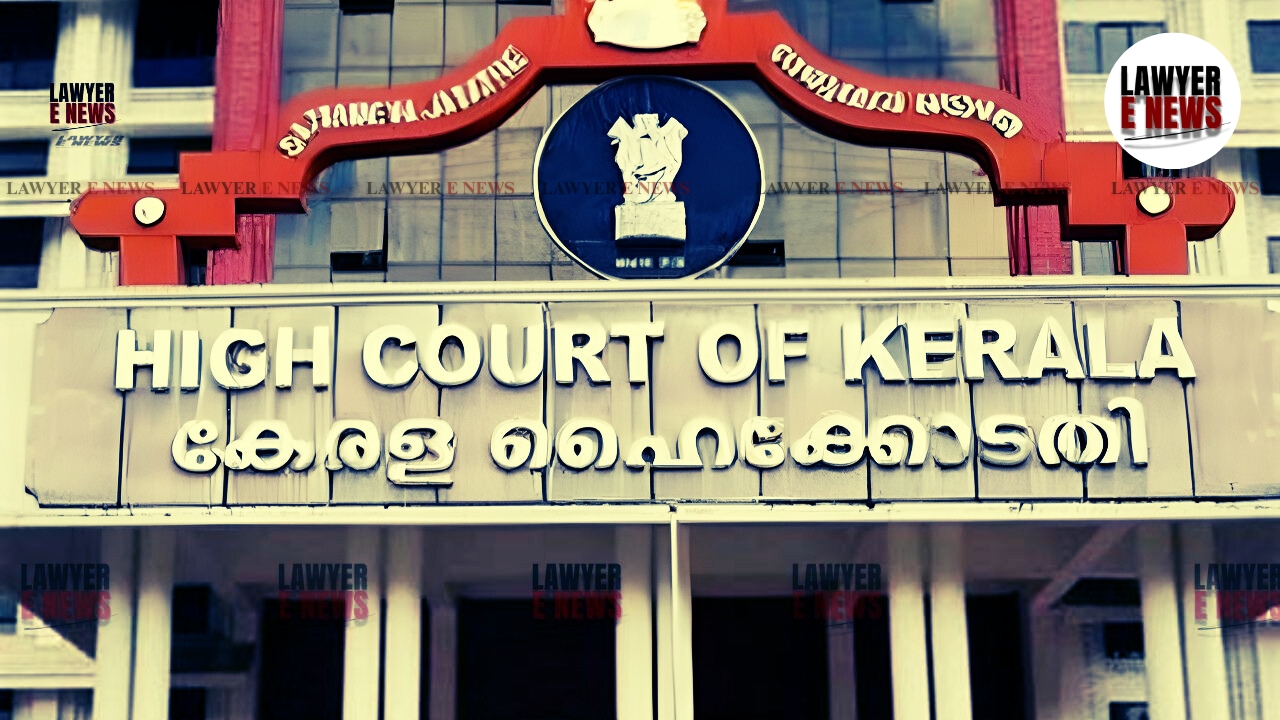
"If the 3rd respondent passes any order against the appellant, he can file an appeal to an immediate superior authority, which is the Board. Therefore, the contention that since the 3rd respondent acted as the appellate Authority, he has lost the right of appeal, is devoid of merits," Kerala High Court, in a significant ruling, held that an employee is not unjustly deprived of their right to an administrative appeal merely because a higher authority initiated disciplinary proceedings, provided that a further appeal lies to a superior body.
A Division Bench of Justice Devan Ramachandran and Justice Basant Balaji observed that the right to appeal is preserved if the immediate superior to the acting authority is available as a forum for redressal.
The appellant, an Assistant Engineer with the Kerala State Electricity Board (KSEB), filed a writ appeal challenging a Single Judge's dismissal of his petition against a memo of charges (Ext.P3). The disciplinary action was initiated by the Chief Engineer (HRM) for alleged financial losses caused to the Board and collusion with a contractor. The appellant contended that since the Chief Engineer is usually the appellate authority for his appointing authority, the direct involvement of the Chief Engineer stripped him of his right to a meaningful appeal.
The primary question before the court was whether the issuance of a charge memo by a higher authority, who normally functions as an appellate body, vitiates the disciplinary proceedings by depriving the employee of an appeal right. The court also examined whether it could interfere with a memo of charges involving disputed questions of fact under Article 226 of the Constitution of India.
Scope Of Kerala State Electricity Board Regulations, 1969
The Court examined the Kerala State Electricity Board Regulations, 1969, specifically Regulation 2(a), 2(b), and Regulation 9, which define the Appointing and Disciplinary Authorities. The bench noted that Regulation 23 of Part VI deals specifically with the hierarchy of appeals against administrative orders.
The Court observed that under the statutory framework, an employee has the right to appeal against an order to the authority to which the authority that made the order is immediately subordinate. This ensures that the ladder of remedy remains intact regardless of which level of authority initiates the action.
"If the 3rd respondent passes any order against the appellant, he can file an appeal to an immediate superior authority, which is the Board."
Preservation Of Right To Appeal Under Higher Authorities
Addressing the appellant's reliance on the Supreme Court precedent in Surjit Ghosh v. Chairman and Managing Director, United Commercial Bank [(1995) 2 SCC 474], the Court clarified the distinction in the present case. In Surjit Ghosh, the employee was stripped of an appeal because the highest authority acted as the disciplinary power, leaving no further room for review.
However, the Bench noted that in the KSEB hierarchy, the Chief Engineer (3rd Respondent) is subordinate to the Board. Therefore, if the Chief Engineer passes a final order, the appellant still retains a statutory right to appeal to the Board itself. The Court held that the right to appeal is not lost; it is merely shifted to a higher tier within the organization.
"The contention that since the 3rd respondent acted as the appellate Authority, he has lost the right of appeal, is devoid of merits."
Limited Interference Under Article 226 In Disciplinary Memos
The Court further addressed the challenge against the memo of charges involving allegations that the appellant assisted contractors in unauthorizedly removing KSEB materials. The Bench emphasized that a memo of charges is a preliminary step and does not constitute a final determination of guilt.
The Court held that since the allegations involve disputed questions of fact regarding financial loss and collusion, it cannot delve into such matters under its writ jurisdiction. The appellant, the Court noted, retains "ample opportunity to controvert these claims" by participating in the inquiry and providing documentary or oral evidence.
"Because this issue involves disputed questions of fact, this Court cannot delve into such factual matters under Article 226 of the Constitution of India."
The Division Bench concluded that the Single Judge was perfectly justified in dismissing the writ petition as there was no illegality in the issuance of the charge memo. The Court affirmed that as long as a superior forum remains available for appeal, the initiation of proceedings by a higher authority does not violate the principles of natural justice or administrative law.
Accordingly, the Writ Appeal was dismissed.
Date of Decision: 24 June 2026