
-
by sayum
27 July 2026 3:39 PM







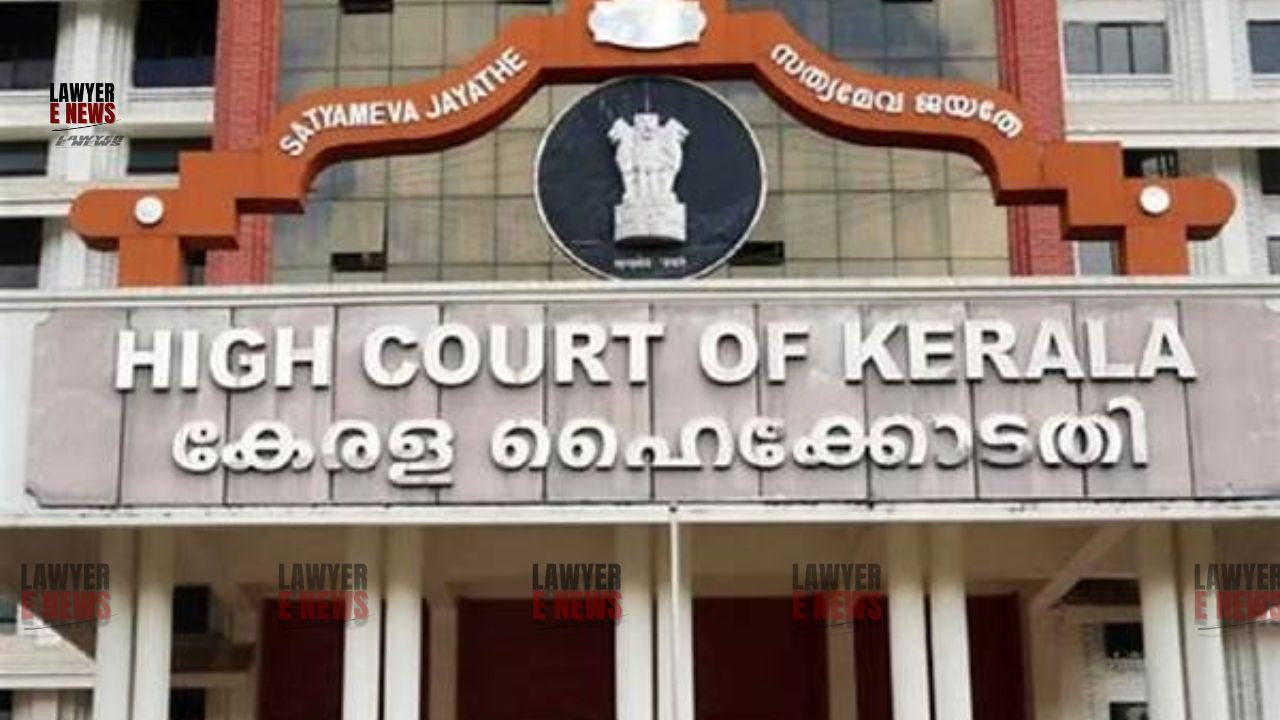
"Mere absence of documentary evidence does not conclusively prove that the workman is not an employee. A trial before the Commissioner being summary in nature, with respect to a finding of employer-employee relationship, preponderance of probabilities is sufficient rather than proof beyond doubt," Kerala High Court, in a significant ruling, held that the absence of formal documentary evidence does not preclude a finding of an employer-employee relationship for the purpose of granting compensation.
A single-judge bench of Justice T.R. Ravi observed that in summary proceedings before the Employees' Compensation Commissioner, the standard of proof required is the preponderance of probabilities rather than proof beyond reasonable doubt.
Court Rejects Argument That Illegal Activity Bars Compensation
The case arose from an appeal filed by employers challenging an order of the Employees' Compensation Commissioner, Kollam. The legal representatives of a deceased worker, Murugan, sought compensation after he died in a drowning accident while engaged in river sand mining. The appellants argued that Murugan was not an employee but was instead involved in the theft of river sand, asserting that his death did not occur in the course of employment.
The deceased, Murugan, was allegedly employed by the appellants for sand mining and died during the act. The appellants contended that they were granite crusher owners, not sand dealers, and that the boat involved was stolen. After an initial award was set aside and remanded by the High Court for fresh consideration of the employment relationship, the Commissioner again found in favor of the claimants, leading to the present appeal.
The primary question before the court was whether a valid employer-employee relationship existed between the deceased and the appellants in the absence of documentary proof. The court was also called upon to determine if the allegedly illegal nature of the work—unauthorized sand mining—negated the status of the deceased as a 'workman' under the Act.
Absence Of Documents Not Fatal To Employment Claim
The court noted that the appellants' primary defense rested on the lack of formal records and the allegation that the mining activity was illegal under the Kerala Protection of River Banks and Regulation of Removal of Sand Act, 2001. However, the bench emphasized that the Employees' Compensation Act is social security legislation intended to protect workers.
Court Explains Standard Of Proof In Summary Proceedings
Justice T.R. Ravi relied on the precedent set in Gangan v. Christin Raj T.L. & Anr. [2013 (2) KHC 574], observing that the mere lack of paperwork does not automatically disprove employment. The court noted that in many informal sectors, particularly manual labor, written contracts or muster rolls are rarely maintained, and requiring them would defeat the purpose of the Act.
"Mere absence of documentary evidence does not conclusively prove that the workman is not an employee."
Preponderance Of Probabilities Is The Governing Standard
Citing the Supreme Court's decision in Ravi Madhavan v. Shekharapanicker [2003 (2) KLT SN 38], the Court reiterated that proceedings before the Commissioner are summary. Therefore, the court does not look for "proof beyond reasonable doubt" as required in criminal trials, but rather looks at which party's version is more likely to be true based on the available evidence.
Oral Testimony Of Co-Workers Carries Significant Weight
The bench highlighted that the claimants produced witnesses (AW2 and AW4) who claimed to be co-workers of the deceased. These witnesses testified that they were working under the appellants at the time of the accident. The Court observed that the oral testimony of these co-workers remained largely unchallenged during cross-examination, providing a strong basis for the Commissioner’s finding.
"The Commissioner relying on the evidence of AW2 and AW4, found that their evidence remained unchallenged, and that there is sufficient proof of employer-employee relationship."
Liability Of Legal Heirs And Ownership Of Assets
The appellants, as legal heirs of the original opposite party, argued they had not succeeded to any assets and thus could not be held liable. The Court, however, found no reason to interfere with the Commissioner's decision to implead them and maintain their liability. The bench also noted that the appellants failed to examine the alleged owner of the boat to prove their claim that the vessel was stolen.
Final Orders And Dismissal Of Appeal
Finding that the deceased squarely fell within the definition of 'workman' under Section 2(1)(n) of the Employees' Compensation Act, the Court refused to dislodge the "well-considered order" of the Commissioner. The bench concluded that no sufficient grounds were made out to warrant interference with the award granted to the deceased's family.
The High Court dismissed the appeal, affirming that once an employment relationship is established through the preponderance of probabilities, the employer cannot escape liability by citing the lack of documents or the unauthorized nature of the work. The ruling reinforces the protective umbrella of the Employees' Compensation Act for workers in informal and high-risk sectors.
Date of Decision: 29 June 2026