-
by Admin
15 December 2025 12:32 AM







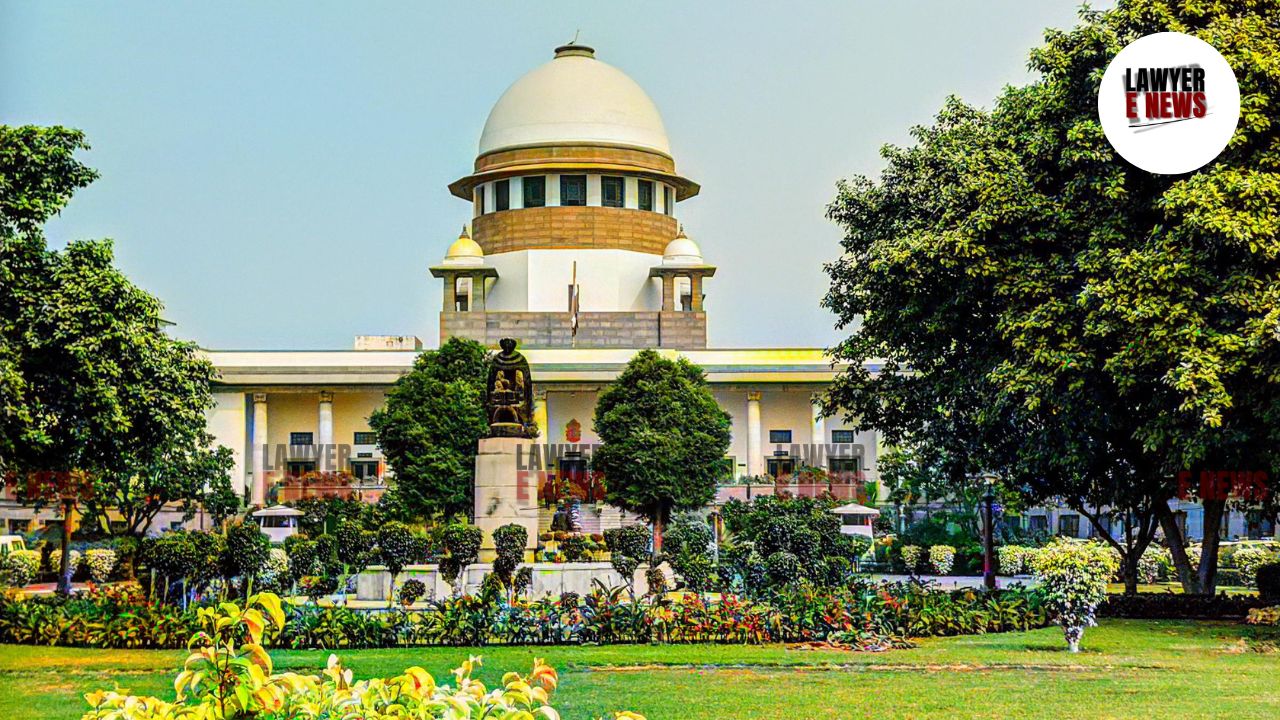
“The appellant, being well aware of the stay order… in gross violation of the same, proceeded to alienate the original allotted apartment…”, - Supreme Court of India, through a bench comprising Justice Vikram Nath and Justice Prasanna B. Varale, delivered a scathing rebuke to Macrotech Developers Ltd. (formerly Jawala Real Estate Pvt. Ltd.) for defying a judicial order and adopting delaying tactics in a consumer flat allotment case. The Court held the builder accountable not only for procedural improprieties and non-disclosure but also for wilfully violating a stay order of the National Consumer Disputes Redressal Commission (NCDRC). In a landmark decision, the Court imposed a financial liability of ₹1.4 crore on the developer, securing the rights of the flat purchaser.
Developer Violated Court Stay, Then Played the Victim
The controversy arose from a 2012 allotment of a three-bedroom apartment in Mumbai’s Lodha Allura project, for which the buyer, Haresh, had paid a substantial advance of ₹92.5 lakh. However, instead of honouring the agreement, the developer cancelled the allotment citing non-execution of the registered sale agreement, without disclosing that it had not provided the necessary documentation for registration. When the buyer approached the NCDRC, a stay was granted on alienation of the flat.
Yet, in stark defiance of that stay, the builder sold the same flat to a third party. The Supreme Court unequivocally condemned this act, stating: “The appellant, being well aware of the stay order dated 19.11.2013… in gross violation of the same, proceeded to alienate the original allotted apartment in favour of some third party.”
Repeated Non-Compliance and Withholding of Information
The Court pulled up the developer for continued delays and failure to disclose key details, even after repeated directions from the Court. Noting the evasiveness, the bench remarked: “Even after the orders passed by this Court, the appellant has not come forward with the specific carpet area of the original allotted apartment and the alternate offered apartment…”
Despite the Supreme Court's 2018 interim solution allowing the builder to allot a substitute flat (Flat No. 6503), the builder withheld essential information such as carpet area, NOCs, and building permissions, thereby stalling resolution for over seven years.
Bringing finality to a prolonged legal battle and to “do complete justice,” the Supreme Court directed that Haresh shall acquire Flat No. 6503 upon payment of ₹1,40,71,000. This amount included property taxes, maintenance charges, and a one-time composite settlement of ₹1 crore against all interest and further claims of the developer. The Court clearly declared: “The payment of above amount is being provided in lieu of clearance of all the outstanding dues… the same shall be treated to be full and final settlement.”
The Court mandated the execution of the sale deed within two months of payment and permitted Haresh to carry out structural work and interior modifications—earlier restricted by the Court's 2018 order.
In a strongly worded verdict, the Supreme Court underscored that no developer can seek equitable relief after violating court orders and acting in bad faith. The Court affirmed the primacy of consumer protection in real estate dealings and laid down that procedural fairness cannot be bypassed by dominant players in the market.
“Once the violation of the interim order is clearly established, the developer cannot be allowed to raise equitable pleas in its favour.”
Date of Decision: May 13, 2025