-
by sayum
04 August 2026 1:39 PM







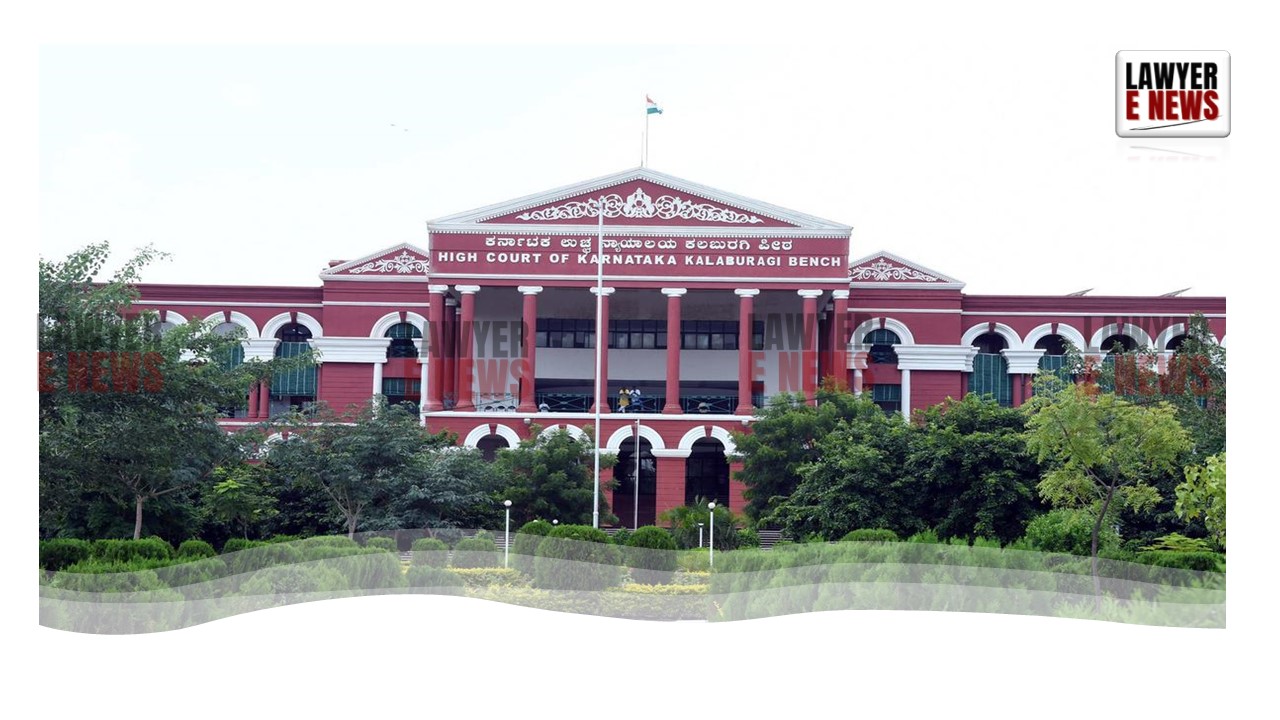
“Failure to consider the detenu’s representation independently of the Advisory Board’s opinion and not apprising him of his right to represent to the Central Government violates Article 22(5) and renders the preventive detention order unsustainable,” held the Karnataka High Court, in Vijay Kumar G. v. Commissioner of Police, Bengaluru and Others, while allowing a habeas corpus writ petition and quashing the preventive detention of one Praveen Kumar V. under the Prevention of Illicit Traffic in Narcotic Drugs and Psychotropic Substances Act, 1988 (PIT NDPS Act).
A Division Bench comprising Justice K.S. Mudagal and Justice Venkatesh Naik T delivered a reasoned judgment setting aside the detention and confirmation orders, citing violations of constitutional and statutory safeguards that govern preventive detention.
"The Government’s Power to Confirm Detention Is Independent and Not a Mere Rubber Stamp": Court Finds Mechanical Reliance on Advisory Board Report
The primary issue before the Court was the legality of a detention confirmation order passed by the State Government (Respondent No. 2) under Section 9(f) of the PIT NDPS Act, without independent consideration of the detenu’s representation dated 17.07.2025.
The Court stressed that the Government’s power to confirm a detention order, even when the Advisory Board has opined in its favour, is not automatic:
“The power of the Government to confirm the detention order is independent of the opinion of the Advisory Board. As the word ‘may’ is employed in Section 9(f)... even if the Board finds sufficient cause, the Government has the discretion to take a different view.”
Upon perusal of official records, the Court found that the detenu’s representation was never considered independently:
“The proceedings show that based on the Advisory Board’s report, the draft of Annexure-B was placed before the competent authority and approved as-is. There is not even a whisper about independent perusal or examination of the representation.”
This, the Court ruled, was a clear violation of Article 22(5) of the Constitution and contrary to the law laid down in Gracy v. State of Kerala (1991) 2 SCC 1, which mandates dual consideration — first by the Advisory Board and independently by the appropriate Government.
Failure to Inform Detenu About Right to Represent to Central Government Under Section 12 Also Fatal
The Court also found fault with the failure of authorities to apprise the detenu of his right to submit a representation to the Central Government under Section 12(1)(b) of the PIT NDPS Act. The State Government had sent the detention report to the Centre, but failed to notify the detenu that he could seek revocation directly from the Central Government.
The Bench observed: “Only if the detenu is apprised by the State Government of making a report to the Central Government, does he get an opportunity to seek revocation under Section 12(1)(b) of the Act. Otherwise, his fundamental right under Article 22(5) to make representation gets affected.”
The Court clarified that while Article 22(5) and Section 9(f) do not explicitly provide for such communication, the requirement arises by necessary implication to preserve the detenu’s fundamental right to make an effective representation.
Detaining Authority Failed to Consider Bail Orders in Three Pending NDPS Cases
Another striking illegality found by the Court was that the detaining authority had failed to consider bail applications and orders passed in three pending criminal cases under the NDPS Act — a factor crucial to the subjective satisfaction required for invoking preventive detention.
The Court reiterated that: “It is mandatory for the Detaining Authority to consider bail applications and the orders passed thereon. Non-consideration of these material facts vitiates the subjective satisfaction and the detention order.”
The petitioner’s son had been granted bail in all three cases between September 2023 and November 2024, and the detention order was issued on 19.05.2025, several months after the last bail. The delay and lack of urgency, coupled with omission to examine judicial orders, cast serious doubt on the genuineness of the preventive purpose of the detention.
Preventive Detention Requires Rigid Adherence to Procedural Safeguards
In reaching its conclusions, the Court relied on the following landmark judgments:
Gracy v. State of Kerala (1991) 2 SCC 1 — held that the Government must independently consider a detenu’s representation regardless of the Advisory Board’s view.
Kamleshkumar Ishwardas Patel v. Union of India (1995) 4 SCC 51 — emphasized the independent role of the detaining authority.
Jayamma v. Commissioner of Bengaluru, ILR 2021 KAR 3825 — laid down administrative and legal safeguards in preventive detention cases.
The Court distinguished Union of India v. Dimple Happy Dhakad (2019) 20 SCC 609, holding that the case dealt only with non-binding guidelines, whereas in the present case, the mandatory provisions of Section 9(f) and Article 22(5) were violated.
Court Quashes Detention and Confirmation Orders; Detenu to Be Released If Not Required in Other Cases
Summing up the multiple constitutional and statutory lapses, the Court concluded:
“The order Annexure-B dated 12.09.2025 passed by respondent No.2 and consequentially the detention order dated 19.05.2025 in Annexure-A are hereby quashed.”
“The petitioner’s allegations regarding pending criminal cases are matters of trial and cannot justify illegal preventive detention.”
Accordingly, the writ petition was allowed, and the detenu was ordered to be released forthwith if not required in any other case.
Date of Decision: 20.11.2025