-
by sayum
05 August 2026 3:07 PM







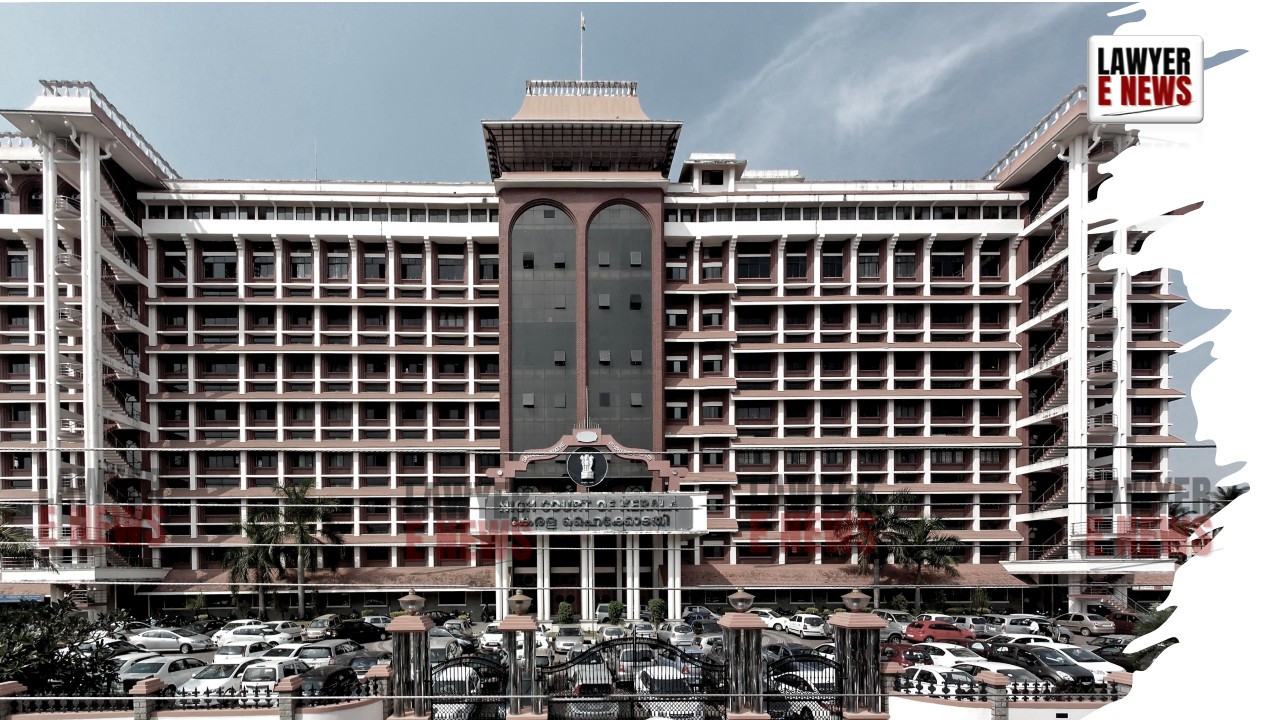
“Section 103(2) Empowers Transport Authorities to Modify Permits; Renewal Cannot Be Denied When Route Curtailed by Law”: In a landmark ruling Kerala High Court in the case of Sudha Sasikumar vs. The Regional Transport Authority, Palakkad & Ors. (WP(C) No.19863/2025), decisively quashed the RTA Palakkad’s rejection of a renewal application under the Motor Vehicles Act, 1988. Justice Mohammed Nias C.P., while issuing the directive, observed, “A route curtailed by the operation of law does not nullify the rights of a permit holder. The transport authority is duty-bound to renew such permits, especially when repeatedly directed by judicial forums.” The Court ordered RTA Palakkad to consider the renewal application of the petitioner within one month, restoring hope for operators trapped in bureaucratic apathy.
The petitioner, Sudha Sasikumar, had obtained a stage carriage permit on 20th June 2006 to operate on the Guruvayur-Palakkad interdistrict route. The permit, however, was subject to counter-signature by RTA Thrissur. Due to a nationalisation scheme covering the Guruvayur-Pattambi segment, the counter-signature was denied, forcing the petitioner to operate solely on the Palakkad–Pattambi stretch.
Upon expiry of the original permit on 19th June 2011, the petitioner sought renewal exclusively for the curtailed Palakkad–Pattambi route. This initiated a decade-long legal battle, with the State Transport Appellate Tribunal (STAT) and the Kerala High Court repeatedly ordering the RTA Palakkad to consider the application. Yet, the RTA, citing untenable reasons, continued rejecting the application culminating in the impugned Ext.P13 order, which the petitioner challenged in this writ petition.
Justice Mohammed Nias C.P. addressed multiple critical questions:
The Court categorically ruled that “The absence of counter-signature by RTA Thrissur does not invalidate the permit within the Palakkad jurisdiction,” adding, “The right to operate persists within the primary authority’s jurisdiction under Section 103(2) of the Motor Vehicles Act.”
Rejecting the contention of maintainability of the writ petition, the Court made a foundational pronouncement on judicial review, stating, “Article 226 jurisdiction cannot be restricted by the mere existence of alternate remedy, especially when state agencies act arbitrarily and ignore binding judicial directions.”
The learned Judge struck down the RTA’s technical objections to the renewal application observing, “The curtailment of route was forced by statutory restrictions, and when the authority itself directs filing of a modified renewal application, it cannot later repudiate the same on technical grounds.”
Relying on M/s. Bundelkhand Motor Transport Co. vs. Behari Lal Chaurasia (1966 SC), the Court clarified, “A permit valid in one region does not become null merely because of refusal by the other region’s RTA; it remains enforceable within the issuing region.”
The judgment extensively examined Sections 72, 80(3), 81(4), and 103(2) of the Motor Vehicles Act, 1988. Justice Nias clarified, “Section 72 empowers granting of permits with suitable modifications, Section 103(2) enables curtailment of routes to comply with approved schemes, and Section 81(4) restricts grounds for rejecting renewals to specific statutory causes.”
Addressing the respondent’s argument that a separate application for route variation was mandatory, the Court ruled emphatically, “This was a curtailment resulting from the operation of law, not a voluntary modification. When a permit cannot operate beyond a certain point by compulsion of law, the renewal must be processed on the viable segment.”
In refuting the argument regarding non-attachment of a vehicle to the permit, the Court noted, “The absence of a vehicle post-expiry of permit has no bearing on renewal rights as the law allows time for production of a vehicle.”
The Court cited the binding nature of prior Tribunal and High Court orders, stating, “Repeated directions to RTA Palakkad remained unheeded, and its obstinate conduct undermines rule of law.”
Setting aside Ext.P13, the Court directed, “The impugned order rejecting the petitioner’s renewal application is quashed. The Regional Transport Authority, Palakkad, shall reconsider and pass appropriate orders on the renewal application for the curtailed Palakkad–Pattambi route within one month after affording notice and hearing to the parties.”
The Court lambasted the conduct of RTA Palakkad, remarking, “It is surprising that the cancellation of the permit contradicts every previous decision of this Court, the Tribunal, and transport authorities.”
Through this ruling, the Kerala High Court reaffirmed the principle that transport authorities must uphold the sanctity of court orders and statutory rights of permit holders. Justice Mohammed Nias concluded with a strong caution: “Administrative arbitrariness, especially in defiance of repeated judicial pronouncements, is indefensible under constitutional governance.”
This judgment stands as a compelling precedent on the rights of permit holders when confronted with route curtailments arising out of statutory interventions and firmly establishes the primacy of judicial oversight over administrative overreach.
Date of Decision: 18th July 2025