-
by sayum
21 October 2026 1:30 PM







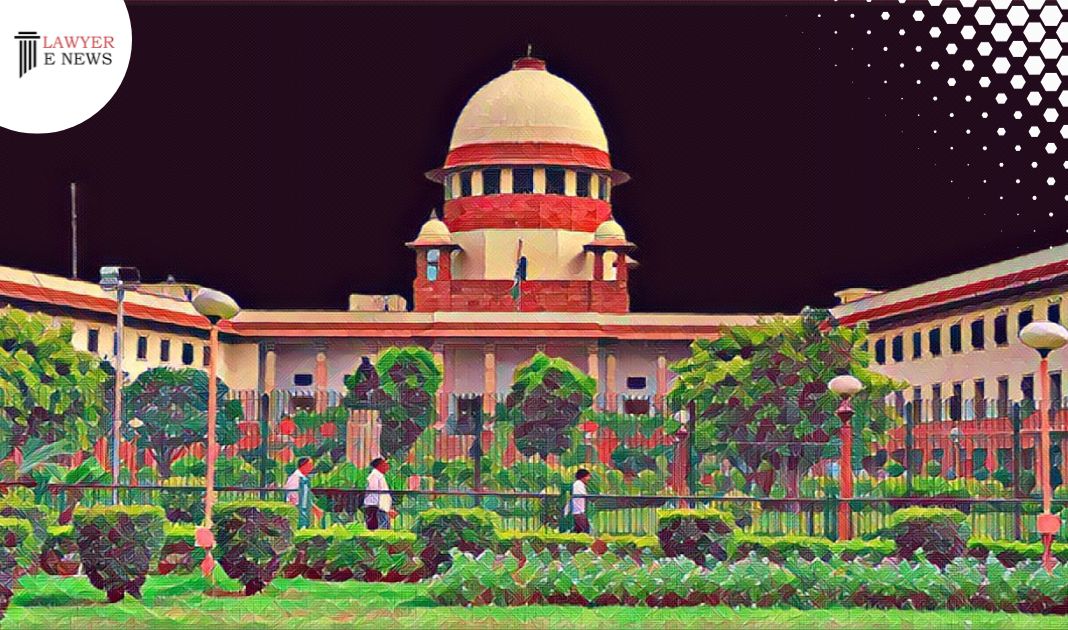
Supreme Court on 17th Feb 2023 while deciding the petition (Shelly Oberoi & Oth. Vs Office of Lieutenant Governor of Delhi & Ors D.D. 17th Feb 2023) regarding Mayor Election of Delhi directed to issue notice convening the first meeting of the Municipal Corporation of Delhi within a period of twenty-four hours.
AAP Party has been filed in the Supreme Court of India's Civil Original Jurisdiction, seeking various reliefs related to the constitution of the Municipal Corporation of Delhi after the elections held on 4 December 2022.
The first petitioner is a prospective candidate for the post of Mayor, and the election of the Mayor has not been held even after two months since the election.
Chapter II of the Delhi Municipal Corporation Act 1957 deals with the establishment of Corporations, and Section 35(1) provides for the election of the Mayor and Deputy Mayor at the first meeting of the Corporation each year.
The composition of the Corporation is specified under Section 3, and among the Councillors, there are ten persons nominated by the Administrator who do not have the right to vote in the meetings of the Corporation.
Chapter V of the Act deals with the procedure and transaction of business by the Corporation, and Section 73 provides for the first meeting of the Corporation after a general election, which shall be convened by the Administrator.
The point of controversy has narrowed down to two issues: whether the nominated aldermen have the right to vote at the first meeting of the Corporation where the Mayor would be elected, and the order for holding elections, i.e., whether the election to the office of the Mayor shall be held first followed by the elections to the Deputy Mayor and other members of the Standing Committee.
The petitioners' submission is that the nominated members of the Corporation do not have the right to vote, including at the election of the Mayor.
The submission on behalf of the Lt Governor and Municipal Corporation is that the restriction on the right to vote in terms of Article 243R(2) as well as the proviso to Section 3(3)(b) (i) applies only to the regular meetings of the Corporation where the business of the Municipal Corporation is transacted and would not extend to the first meeting after the elections are held.
Section 73 requires the first meeting of the Corporation to be convened by the Administrator and Section 35 stipulates that at its first meeting the Corporation shall elect one of its members as a Mayor and another to be a Deputy Mayor. It has been submitted that the prohibition on the exercise of the right to vote which attaches to the nominated members does not extend.
The Supreme Court rejected the arguments put forth by the Municipal Corporation and Lt. Governor in regards to the right of nominated members to vote in meetings of the Corporation. The Court pointed out that Article 243R of the Constitution provides for the composition of Municipalities, which includes direct election to all seats except for those specified in clause (2). The clause contains provisions for representation of persons with special knowledge or experience in Municipal administration, but the Constitution and the Act impose a restriction that such nominated members do not have the right to vote in meetings of the Corporation, including the first meeting where the Mayor and Deputy Mayor are elected.
The Court emphasized Regulation 7 and 8 of the Delhi Municipal Corporation (Procedure and Conduct of Business) Regulations 1958, which stipulate that the election of the Mayor must be held first, followed by the election of the Deputy Mayor with the Mayor as the presiding authority.
Supreme Court issued following directions: -
(i) At the first meeting of the Municipal Corporation of Delhi, the election shall be held first for the post of Mayor and at that election, the members who are nominated in terms of Section 3(3)(b)(i) of the Act shall not have the right to vote;
(ii) Upon the election of the Mayor, the Mayor shall act as the presiding authority for conducting the election of the Deputy Mayor and the members of the Standing Committee at which also the prohibition on the exercise of vote by the nominated members in terms of Section 3(3)(b)(i) shall continue to operate; and
(iii) The notice convening the first meeting of the Municipal Corporation of Delhi shall be issued within a period of twenty-four hours. The notice shall fix the date for convening the first meeting at which the election of the Mayor, Deputy Mayor and members of the Standing Committee shall be conducted in terms of the above directions.
Petition Allowed.
Shelly Oberoi & Oth. Vs Office of Lieutenant Governor of Delhi & Ors