-
by sayum
04 August 2026 1:39 PM







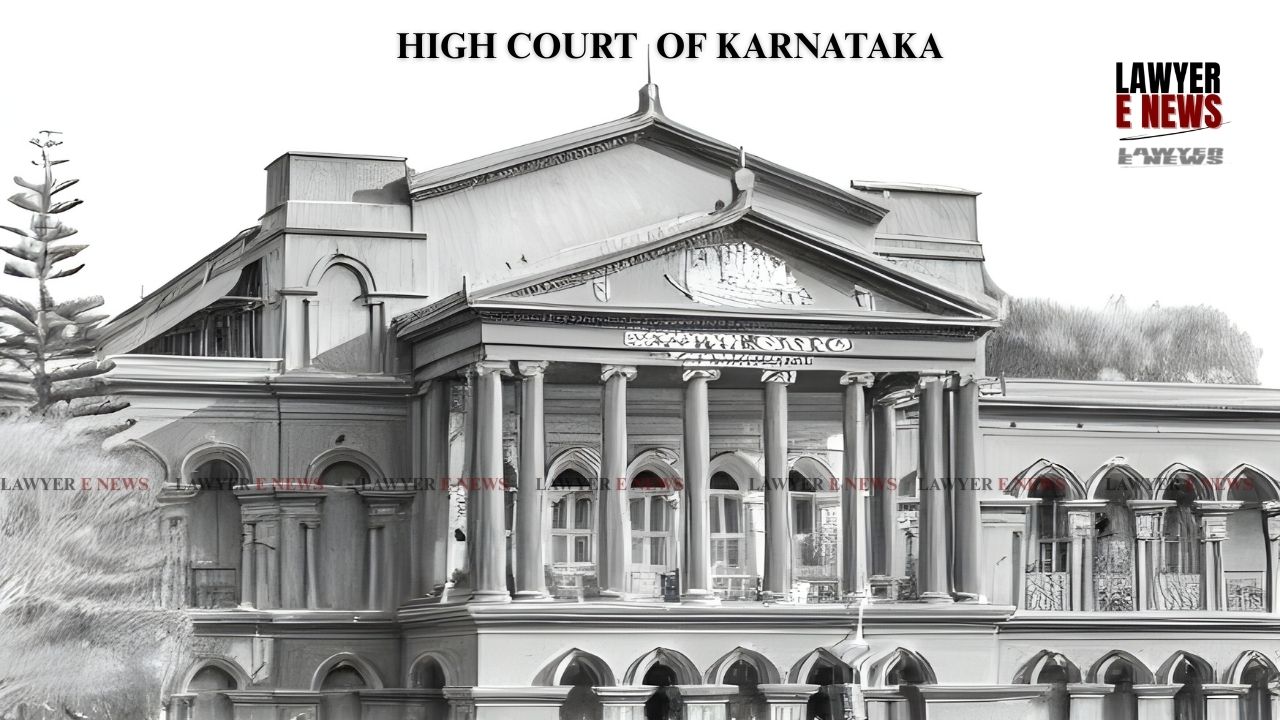
“Law Doesn’t Prescribe a Stopwatch for Seeking Justice in Road Accidents—Delayed Complaint Doesn’t Equal Falsehood”, In a significant decision that reaffirms the importance of substance over form in motor accident claims, the Karnataka High Court allowed Miscellaneous First Appeals, setting aside the Motor Accident Claims Tribunal’s rejection of compensation claims solely on the ground of delay in FIR registration.
Justice Dr. Chillakur Sumalatha emphasized that “delay in lodging a complaint, when justified by circumstances, cannot by itself be a reason to discard genuine claims backed by medical evidence.” Referring to the Supreme Court’s ruling in Ravi v. Badrinarayan, the Court held that “a claimant’s right to compensation cannot be denied merely because they prioritized treatment over litigation.”
The appeals arose from a 2013 motorbike accident involving a married couple—Shri Pandurang Shivane and Smt. Mangal Shivane—who suffered injuries in a collision caused by a rashly driven TVS motorbike. Despite furnishing wound certificates explicitly recording ‘Road Traffic Accident’ as the cause, their claims under the Motor Vehicles Act, 1988 were dismissed by the Tribunal for not reporting the accident immediately to police.
“Wound Certificates Speak Louder Than Delay—Medical Records Show RTA, Not Fabrication”: High Court Validates Evidentiary Value
The Tribunal had earlier rejected both claims under MVC No. 1710/2013 and MVC No. 1798/2013, solely based on the delay of nearly two weeks in lodging a complaint. However, Justice Sumalatha held that such a finding ignored critical documentary evidence, particularly Exhibits P7 and P10, the wound certificates issued by the treating hospital.
The Court observed:
“A perusal of Exhibit P7 and Exhibit P10 clearly shows a mention of ‘Road Traffic Accident’. For reasons best known, the hospital authorities did not inform the police, but failure on their part should not prejudice the claimants.”
The Court further noted that the police had in fact registered a case and filed a charge sheet against the rider of the offending vehicle once the complaint was lodged. Therefore, the genuineness of the accident could not be doubted merely because of procedural delay.
“Justice Can’t Be Denied for Not Rushing to the Police—Treatment, Trauma, and Practical Realities Take Precedence”
Citing paragraph 20 of the Supreme Court's ruling in Ravi v. Badrinarayan (2011 ACJ 911), the High Court echoed the principle that FIR delay is not per se a ground to reject a claim, especially in cases involving injuries, trauma, and immediate treatment:
“Knowing the Indian conditions as they are, we cannot expect a common man to first rush to the police station immediately after an accident. They give more importance to get the victim treated rather than to rush to the police station. Delay in lodging the FIR thus, cannot be the ground to deny justice to the victim.”
Justice Sumalatha further held:
“Law has not fixed any rigid time limit for lodging a complaint to police. Whether delay is fatal depends on the surrounding circumstances. If there is no sign of concoction, delay must be condoned.”
The Court emphasized that in this case, there was no indication of fabrication or ulterior motive. The victims were husband and wife, both seriously injured, and had sought medical attention immediately. The delay in approaching the police, the Court said, was natural and justified, particularly since they were attending to each other during the treatment period.
“Tribunal’s Rejection Was Legally Unsustainable—Justice Demands Fresh Trial on Merits”
The High Court found fault with the mechanical approach of the Tribunal, which had dismissed the petitions without examining the totality of facts, relying solely on procedural aspects.
Justice Sumalatha observed:
“The Tribunal committed error in giving a sweeping finding that the claimants failed to discharge their burden. Such a conclusion is unsustainable in the face of corroborating medical and police records.”
Allowing both appeals, the Court issued a clear directive:
“The common order rendered by the Additional Motor Accident Claims Tribunal, Belgaum in MVC No.1710/2013 and MVC No.1798/2013 dated 10.09.2014 is set aside. The Tribunal is directed to restore both the cases on file, appreciate the evidence afresh, and decide the matters on merits.”
FIR Delay Not a Ground for Automatic Rejection—Medical Evidence is the Cornerstone in Compensation Law
This ruling from the Karnataka High Court is a crucial reaffirmation for motor accident lawyers and claimants that timely medical evidence can outweigh procedural lapses like delayed FIRs. The judgment underscores that victims of accidents should not be doubly victimized by being denied compensation on technicalities.
As the Court succinctly held: “Courts must assess whether the delay was used to fabricate a false story or arose from genuine causes. Where the latter is true, such delay cannot come in the way of a victim’s right to get justice.”
Date of Decision: 29 October 2025