
-
by sayum
26 August 2026 1:49 PM







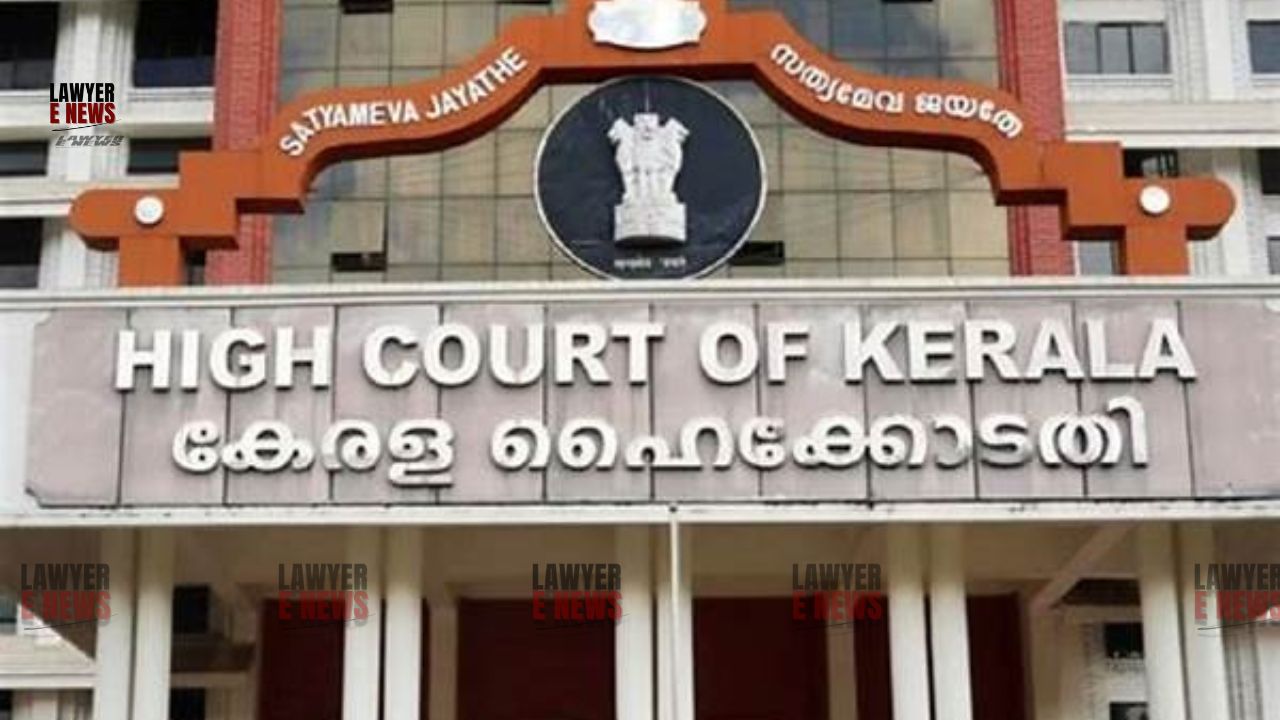
“It is the cumulative circumstances — not just the brutality of the crime — that must determine whether a man is beyond reform”: Kerala High Court applies ‘Manoj’ principles to commute death penalty in a circumstantial evidence case. Kerala High Court, in a significant judgment rendered by a Division Bench comprising Dr. Justice A.K. Jayasankaran Nambiar and Justice Jobin Sebastian, declined to confirm the death sentence imposed by the trial court on the first accused in the infamous Kovalam double assault and rape case. The court instead modified the punishment to life imprisonment without remission for 30 years, observing that although the crime was brutal, it did not meet the threshold of the “rarest of rare” category warranting the death penalty.
The judgment was passed in Death Sentence Reference No. 3 of 2019 and Criminal Appeals Nos. 79 of 2020 and 401 of 2021, arising from the Sessions Case No. 1085 of 2016, where the Additional Sessions Judge - II, Thiruvananthapuram had awarded the death penalty to Anil Kumar @ Kolusu Binu (A1) and life imprisonment to Chandrasekharan @ Chandran (A2) for the brutal murder of a man, rape and near-fatal assault of his wife, and robbery following a home invasion in 2016.
Night of Terror and a Home Shattered
The prosecution established that during the early morning of 7th July 2016, in a house at Koliyoor, Thiruvananthapuram, the deceased Mariyadas and his wife (the victim), were assaulted by intruders — A1 and A2 — leading to the death of the husband and permanent vegetative state of the wife due to severe cranial injuries. Their daughters, who were asleep in the adjoining room, discovered their parents in a pool of blood around 4:30 AM.
Investigations revealed that valuables had been looted from the house, and the attackers fled. A1 and A2 were later apprehended from Tamil Nadu. The trial court found the evidence sufficient to convict both, sentencing A1 to death under Sections 302 and 376A IPC, and A2 to life imprisonment under Section 302 r/w 34 IPC, among other punishments.
Circumstantial Evidence Was “Complete and Unbroken”: High Court Upholds Conviction of Both Accused
The High Court undertook a thorough re-appreciation of evidence and categorically held that the chain of circumstances “was complete and consistent only with the guilt of the accused.”
Quoting from Sharad Birdhi Chand Sarda v. State of Maharashtra, the Bench reiterated:
“In cases dependent on circumstantial evidence, the inference of guilt can be made if all the incriminating facts and circumstances are incompatible with the innocence of the accused or any other reasonable hypothesis than that of his guilt.”
The Court pointed to the following facts as determinative:
DNA evidence linked A1 to the rape of the victim.
Recovery of stolen jewellery and bloodstained clothes at the instance of A1 and A2.
CCTV footage showing A1 exchanging the stolen gold at a jewellery store within hours of the crime.
Identification of both accused near the scene by a local milkman (PW11), who knew A1 and saw A2 under a streetlight.
No motive for false implication by any of the key witnesses, including neighbours and the milkman.
The Court concluded:
“The presence of accused nos.1 and 2 near the scene of crime immediately after the occurrence stands clearly established. The forensic and medical evidence supports the theory of joint commission of offence.”
Eyewitness Testimony: Absence of TIP Not Fatal Where Accused Known and Visibility Clear
A central argument in appeal was the reliability of the eyewitness testimony of PW11, a milkman who saw both accused near the crime scene early in the morning.
The Court rejected the contention that absence of a Test Identification Parade (TIP) rendered the identification unreliable. It held:
“There is no inflexible rule that in order to rely upon an identification made by a witness, there must invariably be a test identification parade... PW11 had prior acquaintance with A1 and saw A2 under a streetlight. His testimony is credible and unshaken in cross-examination.”
Recovery Under Section 27 Evidence Act Valid Despite Objections on Language
The defence challenged the admissibility of recovery of incriminating materials under Section 27 of the Evidence Act, alleging that A2’s statement was recorded in Malayalam, which he could not understand.
The Court found no merit in this contention, stating:
“No objections were raised during cross-examination regarding the alleged mistranslation. The Investigating Officer deposed to using the services of a translator, who was not confronted by the defence. Therefore, the challenge to the recording of the statement must fail.”
Further, the Court clarified that even if the recovery were to be deemed irregular under Section 27, the conduct of the accused in retrieving concealed weapons and items would be admissible under Section 8 of the Evidence Act.
“Possession of Stolen Goods Soon After Crime Can Justify Presumption of Guilt”: Court Cites Section 114 Illustration (a)
Referring to Ronny v. State of Maharashtra and Ganesh Lal v. State of Rajasthan, the Court applied the presumption under Section 114 Illustration (a) of the Evidence Act:
“When articles belonging to the victim’s family are recovered from the accused soon after the crime and no plausible explanation is given, a presumption can be drawn that the accused is the perpetrator of the crime.”
The Court found A1’s explanations during Section 313 CrPC examination — involving claims of consensual sex and accidental death — to be implausible and contradictory, further sealing his culpability.
Medical and Forensic Evidence Irrefutable: Rape and Assault Clearly Established
Forensic and medical expert testimonies conclusively linked A1 to the rape of the victim and both A1 and A2 to the murder and grievous injuries. The Court noted:
“The spermatozoa found in the vaginal swabs matched A1. The blood on the clothes of both accused matched the deceased. The injuries sustained by the victim and deceased could be caused by the recovered weapons.”
Sentencing: Death Penalty Not Justified in Circumstantial Case Despite Heinousness of Offence
Though the crime was unquestionably heinous, the Court underscored that the death penalty must meet the “rarest of rare” threshold, especially in cases dependent entirely on circumstantial evidence.
“It is not the brutality of the crime alone, but the cumulative circumstances surrounding the criminal that must inform the sentencing court. Sentencing is not an act of vengeance but an exercise in justice.”
The Bench drew upon Manoj v. State of Madhya Pradesh and Vasanta Sampat Dupare v. State of Maharashtra, noting that sentencing must consider not only the offence but also the offender’s mental state, background, potential for reformation, and social rehabilitation.
Despite prison reports indicating A1’s erratic conduct and prior criminal behaviour, a NALSAR mitigation study painted a more complex picture — of a man born into poverty, exposed to chronic violence, substance abuse, and neglect. The study concluded:
“Despite structural, familial and societal failings, A1 has displayed resilience, empathy, and the will to change.”
Court Commutes Death Sentence: Life Imprisonment Without Remission for 30 Years
Weighing all mitigating and aggravating factors, the Court held that while a life sentence must reflect the gravity of the crime, the death penalty was not warranted. The Court invoked its power under Swamy Shraddananda (2) and Shiva Kumar v. State of Karnataka to impose a modified life sentence.
“We modify the sentence to one of life imprisonment with the further condition that he shall undergo mandatory imprisonment without remission for a period of thirty years.”
Final Orders:
Crl.A. No. 79 of 2020 (A1): Conviction under Sections 302, 376A, 307, 397, and 449 r/w 34 IPC confirmed; Death penalty set aside; Life imprisonment without remission for 30 years imposed for Sections 302 and 376A IPC.
Crl.A. No. 401 of 2021 (A2): Appeal dismissed; Conviction and sentence confirmed.
D.S.R. No. 3 of 2019: Reference answered in the negative; Death sentence not confirmed.
Date of Decision: 15 October 2025





