
-
by sayum
26 August 2026 1:49 PM







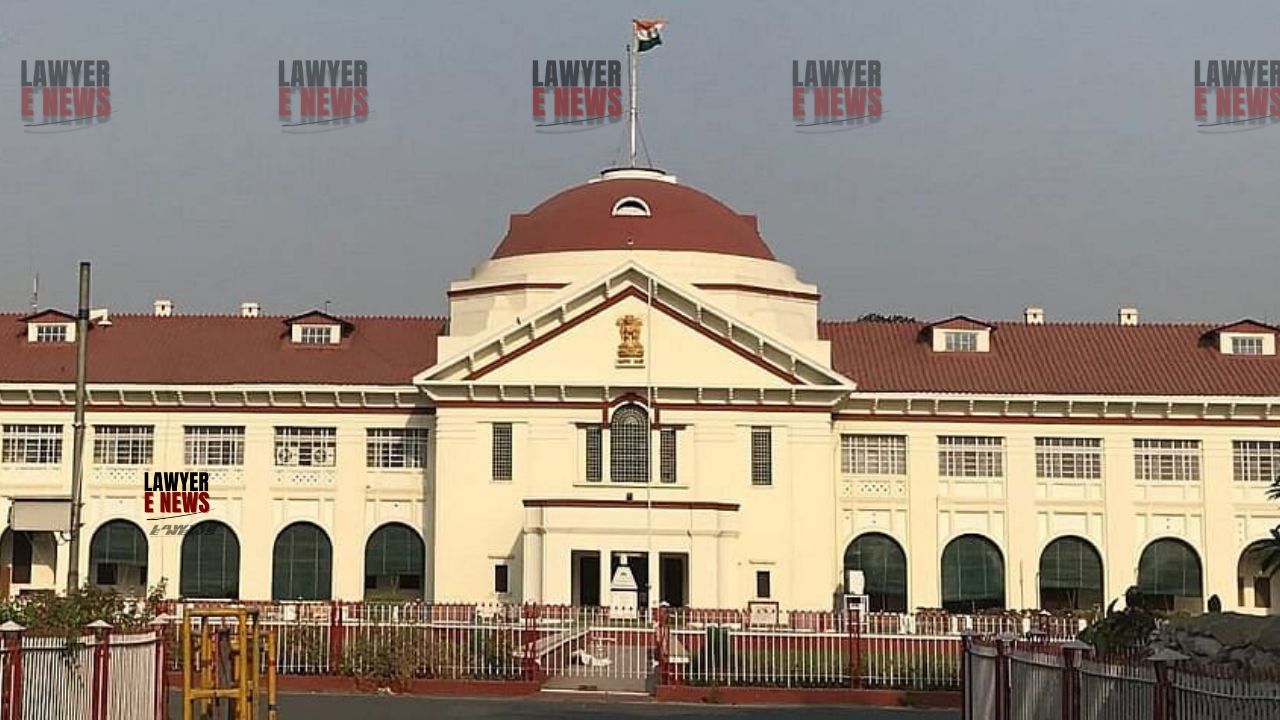
“Civil Dispute Camouflaged as Criminal Allegation—Magistrate Must Apply Judicial Mind to Entire Context Before Taking Cognizance” - Patna High Court, presided by Justice Purnendu Singh, delivered a notable ruling in Sanjiva Kumar Singh @ Sanjiv Kumar Singh v. The State of Bihar & Anr., quashing the order of cognizance dated 16.11.2024 passed by the Judicial Magistrate First Class, Dalsinghsarai, in a complaint allegedly arising from a temple management dispute. The High Court held that “criminal prosecution cannot be permitted to proceed where the allegations are vague, general, and motivated by civil rivalry.”
The Court was considering an application under Section 528 of the Bharatiya Nagarik Suraksha Sanhita, 2023, which replaced the CrPC, filed by the petitioner against whom cognizance had been taken for offences under Sections 341, 323, 379, and 427 of the Indian Penal Code, 1860, based on a complaint that emerged from a long-standing trustee dispute concerning a Kali Mandir governed under the Bihar Hindu Religious Trusts Act, 1950.
“When Civil Remedies Exist and Have Been Pursued, Criminal Allegations Without Specificity Are Abuse of Process”
The Court found that the complaint was filed after the complainant’s failure in civil litigation, where the appointment of the petitioner’s father as trustee of the Kali Mandir had been upheld by a Single Judge in CWJC No. 21312/2013 and confirmed by a Division Bench in LPA No. 1331/2017.
Referring to the factual background, the Court noted:
“The complaint has been lodged by the complainant due to personal enmity in respect of the appointment of trustee of a Kali Mandir… even assuming for the sake of argument, that the materials on record successfully disclose criminality rendering prosecution maintainable, the Revisional Court and the Magistrate have both failed to consider these civil facts and circumstances.”
The allegations made in the complaint ranged from wrongful restraint and assault, to theft of ₹1,200 and crop damage using a tractor, allegedly caused by the petitioner and several others. However, the Court held that such claims lacked specificity, appeared exaggerated, and were likely driven by vengeance rather than any real criminal intent.
“Magistrate Cannot Take Cognizance Without Scrutiny of Attending Civil Background—Application of Judicial Mind Is Mandatory”
Justice Singh noted that the matter had earlier been remanded by the Revisional Court after the Magistrate took cognizance only against the petitioner and not the other accused, despite the complaint naming multiple persons. The revisional court, in its order dated 26.09.2023, had directed a fresh application of judicial mind.
However, the Magistrate, once again failed to examine the broader civil backdrop and the motive behind the complaint. The High Court remarked:
“The learned Magistrate upon remand could not have taken cognizance without considering the attending circumstances emerging from the records of the case.”
It was further held that the Magistrate’s omission to evaluate the dispute’s civil nature—especially one involving temple trust appointments that had already been litigated in constitutional courts—rendered the order legally unsustainable.
“Courts Must Look Beyond the FIR to Uncover Vengeance-Motivated Prosecutions Disguised as Criminal Complaints”
The High Court relied heavily on the Supreme Court’s binding precedent in Kailashben Mahendrabhai Patel v. State of Maharashtra, 2024 SCC OnLine SC 2621, to reiterate the principle that:
“The Court owes a duty to look into many other attending circumstances emerging from the record of the case over and above the averments and, if need be, with due care and circumspection try to read in between the lines.”
Justice Singh emphasised that a well-drafted complaint may still be motivated by malice, and judicial review under Section 528 BNSS must be sensitive to these possibilities.
He further cited Paramjeet Batra v. State of Uttarakhand, (2013) 11 SCC 673, affirming that:
“Where a dispute is essentially of a civil nature and civil remedies are available and adopted, the High Court should not hesitate to quash criminal proceedings to prevent abuse of the process of the court.”
The Court also invoked the classic test laid down in State of Haryana v. Bhajan Lal, 1992 Supp (1) SCC 335, particularly the seventh category where “criminal proceedings are maliciously instituted with an ulterior motive for wreaking vengeance.”
Cognizance Order Set Aside, Magistrate Directed to Rehear Matter After Issuing Notices
Finding that neither the Magistrate nor the Revisional Court had applied their minds to the full context, the High Court concluded that allowing such proceedings to continue would amount to abuse of judicial process. Accordingly, the Court quashed the cognizance order dated 16.11.2024, and directed a fresh hearing before the Magistrate:
“The order taking cognizance dated 16.11.2024 is set aside. The contesting parties are directed to appear before the learned Judicial Magistrate First Class, Dalsinghsarai, Samastipur. The Magistrate shall issue notices, consider the entire factual backdrop, and pass a fresh order with full application of judicial mind.”
Further, the Magistrate has been directed to prioritize disposal of the complaint while maintaining neutrality and procedural fairness, ensuring that no party is made to suffer due to misuse of criminal machinery in a civil context.
Date of Decision: 14 October 2025





