-
by sayum
27 July 2026 3:39 PM







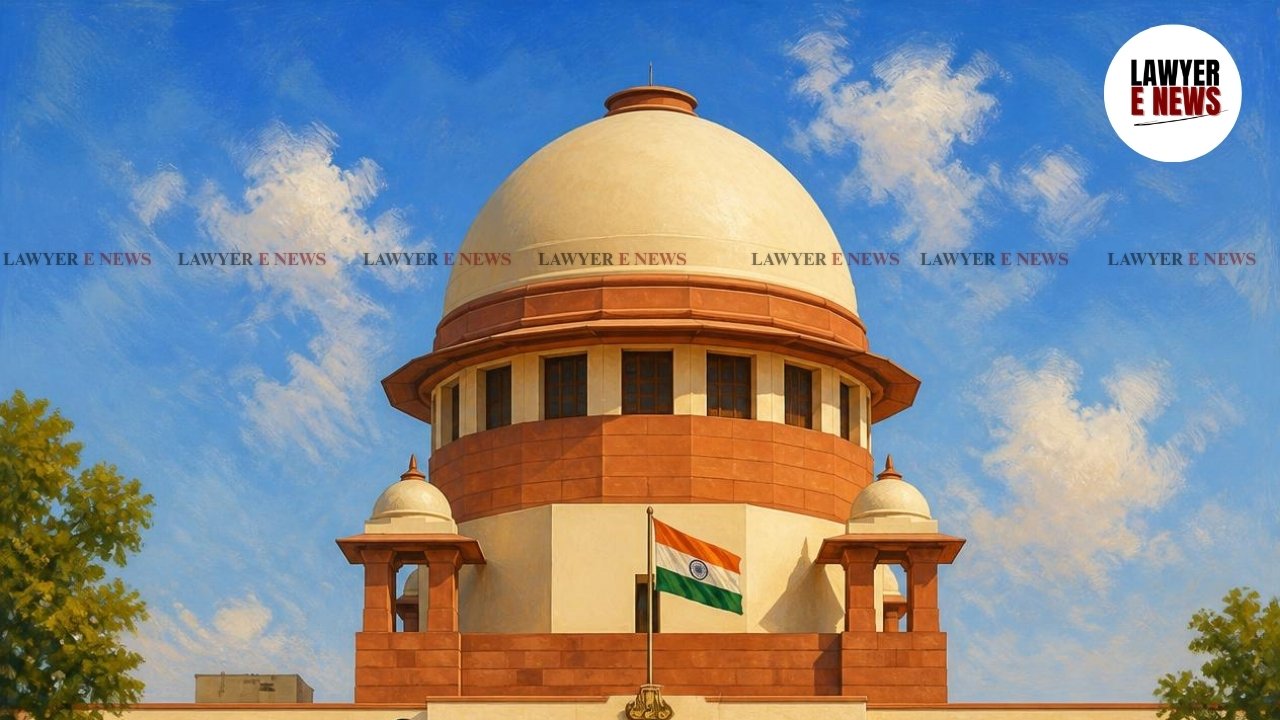
"If clever drafting of the plaint has created the illusion of a cause of action, the court will nip it in the bud at the earliest so that bogus litigation will end at the earlier stage," Supreme Court, in a significant ruling dated July 1, 2026, held that a civil suit must be rejected at the threshold if it is patently barred by limitation, regardless of how "cleverly" the plaint is drafted to create an illusion of a cause of action.
A bench of Justice Sanjay Karol and Justice Nongmeikapam Kotiswar Singh observed that the purpose of Order VII Rule 11(d) of the CPC is to prevent protracted proceedings in sham litigations that waste judicial time.
The dispute pertained to a plot in Ulhasnagar, Maharashtra, originally owned by the appellants' predecessor. The respondents filed a suit in 2022 seeking specific performance of an unregistered agreement to sell dated August 21, 1984. The appellants sought the rejection of the plaint under Order VII Rule 11(d) of the CPC, arguing that the suit was filed after a delay of thirty-eight years. Both the Trial Court and the Bombay High Court had refused to reject the plaint, leading to the present appeal.
The primary question before the court was whether a suit for specific performance based on a 1984 agreement, filed in 2022, could be rejected under Order VII Rule 11(d) of the CPC as being barred by limitation. The court also considered whether previous observations made by the High Court in a writ petition could grant a fresh lease of life to an otherwise time-barred claim.
Independent Power Of Rejection Under Order VII Rule 11 CPC
The Court emphasized that the remedy under Order VII Rule 11 is an independent and special power that empowers a court to summarily dismiss a suit at the threshold. The bench noted that this power is intended to ensure that the court does not permit a plaintiff to unnecessarily protract proceedings when no cause of action is disclosed or when the suit is barred by law.
The bench relied on the precedent in Dahiben v. Arvindbhai Kalyanji Bhanusali, noting that the underlying object is to put an end to sham litigation. The Court observed that the remedy serves as a "crucial filter" in civil litigation, enabling courts to terminate proceedings where the plaintiff's case, even if accepted in its entirety, fails to disclose a right to sue or is barred by statute.
Lifting The Veil On Clever Drafting - Court's Duty To Identify Fictitious Suits
The Court dealt extensively with the concept of "clever drafting" used to mask the lack of a cause of action or a legal bar. It observed that when such drafting veils an implied bar, it becomes the duty of the Court to "lift the veil" and expose the reality of the suit. The power to reject a plaint is not merely procedural but substantive, aimed at preventing the abuse of the judicial process.
Referring to Madansuri Sri Rama Chandra Murthy v. Syed Jalal, the bench stated that if a meaningful reading of the plaint reveals it to be manifestly vexatious and meritless, the court should exercise its drastic power to terminate the action. The Court remarked that the foundation of the respondents' case was an agreement from 1984, yet no explanation was provided for the three-decade delay in seeking its execution.
Limitation In Specific Performance Suits - Article 54 Of The Limitation Act Applies Strictly
The Court noted that Article 54 of the Limitation Act, 1963, clearly specifies that the period of limitation for a suit of specific performance is three years. In this case, the foundation of the respondents' claim was an agreement dated August 21, 1984. The bench found no warranted explanation as to why no suit was initiated for the execution of a Conveyance Deed for more than thirty-eight years.
The bench rejected the respondents' argument that the limitation period should run from the date of a previous High Court order in 2021. The High Court had simply observed in a writ petition that the respondents had not initiated civil proceedings to establish their rights. The Supreme Court clarified that such an observation cannot, by any stretch of imagination, become the basis for a fresh period of limitation or a fresh cause of action.
The Supreme Court concluded that a litigant who has remained silent for decades cannot be permitted to file a suit as an afterthought in ignorance of the laws of limitation. Holding that the suit was an abuse of the process of the Court, the bench set aside the orders of the Trial Court and the Bombay High Court. The application under Order VII Rule 11(d) of the CPC was allowed, and the plaint was rejected.
Date of Decision: July 1, 2026