-
by sayum
27 July 2026 3:39 PM







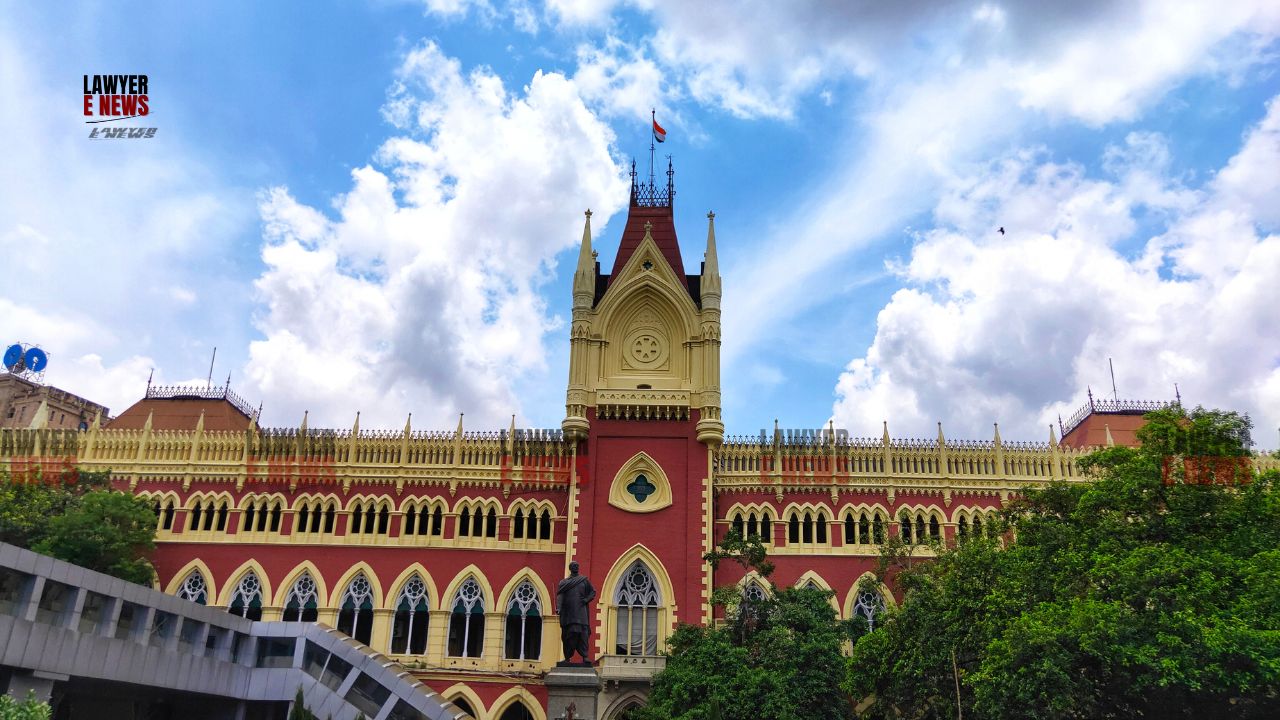
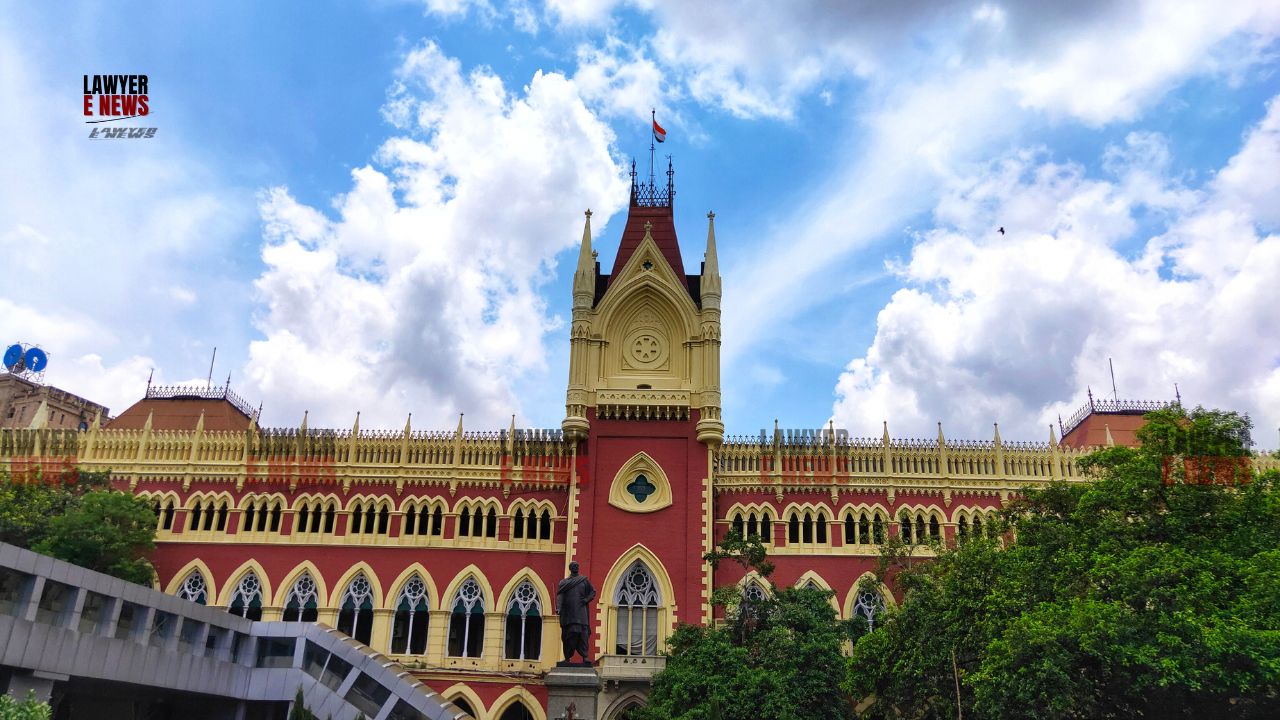
"Where the plaint is rejected solely on account of non-compliance with the pre-institution mediation requirement, without any adjudication on merits, the litigant ought not to suffer automatic forfeiture of Court fee," Calcutta High Court, in a significant ruling, held that a plaintiff is entitled to a refund of court fees when a commercial suit is rejected under Order VII Rule 11(d) of the CPC for failing to exhaust the mandatory pre-institution mediation under Section 12A of the Commercial Courts Act, 2015.
A Division Bench of Justice Arijit Banerjee and Justice Rai Chattopadhyay observed that such a rejection constitutes a "temporary procedural foreclosure" rather than a substantive extinction of the remedy, making the retention of substantial court fees "oppressive" and "inequitable."
The matter arose from a money suit filed by IPJ Industrial Corporation against M/s. Esskay Machinery Pvt. Ltd. for the recovery of the price of goods. The Commercial Court at Rajarhat rejected the plaint under Order VII Rule 11(d) of the CPC, finding that the plaintiff had not complied with the mandatory pre-institution mediation requirement under Section 12A of the Commercial Courts Act, 2015, nor demonstrated any urgency. The plaintiff subsequently moved the High Court seeking the return of the court fees paid to file a fresh suit after compliance.
The primary question before the court was whether the rejection of a plaint for non-compliance with Section 12A of the Commercial Courts Act, 2015, necessitates the forfeiture of court fees. The court was also called upon to determine if the Supreme Court's silence on the consequence of court fees in the Patil Automation case allowed for the application of equitable principles regarding the refund of fees for technical failures.
Mandatory Nature Of Section 12A and Procedural Defects
The Court noted that while the Supreme Court in Patil Automation Private Limited v. Rakheja Engineers (P) Ltd. (2022) authoritatively settled that pre-institution mediation is mandatory, it did not explicitly address the consequential issue of court fees. The Bench emphasized that a violation of Section 12A is a threshold procedural defect rather than an adjudication on the merits of the case.
Court Distinguishes Between Technical Failure And Adjudication On Merits
The Court relied heavily on the equitable principle that a litigant should not suffer irreversible financial prejudice when a proceeding fails on technical grounds without an adjudication on merits. It noted that the earlier Supreme Court decision in Dr. (Col.) Subhash Chandra Talwar v. T. Choithram and Sons (2019) had recognized the right to a refund of court fees when a proceeding fails for technical or jurisdictional reasons.
Application Of The Doctrine Of Per Incuriam
The Bench observed that since Patil Automation did not notice or reconcile the earlier principle regarding the refund of fees established in the Talwar case, any interpretation implying automatic forfeiture would run contrary to established binding authority. The Court held that to the limited extent of the ancillary consequence of court fees, the later judgment remained outside the scope of consideration.
“Patil Automation (supra) undoubtedly authoritatively settled the mandatory nature of pre-institution mediation... however, insofar as the consequential issue as to whether Court fees deposited are to be returned or refunded or not, the earlier principle recognised in Dr. (Col.) Subhash Chandra Talwar (supra) was neither noticed nor reconciled.”
Rejection Under Order VII Rule 11(d) Is Not Res Judicata
The Court clarified the nature of rejection under the CPC, stating that Order VII Rule 13 expressly provides that the rejection of a plaint does not preclude the plaintiff from presenting a fresh plaint. Since the law recognizes the right of reinstitution after curing the procedural defect, the Court reasoned that the state should not retain the fee for a "valid suit" that the law deems never effectively came into existence.
Retention Of Fees Contrary To Objects Of Commercial Courts Act
The Court highlighted that the object of Section 12A is the facilitation of dispute resolution and procedural discipline, not the imposition of punitive financial penalties. It observed that court fees are essentially a fee for the consideration of a cause, and where the adjudicatory jurisdiction was never effectively invoked on merits, the fees must be returnable to the litigant.
“Once the law recognizes the right of reinstitution after curing the defect, retention of substantial Court fees paid in the earlier defective proceeding would operate oppressively and contrary to the remedial object of the procedural law.”
Harmonizing West Bengal Court Fees Act With Equitable Principles
Referring to Sections 18, 19, and 20(1) of the West Bengal Court Fees Act, 1970, the Court found that the statutory scheme supports the refund of fees in specific circumstances where proceedings fail for technical reasons. The Bench concluded that compelling a litigant to pay court fees twice for the same dispute, which was never examined on merits, would be inherently inequitable.
In conclusion, the High Court allowed the application, holding the plaintiff entitled to a refund of the court fees paid at the time of the earlier institution. The Court directed the competent authority to take necessary steps for the compliance of this order within three weeks.
Date of Decision: 24 June 2026