-
by sayum
05 August 2026 3:07 PM







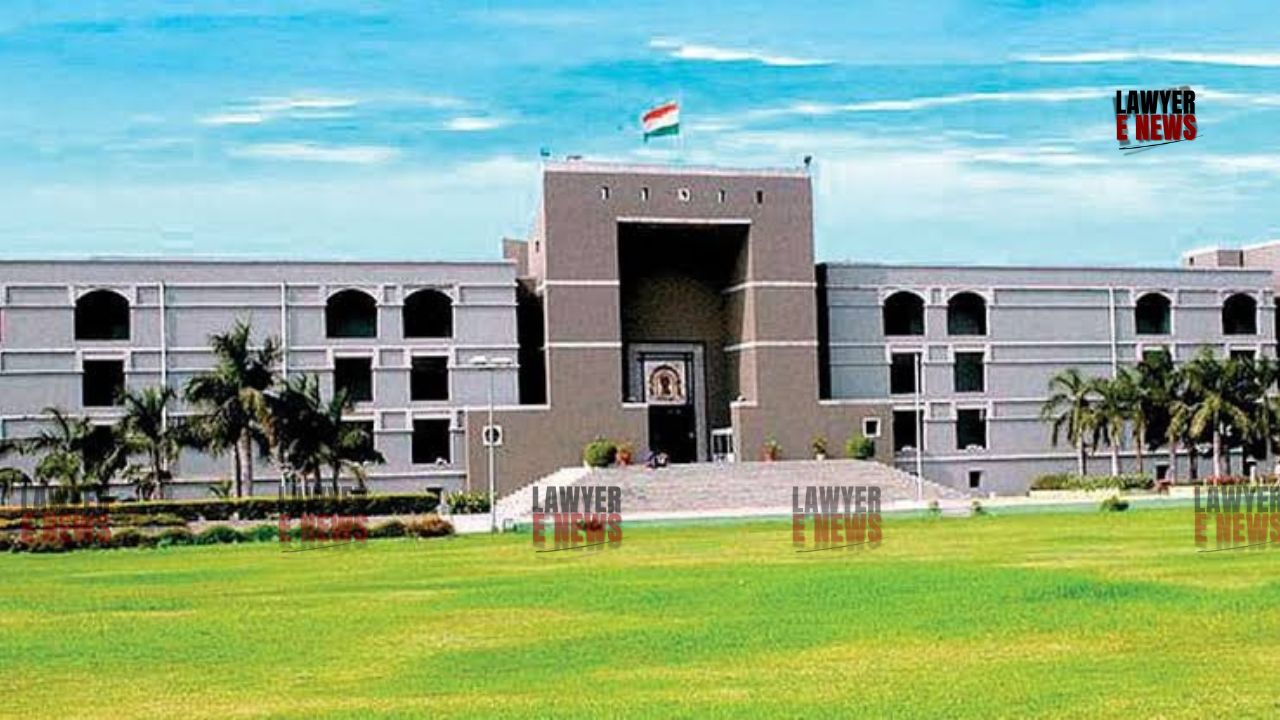
“Once Threshold of ₹1 Crore Is Crossed, Twin Conditions of Section 45 Apply—Contradictory Explanations Cannot Justify Seized Cash”, Gujarat High Court, in a detailed and reasoned judgment by Justice M. R. Mengdey, dismissed a regular bail application filed under Section 483 of the Bharatiya Nagarik Suraksha Sanhita (BNSS), 2023, by senior journalist Maheshdan Prabhudan Langa in a case registered under the Prevention of Money Laundering Act, 2002 (PMLA). The Court held that the twin conditions under Section 45 of the PMLA were applicable and not satisfied, given that the proceeds of crime allegedly exceeded ₹1.18 crores, and the applicant failed to rebut the presumption under Section 24 of the PMLA.
This judgment has critical implications for the interpretation of proceeds of crime, application of Section 45’s twin conditions, and the admissibility of inconsistent statements in money laundering investigations.
The case arose from an ECIR (Enforcement Case Information Report) No. ECIR/AMZO/20/2024 dated 26.11.2024, registered by the Directorate of Enforcement (ED), Ahmedabad, under Sections 3 and 4 of the PMLA. The ECIR was based on two FIRs lodged against the applicant:
FIR No. 11191011240284/2024 (dated 29.10.2024) at DCB Police Station, Ahmedabad, alleging extortion and cheating of ₹28.68 lakhs from one Pranay Shah under the pretext of media influence and property purchase.
FIR No. 11191042250022/2025 (dated 23.01.2025) at Satellite Police Station, Ahmedabad, alleging extortion of ₹40 lakhs from Janak Arjunbhai Thakore through threats of negative media publicity.
The ED further alleged unaccounted cash transactions of ₹50 lakhs, bringing the total proceeds of crime to ₹1.18 crores, thereby invoking the rigors of Section 45.
Whether Section 45 of PMLA Applies Without FIR for ₹50 Lakhs?
The applicant contended that since no predicate offence had been registered for the ₹50 lakhs, it could not be treated as proceeds of crime under Section 2(u) of the PMLA, and therefore, Section 45 would not apply.
The Court rejected this argument, relying on Section 66(2) of the PMLA and the Supreme Court’s ruling in Vijay Madanlal Chaudhary v. Union of India, (2022) 12 SCC 1, observing:
“The PMLA permits provisional attachment and investigation based on material even when no predicate FIR has yet been registered. Section 66(2) creates a mechanism for communication with jurisdictional police.”
The Court found that the ED had already informed police authorities via communication dated 24.06.2025 regarding the suspicious nature of ₹50 lakhs, fulfilling the statutory requirement under Section 66(2).
Contradictory Statements Regarding ₹20 Lakhs Seized
Cash of ₹20 lakhs was found during a search at the applicant’s residence. The applicant, his wife (Kavita Langa), and his sister-in-law (Naina Manhar Langa) provided conflicting accounts:
Applicant: Claimed the money was kept for safekeeping by Naina.
Wife: Claimed the money was gifted to her by Naina.
Naina (in her statement dated 18.06.2025): Denied any financial transaction or gift.
The Court noted: “Contradictory versions from close family members regarding such a large amount raise serious doubts about the legality of the source of funds.”
It also found that a post-facto affidavit dated 02.07.2025 by Naina retracting her earlier statement was likely influenced by the applicant while in custody, and thus not credible.
Cash Transaction of ₹30 Lakhs with Milan Mehta
Applicant allegedly paid ₹30 lakhs in cash to Milan Mehta under an MoU to purchase land in the name of his wife. While Mehta claimed he returned the cash due to applicant’s failure to pay the balance by cheque, the applicant stated that Mehta failed to hand over possession, causing the deal to collapse.
The Court held: “The explanation lacks credibility, especially in light of the applicant's and Mehta's conflicting versions. The source of ₹30 lakhs remains unexplained and suspicious.”
Threshold under Section 45 and Twin Conditions
The applicant argued that since only ₹68.68 lakhs were involved in the FIRs, the ₹1 crore threshold under Section 45 was not met.
Rejecting this, the Court held:
“Once the total value of proceeds of crime, including unregistered amounts, exceeds ₹1 crore, the twin conditions apply, and they have not been satisfied here.”
Presumption under Section 24 and Burden on Accused
The Court emphasized that under Section 24, the burden lies on the accused to prove that the assets are not proceeds of crime.
“Applicant has failed to provide a convincing explanation for the source of the funds, especially given the contradictions in statements and unexplained cash deposits.”
The Court found that the evidence gathered by ED, including statements under Section 50 of PMLA, bank records, and inconsistencies in family explanations, pointed to a clear case of money laundering.
It ruled that the twin conditions under Section 45 were mandatory, and the applicant had not satisfied either of the following:
Reasonable grounds to believe he is not guilty.
That he is not likely to commit any offence while on bail.
The Court referred to the Supreme Court judgment in Union of India v. Kanhaiya Prasad, 2025 SCC OnLine SC 306, stating:
“Mere filing of prosecution complaint and cognizance by Court does not entitle accused to bail unless twin conditions under Section 45 are satisfied.”
The Court also emphasized the risk of witness tampering, observing:
“Witnesses have avoided ED summons; one key witness retracted under pressure; this undermines the integrity of investigation.”
The Gujarat High Court held that the applicant failed to provide a credible explanation for key cash transactions and had a pattern of attempting to mislead and obstruct the investigation. It found that the twin conditions under Section 45 applied and were not satisfied. Consequently, the bail application was dismissed.
Date of Decision: 31 July 2025