
-
by sayum
25 August 2026 12:32 PM







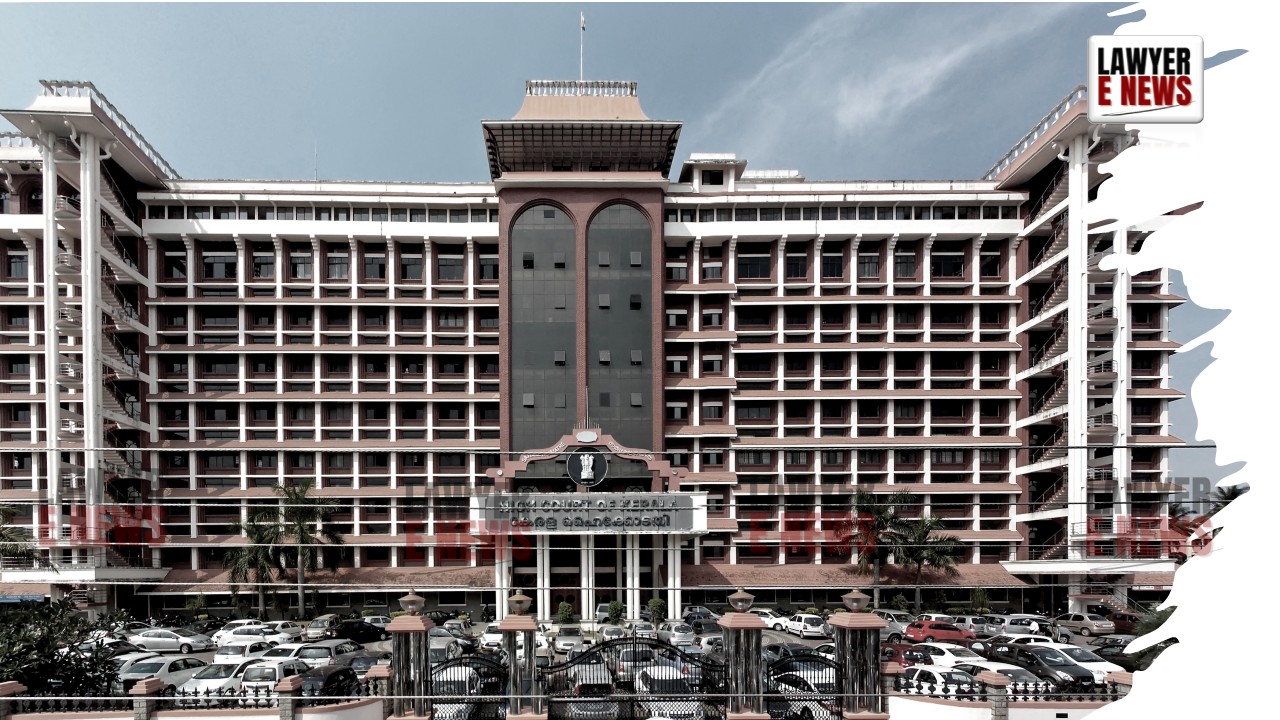
Government Has Discretion to Acquire Remaining Land or Compensate for Severance Under RFCTLARR Act - In a significant ruling, the Kerala High Court on February 18, 2025, disposed of a batch of writ appeals filed by the National Highway Authority of India (NHAI) & Others against various landowners challenging compensation awarded under the National Highways Act, 1956. The appeals raised the issue of whether landowners are entitled to compensation for unacquired portions of their properties when a part of their land is taken for highway expansion.
A division bench comprising Chief Justice Nitin Jamdar and Justice S. Manu upheld the ruling of the Single Judge, clarifying that the government is not bound to acquire the severed portions of land but must compensate the affected landowners if the severance causes financial loss. The Court observed, "The government retains the discretion to acquire the remaining portion of land or compensate for the severance suffered by the landowners. Compensation must be determined under Section 3G(7) of the National Highways Act, 1956, read with Section 28 of the RFCTLARR Act, 2013."
Dismissing the contention of the NHAI that the Single Judge's ruling made the acquisition of severed land mandatory, the Court clarified, "The direction of the learned Single Judge does not impose an obligation upon the government to acquire unacquired portions of land, but merely provides options—either to acquire the remaining portion or to compensate for the severance. The liability to compensate cannot be denied."
"Compensation Disputes Must Be Settled Before Competent Authority, Not Through Writ Petitions"
The High Court reaffirmed the principle that compensation-related disputes must be adjudicated before statutory authorities or through arbitration under the National Highways Act, 1956. The Court emphasized that writ petitions are not the appropriate remedy for determining the adequacy of compensation.
Citing the Supreme Court’s ruling in National Highway Authority of India v. P. Nagaraju (2022) 15 SCC 1, the Court held, "Since the adequacy of compensation is a factual issue, it must be decided by the statutory authorities or through arbitration. Writ jurisdiction cannot be invoked for re-evaluating compensation amounts."
"Landowners Must Prove Claims for Severance Compensation Before Authorities"
During the hearings, several landowners argued that their compensation did not include severance damages for the unacquired portions of their properties. However, the government authorities countered this claim, stating that in most cases, severance compensation had already been considered in the total compensation awarded.
To resolve this dispute, the Court directed, "Landowners claiming severance compensation must approach the Competent Authority or Arbitrator, who shall verify whether such compensation has been included. If it has not been granted, the claimants shall be entitled to a fresh determination."
The Court further observed, "In case the outcome is unsatisfactory, claimants may pursue further legal remedies. However, factual disputes regarding compensation cannot be adjudicated in writ proceedings and must be resolved through statutory mechanisms."
"High Court Refuses to Delve Into Compensation Calculations, Keeps Objections Open"
Several landowners filed objections challenging the compensation calculations provided by government authorities. However, the Court declined to adjudicate these specific objections, stating, "It is not within the scope of these appeals to assess factual disputes over compensation calculations. These issues are kept open for consideration by the relevant statutory authorities."
The Court made it clear that each case must be independently reviewed by the Competent Authority or Arbitrator to determine if severance compensation was included in the final payout.
"Appeals Disposed Of, Landowners Directed to Seek Remedies Before Competent Authorities"
Concluding its ruling, the Kerala High Court disposed of the appeals, holding that the Single Judge’s ruling did not mandate the acquisition of severed land but directed compensation for severance, subject to government discretion.
The judgment stated, "In light of the above observations, no further orders are required. The appeals are disposed of, and landowners may seek redress before the relevant statutory authorities."
This ruling reaffirms that compensation disputes should be settled through statutory processes rather than through writ petitions and clarifies that severance compensation is not automatic but must be granted where justified under the law.
Date of Decision: 18 February 2025





