-
by sayum
24 August 2026 3:22 PM







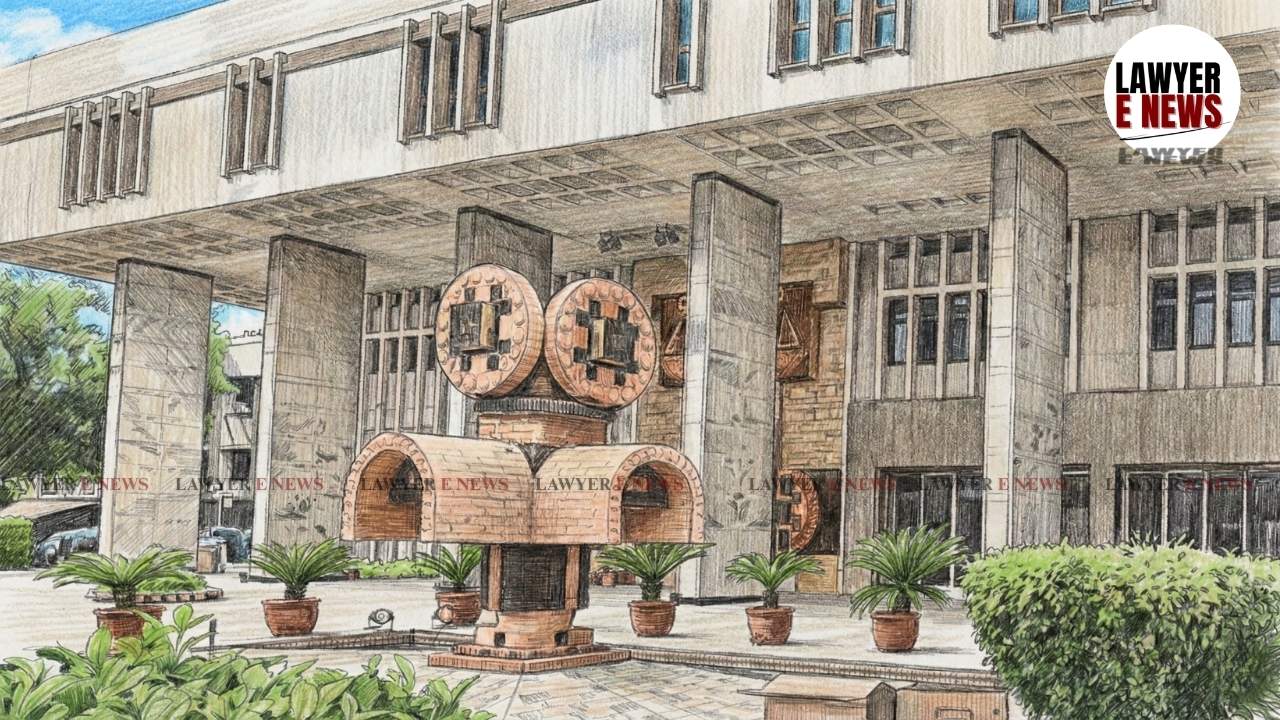
Denial of Section 80G Exemption Based on Assumptions Is Legally Unsustainable - Punjab & Haryana High Court set aside the denial of renewal of exemption under Section 80G of the Income Tax Act, 1961, and quashed the reassessment notice issued under Section 147 for the assessment year 1995-96. The court, comprising Hon'ble Justice Sanjeev Prakash Sharma and Hon'ble Justice Sanjay Vashisth, ruled that the denial of exemption lacked substantial evidence and was based on unsubstantiated assumptions.
The court observed, “The action of the respondents is not tenable, as it is based upon mere suspicion rather than substantive proof. Once the foundation of registration under Section 12A is intact, denial of exemption under Section 80G is improper and unsustainable.” [Paras 12-15] The court’s decision restores the petitioner trust’s eligibility to provide tax benefits to its donors under Section 80G.
"Reassessment Notice Under Section 147 Quashed: No Valid Grounds for Reopening Assessment"
The court also quashed the reassessment notice issued under Section 147, stating that the notice was rooted in the same flawed assumptions as the denial of exemption. The bench clarified, “Reassessment cannot be initiated merely as a fishing inquiry without valid grounds or substantive evidence. Since the denial of exemption has been held invalid, the reassessment notice too cannot stand.” [Paras 8-10] The court emphasized that reassessment powers under Section 147 cannot be misused by tax authorities in the absence of clear evidence of income escapement.
Tilok Tirath Vidyavati Chhuttani Charitable Trust, established in 1972, is a public charitable trust registered under Section 12A(a) of the Income Tax Act, 1961, and had been granted exemption under Section 80G until March 31, 1997. The trust’s primary objectives include providing affordable medical relief, conducting medical research, and supporting institutions like the Post Graduate Institute of Medical Education and Research (PGIMER), Chandigarh. The trust also runs the Chhuttani Medical Centre, offering healthcare services under one roof, including outpatient care and diagnostic facilities at nominal charges.
The controversy arose when the Commissioner of Income Tax (CIT), Chandigarh, denied the trust’s renewal application for exemption under Section 80G, alleging that the trust had deviated from its charitable objectives. The CIT alleged that:
• The trust allowed private doctors to practice on its premises in return for rent, thereby engaging in profit-making activities.
• The trust misused funds by donating Rs. 29 lakh to Sardarni Uttam Kaur Education Society, an entity allegedly unconnected to its objectives.
Based on these allegations, the tax authorities also issued a reassessment notice under Section 147 for AY 1995-96, claiming income had escaped assessment. The trust responded with detailed submissions but was unsuccessful in persuading the CIT, leading to the denial of exemption and the issuance of the reassessment notice.
The court ruled that the denial of exemption was unjustified and lacked a factual foundation. It rejected the CIT’s claim that the trust had engaged in non-charitable activities. The court emphasized, “The trust’s donations to registered charitable societies, which are themselves exempt under Section 80G, cannot be held to contravene its objectives unless there is clear evidence of personal benefit or diversion of funds.” [Paras 14-17]
The bench also addressed the allegation that private doctors used the trust’s premises for practice, stating, “Providing space to doctors under one roof to facilitate affordable medical care aligns with the trust’s primary objective of delivering healthcare services. Such arrangements cannot be construed as profit-making or as a violation of charitable purpose.” [Para 16]
The court cited its own precedent in Sonepat Hindu Education and Charitable Society v. Commissioner of Income Tax (2005) 278 ITR 262, where it was held that a trust cannot be denied exemption under Section 80G solely based on technical or minor procedural lapses when its charitable intent remains intact. It also relied on the Supreme Court’s ruling in New Noble Educational Society v. Chief Commissioner of Income Tax (2023) 6 SCC 649, which affirmed that ancillary activities furthering a trust’s main objectives are permissible and do not negate its charitable nature.
Reassessment Notice Under Section 147 Declared Invalid
The reassessment notice issued under Section 147 for AY 1995-96 was also struck down by the court. It observed that the notice was based entirely on the same allegations as the denial of exemption under Section 80G. The court stated, “Reopening of assessment under Section 147 requires the presence of substantive grounds that establish income escapement. In this case, no such grounds existed, and the reassessment notice is, therefore, unsustainable.” [Paras 8-10]
The court reaffirmed the principle established in Radhasoami Satsang v. Commissioner of Income Tax (1992) 193 ITR 321, that once a fundamental issue is decided in favor of a taxpayer, it cannot be arbitrarily reopened by tax authorities without valid reasons.
Donations to Other Charitable Entities: Ancillary Activities Are Not a Bar
The court addressed the trust’s donations to Sardarni Uttam Kaur Charitable Society, which had been questioned by the CIT. It held that the donations were consistent with the trust’s ancillary objectives and did not constitute a misuse of funds. The court observed, “Ancillary activities supporting the main objects of the trust qualify as charitable. Donations to other registered charitable organizations are permissible unless there is clear evidence of personal benefit or diversion of funds, which the respondents failed to establish.” [Paras 14-16]
The court emphasized that both the petitioner trust and the recipient society were registered under Section 12A and exempt under Section 80G, further underscoring the legitimacy of the donations.
In allowing the writ petitions, the Punjab & Haryana High Court restored the trust’s exemption under Section 80G and quashed the reassessment notice. The court concluded, “The denial of exemption and issuance of the reassessment notice were not based on substantial evidence. The trust’s activities, including donations and the provision of medical facilities, are aligned with its charitable objectives.” [Paras 19-20]
The decision reinforces the principle that charitable trusts cannot be denied exemptions on speculative or unsubstantiated grounds. It also reaffirms that ancillary activities, including donations to other charitable organizations, are permissible as long as they align with the trust’s overall objectives.
Date of Decision: January 17, 2025