
-
by sayum
26 August 2026 1:49 PM







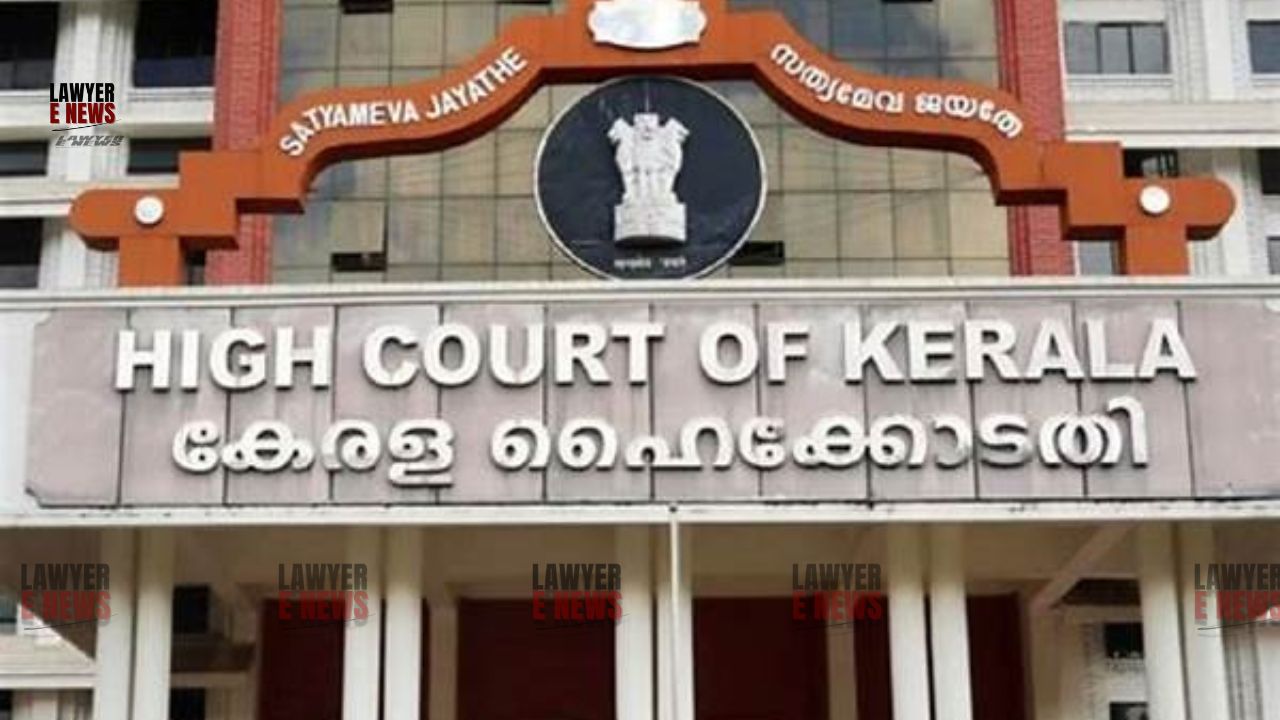
“Silence and Procedural Lapses of Bank Officials Not Innocuous—They Enable Financial Crimes” — Kerala High Court dismissed a plea filed by the Managing Director of Heera Constructions Company Pvt. Ltd. (HCCPL) to quash an order directing further investigation against bank officials in a ₹15 crore loan fraud case. The Court held that an accused borrower cannot invoke Article 227 of the Constitution to derail a validly ordered probe against public servants and found the Special CBI Court’s directive for further investigation “fully justified” in light of institutional failures and disturbing procedural violations by the bank officers.
The Court made it clear that the lack of proven mens rea does not entitle public servants to escape further scrutiny when facts suggest systemic failure, gross negligence, or deliberate silence that may have facilitated fraudulent diversion of public money. The judgment strikes at the heart of attempts to shield collusive conduct under the guise of bureaucratic oversight.
“No Escrow Account, No Consent, and No Questions Asked — This Isn’t Innocence, It’s Omission with Consequences”
The case revolves around a project loan of ₹15 crore sanctioned by the erstwhile State Bank of Travancore (now SBI) in 2013 to HCCPL for its “Heera Lake Front” project. The borrower, Abdul Rasheed @ Dr. A.R. Babu, and his family members allegedly diverted funds by selling mortgaged properties — including commercial units and flats — without the bank’s consent. Significantly, no escrow account was opened, and the sale proceeds were routed through other banks.
Despite these serious irregularities, the CBI, in its two final reports (filed in 2020), gave a clean chit to the bank officials, stating that though they acted negligently, no evidence of dishonest intention or quid pro quo had been unearthed. The Special CBI Judge at Thiruvananthapuram rejected this conclusion and directed further investigation, particularly into the conduct of Sri Ramaswamy and Smt. Veena Das, both senior officials at the bank, who had issued critical no-liability certificates and approved extensions in loan tenure despite glaring red flags.
The High Court upheld this direction, observing:
“The callous attitude of the officers resulted in the non-detection of fraud committed by the customer of the bank… Their negligence further resulted in issuance of no liability certificate for the illegally sold property thereby exposing the bank to the risk of losing one of its collateral securities.” [Para 10]
“Accused No.1 Cannot Play Saviour for Bank Officials — Attempt to Obstruct Investigation Reveals Unholy Nexus”
Abdul Rasheed, the first accused and Managing Director of HCCPL, approached the High Court invoking Article 227, challenging the Special Court’s refusal to accept the CBI’s closure report and its direction to reinvestigate the role of bank officials. The High Court categorically held that he had no locus standi to challenge a relief denied to co-accused public servants.
Justice A. Badharudeen made a scathing observation:
“Once the cause of accused Nos.4 and 5 is taken up by the first accused to get the further investigation annulled, the intention of the first accused to be a saviour of accused Nos.4 and 5 protrudes, after lifting the curtain in front of him.” [Para 16]
The Court termed the petitioner’s conduct as “an attempt to obstruct investigation” and observed that the delay in finalising proceedings was self-created, caused by the very stay order obtained by the petitioner.
“If the petitioner would not have filed this petition and stayed the further investigation as per Ext.P5, the further investigation ought to have been completed much earlier.” [Para 16]
“CBI Cannot Ignore Systemic Red Flags—Further Investigation Is Not a Choice, It's a Duty”
The judgment highlighted that a range of procedural lapses had gone unchecked in the investigation, including:
Sanction of project loan without an escrow account, even though it is an industry standard for builder finance
Approval of home loans to buyers of mortgaged flats without original documents
Granting of ‘no liability certificates’ for undivided shares of collateral property without adequate scrutiny
Extension of loan tenure despite the account being a Non-Performing Asset
The Special Judge had earlier observed:
“The loan was sanctioned without opening an escrow bank account… Flats were sold to third parties, and sale proceeds were received through different banks. The conspicuous silence of the bank officials created a shadow of doubt.” [Para 13]
The High Court agreed, noting that these oversights pointed toward more than just administrative lapse:
“The investigating officer could not simply state that all the lapses were either negligent acts or dereliction of duty, without criminal intent.” [Para 14]
“Public Duty Demands Public Accountability — Laxity in Loan Disbursement Is Not Beyond the Law”
Justice Badharudeen reiterated that the Prevention of Corruption Act casts a wide net, and mere absence of direct bribery does not absolve public servants when their omissions enable fraudulent activity. The CBI's attempt to shield bank officials by relying solely on the lack of proven mens rea was firmly rejected:
“Evidence for dereliction of duty is not sufficient to prosecute the public servants and hence recommended for departmental action… But in view of materials pointing to possible complicity, such a conclusion is premature.” [Para 10, paraphrased]
The Court refused to accept the CBI’s soft exit route for the bank officials and directed the agency to “conduct effective further investigation” and submit a fresh report within two months.
Petition Dismissed, Further Investigation Mandated
The Court concluded that the Special Judge’s order directing continued investigation into the role of the bank officials was “justifiable” and “not open to interference”. Accordingly, it dismissed the petition and vacated the interim stay, enabling the CBI to proceed with the inquiry.
“Accordingly, this petition stands dismissed. Interim order of stay granted by this Court stands vacated. The investigating officer is specifically directed to conduct effective further investigation… and file report within two months.” [Para 17]
The Registry was also directed to forward a copy of the judgment to the Special Court for immediate compliance.
Date of Decision: 16 October 2025





