-
by sayum
26 August 2026 1:49 PM







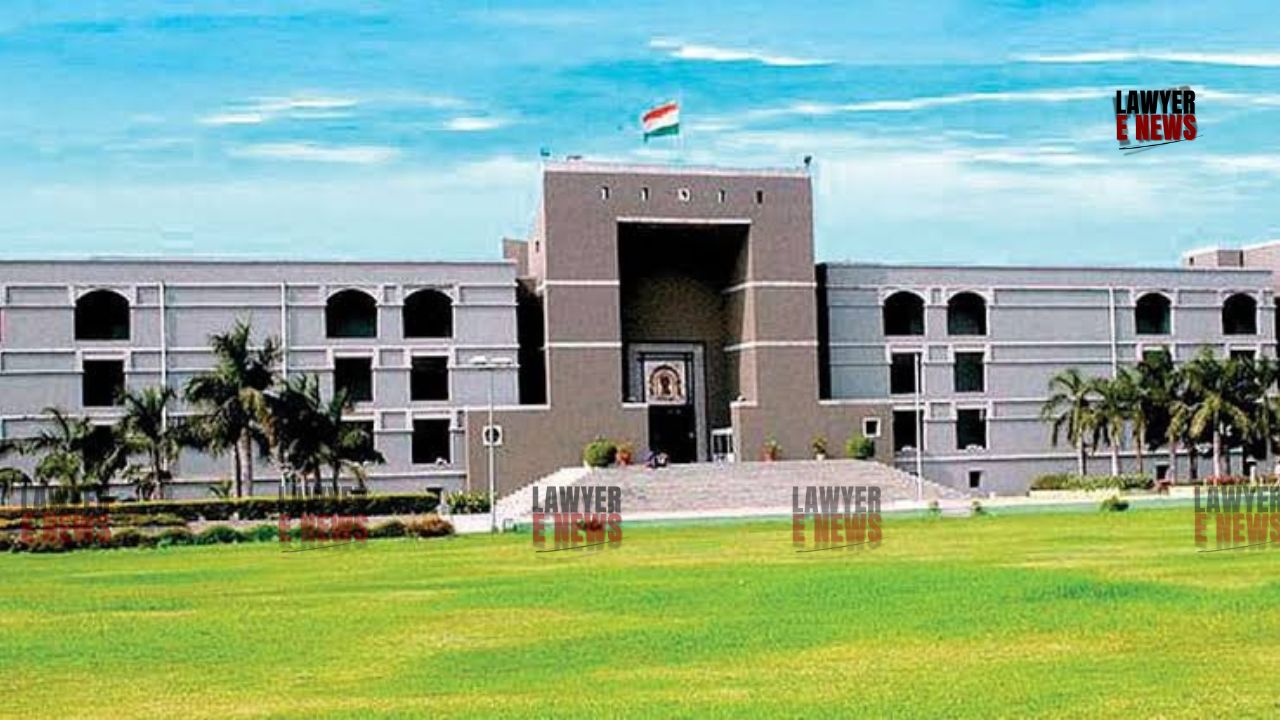
"Damage To A Vehicle Depends Upon The Nature Of Material And Combined Velocity Of Both Vehicles At The Time Of Collision — Not On The Speed Of Any One Vehicle Alone", Gujrat High Court.
In a ruling that dismantles two commonly advanced but scientifically unsustainable arguments used by insurance companies to reduce motor accident compensation, the Gujarat High Court on February 26, 2026 set aside a finding of 20% contributory negligence attributed to a deceased motorcyclist — holding that neither the extent of damage to a vehicle nor the comparative size of the vehicles involved can serve as a valid basis for apportioning negligence, particularly when the burden of proof rests squarely on the insurer and the truck driver was never produced as a witness.
Justice J.L. Odedra of the Gujarat High Court partly allowed the appeal filed by the widow, three minor daughters, and both parents of the deceased — enhancing compensation from Rs. 8,00,960 to Rs. 11,52,900 and directing the Insurance Company to deposit the additional amount of Rs. 3,51,940 with 9% simple interest within eight weeks.
Whether 20% Contributory Negligence Was Rightly Attributed to the Deceased
The Insurance Company sought to defend the Tribunal's finding on two arguments. First, that the higher extent of damage to the motorcycle indicated that it was the motorcyclist who was travelling at a higher speed — implying his own negligence caused or contributed to the severity of the collision. Second, that negligence should naturally be apportioned in inverse proportion to vehicle size — the bigger truck bearing 80% negligence and the smaller motorcycle bearing 20%.
The High Court rejected both arguments unequivocally.
On the damage-equals-speed argument, the Court held that the reasoning was scientifically untenable. "The damage to a vehicle would depend upon the nature of material that it is made of and combined velocity of both the vehicles at the time of collision. Therefore, merely because the motorcycle has suffered damage at a higher scale does not mean that it was the motorcyclist who was travelling at a higher speed." This is a critical clarification — in a head-on collision, the damage sustained by each vehicle is a product of the combined kinetic energy at impact, the structural composition of both vehicles, and the point of impact, not solely the individual speed of either vehicle.
On the vehicle-size-equals-negligence argument, the Court was equally firm: "Negligence is a factual determination and merely because a particular vehicle is higher or lower, negligence cannot be apportioned on the basis of such vehicular size." Size and weight of a vehicle may be relevant to determining the extent of damage caused, but they cannot substitute for actual evidence of how and why the accident occurred.
The Court then turned to the fundamental evidentiary deficiency in the Insurance Company's case. The Panchnama — the only piece of evidence relied upon by the Tribunal — did not indicate in which lane of the road the accident had occurred. Without this basic factual foundation, it was impossible to conclude that the deceased had veered into the truck's lane or had otherwise been negligent. More importantly, the driver of the truck was never examined before the Tribunal, even though the truck owner could readily have produced him. The Court reiterated the settled principle: "It is for the Insurance Company to prove the negligence of the claimant in order to avoid corresponding liability from falling on them." Having failed to discharge this burden, the finding of 20% contributory negligence could not be sustained and was set aside in its entirety.
Whether the Compensation Awarded Was Just and Reasonable
On the quantum of compensation, the Court applied the authoritative framework laid down by the Supreme Court in National Insurance Company Limited v. Pranay Sethi, (2017) 16 SCC 680. The Tribunal's awards under several heads were found to deviate from the Pranay Sethi guidelines and were accordingly corrected.
The Tribunal had awarded Rs. 25,000 under Funeral Expenses and nothing under Loss of Estate. Under Pranay Sethi, both heads are to be compensated at Rs. 18,150 each. The Tribunal had also clubbed consortium and care-and-guidance into a combined award of Rs. 1,50,000 across all claimants — a figure the Court found wholly inadequate.
Under Pranay Sethi, consortium is to be awarded at Rs. 48,400 per dependent. The deceased left behind six dependents: his widow, three minor daughters, and both parents. Applying the Pranay Sethi rate to each of the six dependents, the total consortium award came to Rs. 48,400 multiplied by 6 — a sum of Rs. 2,90,400. The head of Loss of Care and Guidance, which the Tribunal had separately awarded at Rs. 50,000, was subsumed within the consortium recalculation.
The loss of future income, calculated at a notional monthly income of Rs. 3,000 per month with appropriate multiplier, was retained at Rs. 8,26,200 as awarded by the Tribunal, and was not disturbed.
The revised total compensation was determined at Rs. 11,52,900, representing an enhancement of Rs. 3,51,940 over the Tribunal's award — with the additional amount carrying 9% simple interest.
Date of Decision: February 26, 2026