-
by sayum
27 August 2026 3:32 PM







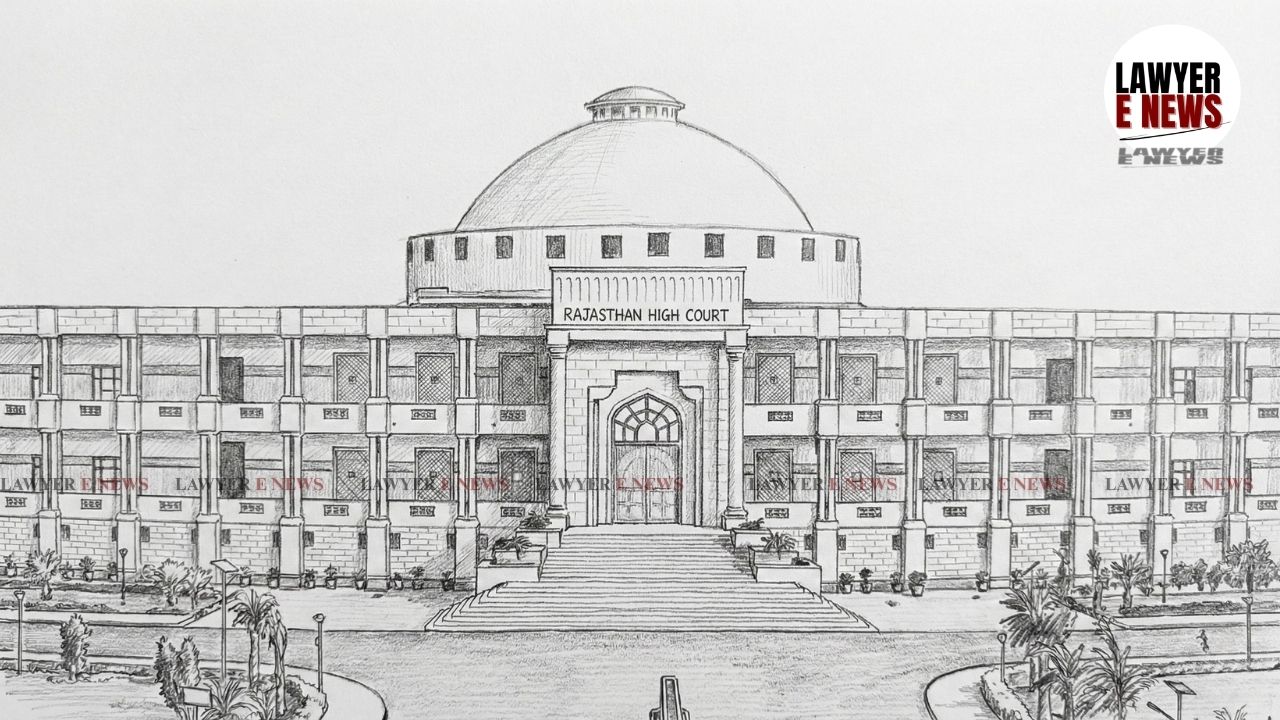
"If the seeds of a commercial relationship between a private entity and the State are planted in fraud, every subsequent offshoot that grows from such seeds, including the work order and the contract, is fatally infected with the poison of fraud," Rajasthan High Court, in a significant ruling dated April 29, 2026, held that a bidder’s failure to disclose past debarment in a sworn affidavit constitutes a "fraudulent practice" that justifies the immediate cancellation of a work order.
A bench of Justice Sameer Jain observed that the sanctity of affidavits must be preserved in public procurement to ensure commercial integrity, even if the period of debarment had expired before the new bid was submitted.
The petitioner, a co-operative society, was awarded a contract by the Jaipur Development Authority (JDA) for providing security and labor services. During the bidding process, the petitioner filed an affidavit stating it had never been blacklisted or debarred by any government department. However, the JDA later discovered that the petitioner had been debarred by SMS Hospital, Jaipur, for six months ending in June 2025, leading to the cancellation of the contract, forfeiture of the bank guarantee, and a fresh six-month debarment.
The primary question before the court was whether the suppression of a past debarment, which had already expired at the time of the bid submission, warranted the cancellation of the current work order. The court also examined whether such non-disclosure constitutes a violation of the 'Code of Integrity' and the technical eligibility criteria enshrined in the tender document.
Mandatory Obligation To Disclose Past Operational Record
The Court observed that as per the technical eligibility conditions and the "Compliance with the Code of Integrity" clause in the Tender Document, every bidder is under a mandatory obligation to disclose any debarment by any other procuring entity. This requirement is not limited to active debarments but extends to any transgressions within the last three years to allow the authority to analyze the bidder's past operational record.
The bench noted that the petitioner had categorically sworn in an affidavit that it had "never" been debarred, which was a manifest falsehood. The Court emphasized that the petitioner cannot escape liability by claiming they were not actively debarred at the time of the bid, as the disclosure window specifically covered the preceding three years.
Fraudulent Practice To Influence Bidding Process
"Non-disclosure of an adverse order constitutes a fraudulent practice aimed at influencing the bidding process."
Relying on the Supreme Court's dictum in The State of Madhya Pradesh v. U.P. State Bridge Corporation Limited (2020), the Court held that "fraudulent practice" includes the omission of facts or disclosure of incomplete facts. In the present case, the omission of the SMS Hospital debarment was a suppression of a relevant fact intended to gain an undue advantage in the procurement process.
The Court expressed concern over the rising trend of filing false affidavits in commercial matters. Citing M/s. Sciemed Overseas Inc. v. BOC India Limited & Ors. (2016), the bench reiterated that the sanctity of affidavits must be protected and that filing false statements should be strongly discouraged before it is treated as a routine affair.
Fraud Vitiates The Entire Commercial Relationship
"A product of fraud is fundamentally in conflict with the public policy of India and notions of morality."
The Court highlighted that if the foundation of a work order is built upon false and concocted information, the issuing authority possesses the indefeasible right to terminate the contract. It observed that a tender authority is entirely justified in cancelling an order the moment it is established that a successful bidder relied on misrepresentation to cross the technical eligibility threshold.
The bench found that the JDA had followed the principles of natural justice by issuing a Show Cause Notice and providing the petitioner an opportunity to be heard. The petitioner’s response was found to be evasive, as it failed to justify why it had suppressed a material fact that was explicitly required to be disclosed under the tender's Code of Integrity.
The Court concluded that the petitioner failed to establish any procedural irregularity or arbitrariness in the JDA's cancellation order. Justice Jain remarked that the petitioner’s actions were a grave misconduct aimed at procuring a work order through fraudulent means. Consequently, the Court refused to interfere with the cancellation of the contract and the forfeiture of the bank guarantee.
The Rajasthan High Court dismissed the writ petition, affirming that honesty and transparency are non-negotiable in public tenders. The ruling reinforces that any commercial contract obtained through the suppression of material facts, specifically past debarments, is voidable at the instance of the State, regardless of whether the previous punishment period has concluded.
Date of Decision: 29 April 2026