-
by sayum
27 August 2026 3:32 PM







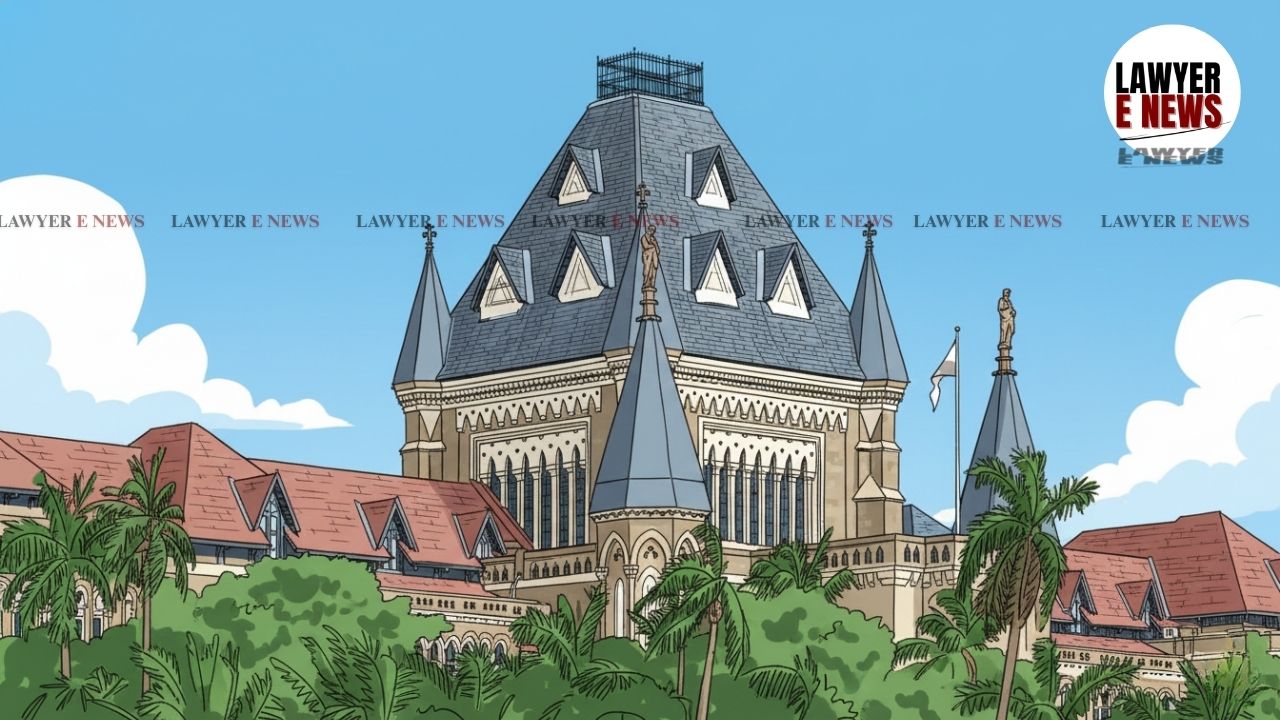
"Undertaking to the court that the land shall remain unencumbered is implicit in the solvent surety provided by the party as the condition to defend the suit," Bombay High Court, in a significant ruling dated May 4, 2026, held that the sale of property furnished as a solvent surety for obtaining leave to defend a summary suit constitutes civil contempt.
A single-judge bench of Justice Gauri Godse observed that furnishing such a surety carries an implicit undertaking to the court that the property will remain unencumbered until the disposal of the litigation. The court emphasized that any breach of this assurance defeats the very purpose of conditional leave under the Code of Civil Procedure (CPC).
The dispute arose from a summary suit filed by the petitioners for a claim of ₹2.30 crores based on an agreement for compensation in lieu of flats. The trial court had granted the respondents conditional leave to defend, subject to furnishing a solvent surety equal to the claim amount plus interest. Despite these orders, and while the suit was pending, the respondents executed a registered sale deed in June 2023 in favour of a third party for the property offered as surety.
The primary question before the court was whether the execution of a sale deed for a property furnished as a solvent surety amounts to "civil contempt" under Section 2(b) of the Contempt of Courts Act, 1971. The court was also called upon to determine whether an unconditional apology can be accepted as bona fide when the contemnor commits a breach with full knowledge of subsisting court orders.
Implicit Undertaking in Solvent Surety
The court noted that when a party provides a solvent surety to satisfy a condition for leave to defend, they are essentially giving an assurance to the court. Justice Godse observed that such a surety is liable to be realized to satisfy a potential decree under Section 145 of the CPC. The bench clarified that the property must remain available for realization, making an undertaking to keep it unencumbered an inherent part of the legal process.
"Thus, a solvent surety would mean that it has to remain unencumbered so that it can be realised to satisfy the decree. Therefore, the undertaking to the court that the land shall remain unencumbered is implicit in the solvent surety provided by the party as the condition to defend the suit."
Breach Constitutes Civil Contempt
The court found that the respondents were fully aware that the solvent surety was a mandatory condition for their defense. By disposing of the property without seeking the court's permission, they committed a willful breach of the orders passed by the trial court and the High Court in earlier writ proceedings. The court held that such conduct squarely falls within the definition of civil contempt under Section 2(b) of the Contempt of Courts Act, 1971.
Court Rejects Apology as a ‘Legal Trick’
The respondents tendered an unconditional apology, citing financial distress and the death of their previous advocate as reasons for the sale. However, the court refused to accept this as bona fide. Relying on the Supreme Court's precedent in Balwantbhai Somabhai Bhandari vs. Hiralal Somabhai Contractor, the bench remarked that courts should not show compassion when a breach is committed with total consciousness and impunity.
"Apology is not just a word. The court should not accept the apology when it appears that saying sorry is nothing but a legal trick to wriggle out of responsibility. A true apology must be a deep ethical act of introspection, self-introspection, atonement and self-reform. In its absence, an apology can be termed as farce."
Third-Party Rights and Contempt Jurisdiction
The respondents argued that the property had been further subdivided by the purchaser, making the transaction irreversible. The court dismissed this logic, holding that beneficiaries of contumacious transactions have no locus to be heard in contempt proceedings. The court noted that it possesses the power to declare such transactions void or issue directions to nullify any advantage secured by the contemnor through their disobedience.
"The beneficiaries of any contumacious transaction have no right or locus to be heard in the contempt proceedings on the ground that they are bona fide purchasers... Contempt is between the court and the contemnor and no third party can involve itself into the same."
During the sentencing phase in the second session, the respondents shifted their stance and offered to settle the entire suit claim. Respondent No. 1 submitted an undertaking to pay ₹4.60 crores (representing the principal of ₹2.30 crores and an equivalent amount toward interest) as a full and final settlement. Both parties subsequently signed consent terms to dispose of the summary suit based on this payment schedule.
"Since respondent no.1 has shown willingness to settle the entire suit claim by way of full and final settlement and has accordingly tendered an undertaking to the court, this court is satisfied that the respondents can be discharged on payment of a fine."
The High Court held the respondents guilty of contempt but, in light of the settlement and the advanced age of the second respondent, opted for a lenient sentence. The respondents were discharged upon the condition of paying a fine of ₹2,000 and strictly adhering to the undertaking to deposit the suit amount. The ruling reinforces that solvent sureties are solemn commitments to the court that cannot be bypassed for private commercial gain.
Date of Decision: 04 May 2026