-
by sayum
23 August 2026 2:56 PM








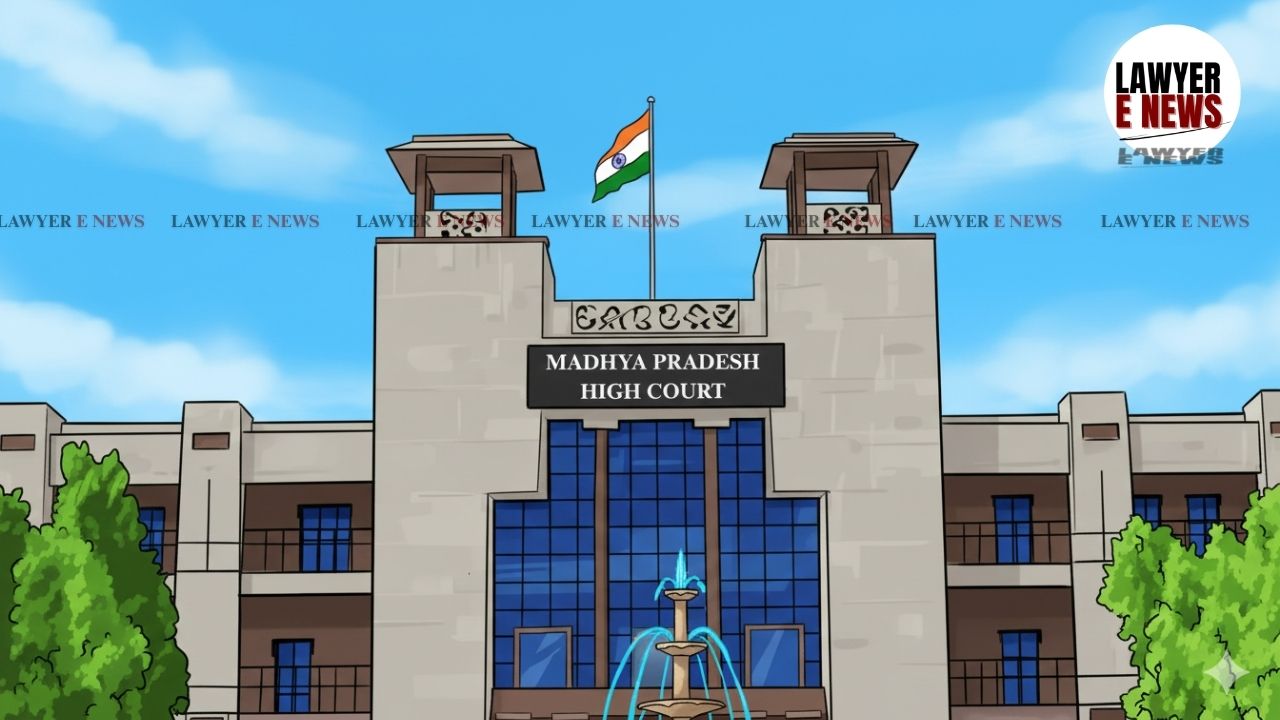
“The applicants, with open eyes, have agreed to follow the Rules of MCIA for appointment of Arbitrator... Thus, they cannot now turn back and seek appointment of Arbitrator in terms of Section 11... without first exhausting the process provided under the arbitration agreement”— In a seminal ruling, the Madhya Pradesh High Court, comprising Justice Pavan Kumar Dwivedi, has dismissed a batch of Section 11 petitions, firmly establishing that courts cannot usurp the jurisdiction of agreed institutional arbitration centers merely because the seat of arbitration differs from the institution's headquarters.
The Court was adjudicating a dispute arising from the termination of employment contracts between former employees (Applicants) and TaskUs India Pvt. Ltd. The core legal conundrum revolved around the interpretation of a dispute resolution clause that mandated the appointment of an arbitrator under the Mumbai Centre for International Arbitration (MCIA) Rules, while simultaneously designating Indore as the seat and venue of arbitration.
The 'Anomaly' Argument: MCIA Rules vs. Indore Seat
The Applicants, whose services were terminated in early 2025, invoked the arbitration clause. While the Respondent company consented to arbitration, they insisted on adherence to the contractual mechanism—appointment via the MCIA. The Applicants, however, approached the High Court under Section 11(6) of the Arbitration and Conciliation Act, 1996, arguing that the arbitration clause was "anomalous."
Their counsel contended that the MCIA Rules are inherently tied to Mumbai, and therefore, a clause fixing the seat at Indore rendered the institutional mechanism unworkable. Consequently, they argued, the High Court should step in to appoint an independent arbitrator.
“The contention that in Indore the Rules of MCIA will not apply... appears to be fallacious in view of the fact that the rules of MCIA in itself provide in Rule No.30 that the parties may agree on the seat of arbitration.”
Judicial Reasoning: Sanctity of Institutional Rules
Justice Dwivedi dismantled the Applicants' argument by conducting a textual analysis of the MCIA Rules. The Court observed that Rule 30 of the MCIA Rules explicitly empowers parties to agree on a seat of arbitration other than Mumbai. The Court held that designating Indore as the seat while adopting MCIA Rules creates no legal repugnancy. The institutional framework is flexible enough to administer arbitration proceedings outside its headquarters.
The Court emphasized that party autonomy is the cornerstone of arbitration. Since the parties had "consciously agreed" to an institutional mechanism, the Court refused to rewrite the contract to allow for an ad-hoc appointment under Section 11.
“It is thus clear that the MCIA Rules provide that seat of arbitration can be at any place as agreed by the parties... even in terms of Rules of MCIA it is not required that the arbitration must be held at Mumbai.”
Prematurity and the 'Default' Nature of Section 11
The Court further noted that the Respondent had not failed to act; rather, they had accepted the invocation and pointed the Applicants toward the MCIA. Relying on the Supreme Court’s precedent in Union of India v. Parmar Construction Company (2019), the High Court reiterated that Section 11 jurisdiction is a default remedy. It can only be triggered when the agreed procedure fails or the opposing party refuses to adhere to it.
Since the Applicants had bypassed the MCIA Registrar and approached the High Court directly, the petitions were deemed premature and impermissible. The Court dismissed all three applications, granting liberty to the parties to approach the MCIA for the appointment of a Sole Arbitrator as per their contract.
Date of Decision: 08/01/2026