-
by sayum
04 August 2026 1:39 PM







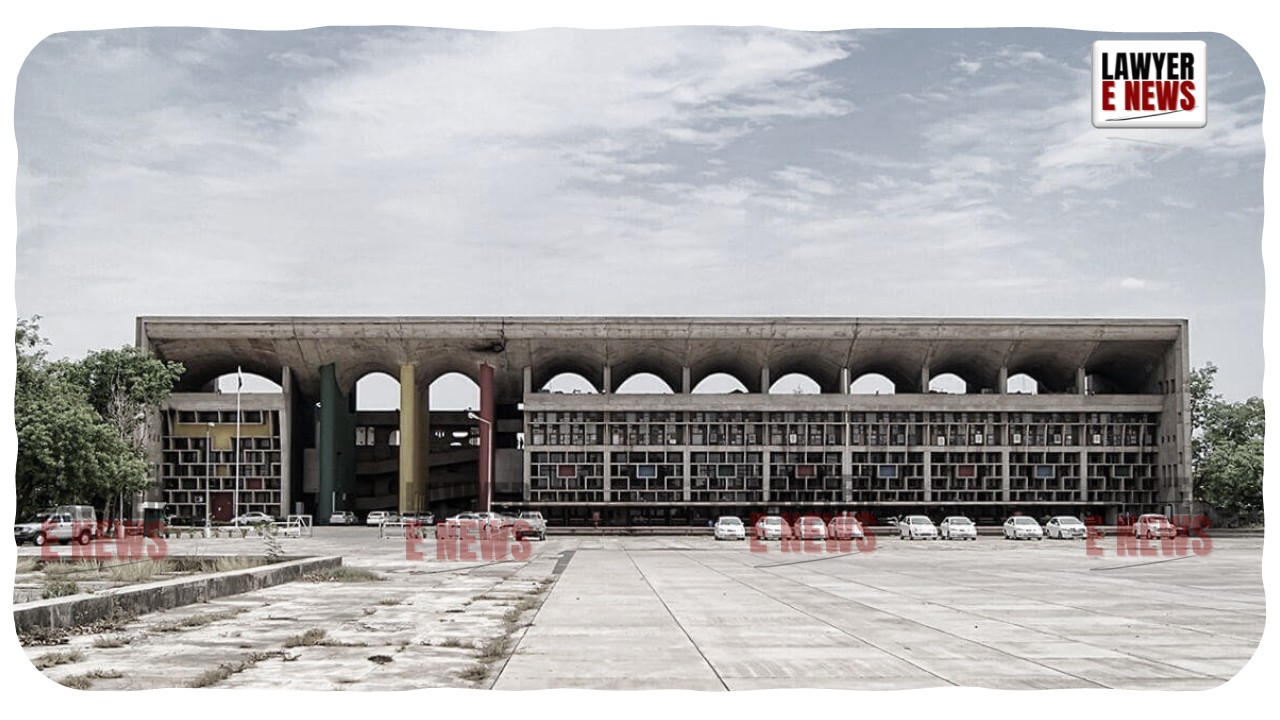
“In absence of a registered rent deed or document establishing ownership, no prima facie case is made out; injunction rightly denied” — Punjab and Haryana High Court dismissed a civil revision filed by Siri 1008 Bhagwan Aadi Nath Digamber Jain Mandir Ji, Navin challenging the concurrent orders of the Trial Court and the First Appellate Court, which had rejected its application for ad-interim injunction under Order 39 Rules 1 and 2 CPC. The petitioner had sought to restrain the respondent, Narender Kumar Jain, from reconstructing a shop allegedly in his possession as a tenant. However, the Courts below found that the plaintiff religious body failed to establish a prima facie relationship of landlord and tenant, or ownership over the disputed shop.
Justice Alka Sarin, while upholding the concurrent findings, held that “no prima facie case, balance of convenience or irreparable injury was shown by the petitioner,” and further remarked that “Article 227 of the Constitution cannot be used to re-appreciate findings of fact where courts have exercised jurisdiction properly.”
“Religious Body Fails to Prove It Owns the Property or That Defendant Is Its Tenant”: Court Refuses to Interfere under Article 227
The suit was originally filed by the petitioner, a Jain religious institution, seeking a permanent injunction against the respondent, claiming that the shop in question was its property and that the respondent was occupying it as a tenant, attempting to unauthorisedly reconstruct it. The petitioner relied on a gift deed dated 20.10.1987 and certain rent receipts to assert ownership and tenancy.
However, both courts below found that the petitioner had not filed any rent note, nor had it produced conclusive ownership documents linking the shop to its name. The gift deed, as the High Court noted, was executed in favour of a different entity, namely Siri Digamber Jain Shiksha Parcharni Sabha, Gohana, and not the plaintiff-mandir.
Justice Alka Sarin observed: “The gift deed relied upon by the plaintiff reveals that it was not executed in favour of the petitioner but in favour of a separate Sabha. The present suit has not been filed by that Sabha. Moreover, the gift deed does not even mention the shop number.”
Further undercutting the petitioner’s claim, the Court found that the rent receipts submitted also failed to mention any shop number and were issued by another Mandir entity, namely Mandir Ji Navin, Gohana, Rohtak, not by the plaintiff-Mandir which claimed rights over the premises.
“Rent Receipts Without Shop Numbers or Legal Entity Match Cannot Prove Tenancy”: No Prima Facie Case Made Out
The High Court reiterated the well-settled position that interim injunctions under Order 39 CPC require the plaintiff to demonstrate:
However, as the Court succinctly stated: “There is no prima facie case which has been made out by the plaintiff-petitioner. Even the balance of convenience is not in its favour nor irreparable loss has been shown which would be caused... in case the injunction is not granted.”
In response to the petitioner’s argument that Article 227 empowers the High Court to intervene, the judgment reinforced that supervisory jurisdiction under Article 227 is not to re-evaluate facts or disturb concurrent findings unless there is perversity or jurisdictional error, neither of which was present in this case.
“Concurrent Findings of Courts Below Not Liable to Be Disturbed Where Jurisdiction Has Been Properly Exercised”: Article 227 Not a Substitute for Second Appeal
Justice Sarin emphasized the limited scope of Article 227, clarifying that the High Court’s power of superintendence cannot be invoked to reopen factual conclusions drawn by subordinate courts unless patently perverse or jurisdictionally flawed:
“No fault can be found with the orders passed by both the Courts... The present revision petition being devoid of any merit is accordingly dismissed.”
The Court also clarified that its observations shall not be treated as findings on the merits of the suit, which remains pending before the Trial Court.
The decision in Siri 1008 Bhagwan Aadi Nath Digamber Jain Mandir Ji v. Narender Kumar Jain reinforces the principle that injunctions are not to be granted mechanically — they require credible documentary evidence of a legal right or relationship. The ruling is a reminder that Article 227 of the Constitution cannot serve as a tool to sidestep settled procedural thresholds or factual findings rendered by competent courts.
The High Court’s refusal to interfere, despite the involvement of a religious institution, underscores a consistent judicial stance: “faith cannot replace facts, and emotion cannot substitute for evidence.”
Date of Decision: 15 October 2025