-
by sayum
05 August 2026 3:07 PM







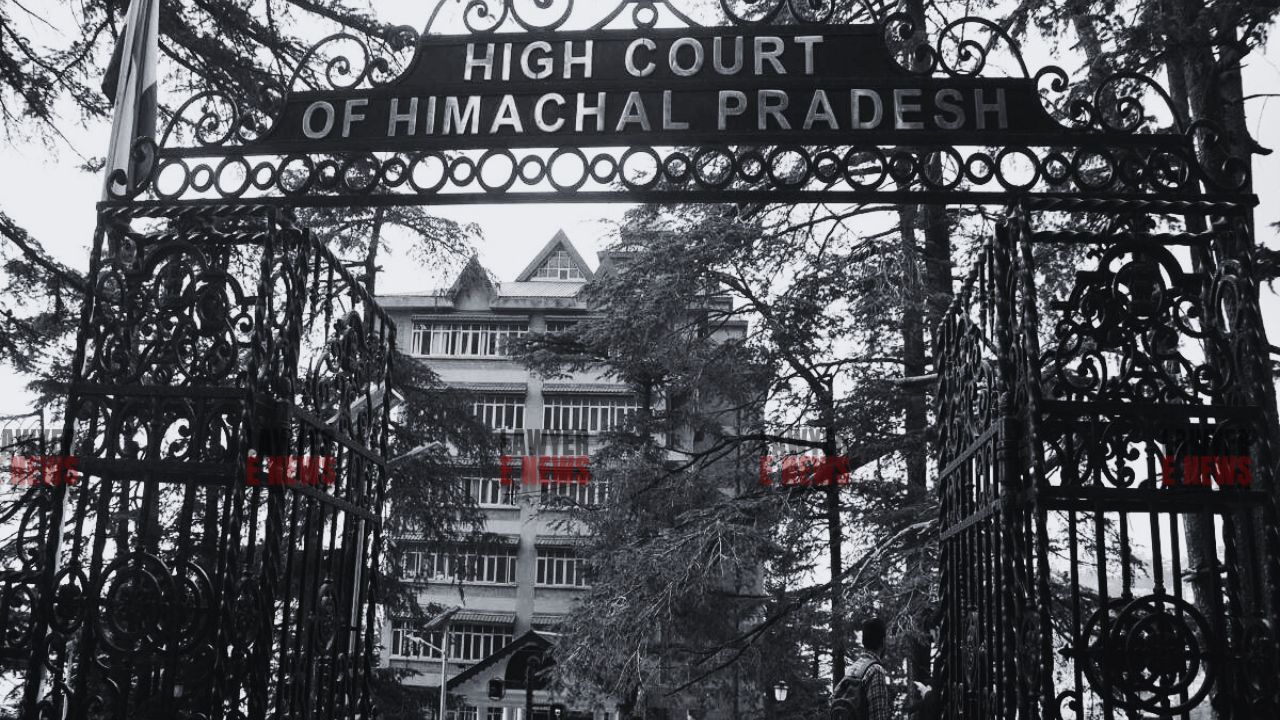
“A Word Uttered in a Fit of Anger Without Intending the Consequences Cannot Be Said to Be Instigation” – Himachal Pradesh High Court addressing the essential ingredients required to establish the offence of abetment to suicide under Section 306 read with Section 34 of the Indian Penal Code. Justice Rakesh Kainthla dismissed the petition seeking quashing of FIR No. 54/2022 but offered extensive legal reasoning reiterating the judicial approach to the offence of abetment to suicide.
Allegations of Threats and Suicide
The case arose from a tragic incident where Savitri Devi, who had reportedly gone missing on 13 March 2022, was later found dead. It was alleged that the petitioners—Sanjeev Kumar, Kala Devi, and Anjana Kumari—had abused, threatened, and beaten her, leading to her suicide. An FIR was registered under Sections 306 and 34 IPC following recovery of her body on 22 March 2022. The postmortem report indicated death due to strangulation consistent with partial suicidal hanging.
The petitioners sought quashing of the FIR, contending false implication based on a short verbal spat over storing firewood and highlighting contradictions in witness statements. They asserted that there was no material or direct provocation to drive the deceased to suicide and emphasized lack of proper investigation and DNA confirmation.
Test of ‘Instigation’ and ‘Mens Rea’ Under Section 306 IPC
Justice Rakesh Kainthla delved deeply into the jurisprudence surrounding abetment to suicide. Relying on several binding precedents, including M. Mohan v. State, Ramesh Kumar v. State of Chhattisgarh, S.S. Chheena v. Vijay Kumar Mahajan, and Amalendu Pal v. State of West Bengal, the Court reiterated: “Instigation is to goad, urge forward, provoke, incite or encourage to do ‘an act’. A word uttered in a fit of anger or emotion without intending the consequences to actually follow cannot be said to be instigation.”
The Court emphasized that to constitute abetment, there must be a mens rea to provoke or urge suicide, and a proximate nexus between the alleged act and the suicide must exist. Mere quarrels or stray remarks made days before the act do not suffice.
“Each person has their own threshold of sensitivity. The deceased must not merely be hypersensitive to ordinary discord or petulance,” the Court said while quoting State of West Bengal v. Orilal Jaiswal and Gangula Mohan Reddy v. State of Andhra Pradesh.
“No Positive Act That Pushed Deceased to Commit Suicide”: Court Applies Bhajan Lal Guidelines
Applying the principles laid down in State of Haryana v. Bhajan Lal, the Court scrutinized whether the allegations prima facie disclosed any offence. It concluded that the facts did not demonstrate any “direct or indirect incitement or aiding,” and the element of mens rea was absent. The time lapse between the quarrel and the suicide, and absence of specific inciting acts, further weakened the prosecution’s case.
The judgment further observed: “Abetment involves a mental process. Without a positive act on the part of the accused, conviction under Section 306 IPC cannot be sustained.”
Thus, the Court found that the prosecution’s claim failed to establish any causal connection between the petitioners' actions and the alleged suicide.
FIR Quashed Due to Lack of Proximate, Intentional Instigation
The Court concluded that mere allegations of general harassment or quarrel do not meet the strict legal criteria for abetment to suicide. There being no overt act of provocation or incitement, and in the absence of any material to establish a direct nexus, the FIR was quashed.
“It cannot be said that the petitioners played any active role or committed any positive act that pushed the deceased to commit suicide,” the Court ruled, relying on Sanju @ Sanjay Singh Sengar v. State of M.P. and Ajay Malik v. State of Uttarakhand.
Date of Decision: 14 May 2025