-
by sayum
28 August 2026 10:07 AM







“Plaintiff cannot rely on weakness in defendants' pleadings — cause of action must stand on its own, especially where title of deity is undisputed and Dev Seva continues unhampered.” — Justice Dr. Ajoy Kumar Mukherjee
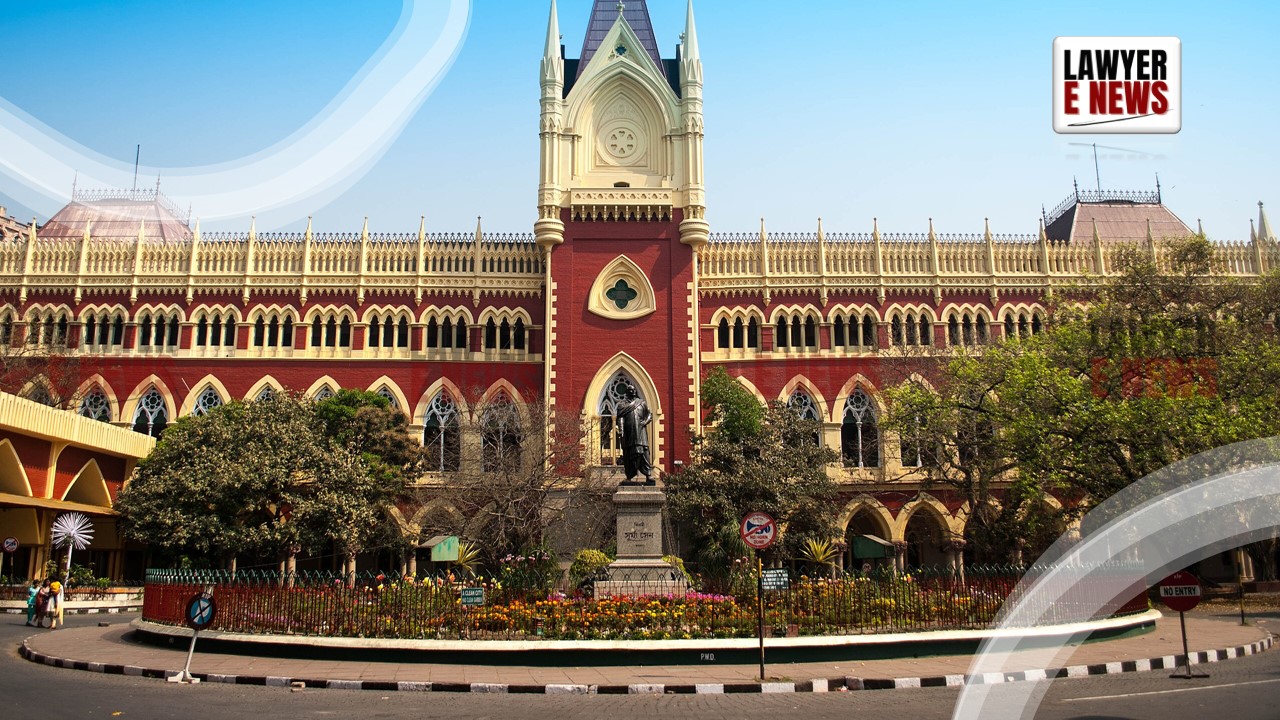
Calcutta High Court (Appellate Side) delivered a reasoned judgment dismissing the second appeal filed by a shebait's heir seeking to set aside a compromise decree passed in 1994 relating to debottar properties. Justice Dr. Ajoy Kumar Mukherjee held that the plaintiff had no cause of action, no locus standi, and that the decree did not infringe the deity's rights. The Court also upheld the findings of both the Trial and First Appellate Courts, reiterating the principle that High Courts should not disturb concurrent factual findings unless perversity is shown.
“Debottar property remains divine — shebait’s arrangements don’t dilute the deity’s ownership”
The plaintiff, an heir of a deceased shebait, filed a suit seeking declaration that the suit properties were absolute debottar, and challenged the 1994 compromise decree between two other shebaits, claiming it was fraudulent and void.
It was alleged that one of the shebaits (defendant no. 7) had fraudulently entered into a compromise with another (now deceased), giving up his share of seva pala and debottar land in exchange for another property. The plaintiff contended that he only came to know of this decree years later, and that the deities' rights had been compromised.
However, both the Trial Court and First Appellate Court held that the compromise was merely an internal arrangement between two shebaits, did not affect the title of the deity, and could not be challenged by a party who neither suffered legal injury nor was excluded from participation.
“The compromise decree was not a partition, but a mutual settlement of seva pala between two shebaits, which cannot cloud the title of the deity.”
“Attorney can’t testify on what only the principal knows” — Court disbelieves power of attorney holder’s testimony
The plaintiff did not depose personally, instead authorizing his daughter as power of attorney holder to testify. The Court found that her deposition was inadmissible regarding events prior to the power of attorney, especially on the crucial point of when the plaintiff came to know about the 1994 decree, which was filed seventeen years later.
“Where the knowledge of a material fact, like the existence of a decree, is within the personal knowledge of the plaintiff, his non-appearance creates a presumption against him.”
Citing Janki Vashdeo Bhojwani v. Indusind Bank Ltd. (2005) 2 SCC 217 and S. Kesari Hanuman Goud v. Anjum Jehan (2013) 12 SCC 64, the Court held: “A power-of-attorney holder may depose for acts done by them, but cannot depose for acts done by the principal, especially where personal knowledge is involved.
“Cause of action cannot be constructed from isolated phrases in pleadings” — No legal injury shown by plaintiff
The Court noted that the deity’s title was never denied, nor was the performance of Dev Seva interrupted. In fact, it was admitted that other legal heirs of the plaintiff's family continued seva pala without objection.
“No infringement of deity's rights was alleged by any other shebait; no denial of title ever occurred; no damage to Dev Seva shown.”
Justice Mukherjee stressed that a suit must disclose a legal right violated by the defendants, and that mere suspicion or familial discord cannot substitute real legal harm.
“By picking isolated words like ‘partition’ from defendants’ pleadings, plaintiff cannot invent a cause of action. Dev Seva was never interrupted, and ownership of deity never questioned.”
“Finality matters — Same issues were already litigated, up to the Supreme Court” — Bar of res judicata upheld
The Court held that the plaintiff’s suit was barred under Explanation VI to Section 11 CPC, as identical issues regarding the 1994 compromise decree had already been decided when other shebaits challenged it unsuccessfully all the way up to the Supreme Court.
“Just because the plaintiff was not a party to the earlier litigation does not prevent res judicata, where his claim and legal standing are identical to those of the prior litigants.”
The Court cited Narayan Prabhu v. Narayana Prabhu (1977) 2 SCC 181, clarifying that in cases of joint interest, earlier decisions operate as binding on similarly placed parties.
“A compromise doesn’t require deity’s consent when no rights are violated” — No cause to challenge decree after 17 years
The compromise only dealt with internal allocation of seva pala and shebaitship, not the ownership of the deity, and the deity was never impleaded because its rights were unaffected.
“Plaintiff cannot challenge a decree to which he was a stranger unless he shows it adversely impacted his legal interest — which he failed to do.”
Moreover, the delay of 17 years without justifiable explanation, when other heirs had already challenged the decree, was found fatal.
Conclusion: No Error, No Infringement, No Cause of Action — Second Appeal Dismissed
Justice Dr. Ajoy Kumar Mukherjee concluded: “There is no scope to say that the courts below based their decisions on no evidence or misread evidence. No perversity is shown, and thus the concurrent findings cannot be disturbed.”
Accordingly, the second appeal was dismissed, affirming the decisions of both courts below.
Date of Decision: 21 April 2025