-
by sayum
04 August 2026 1:39 PM







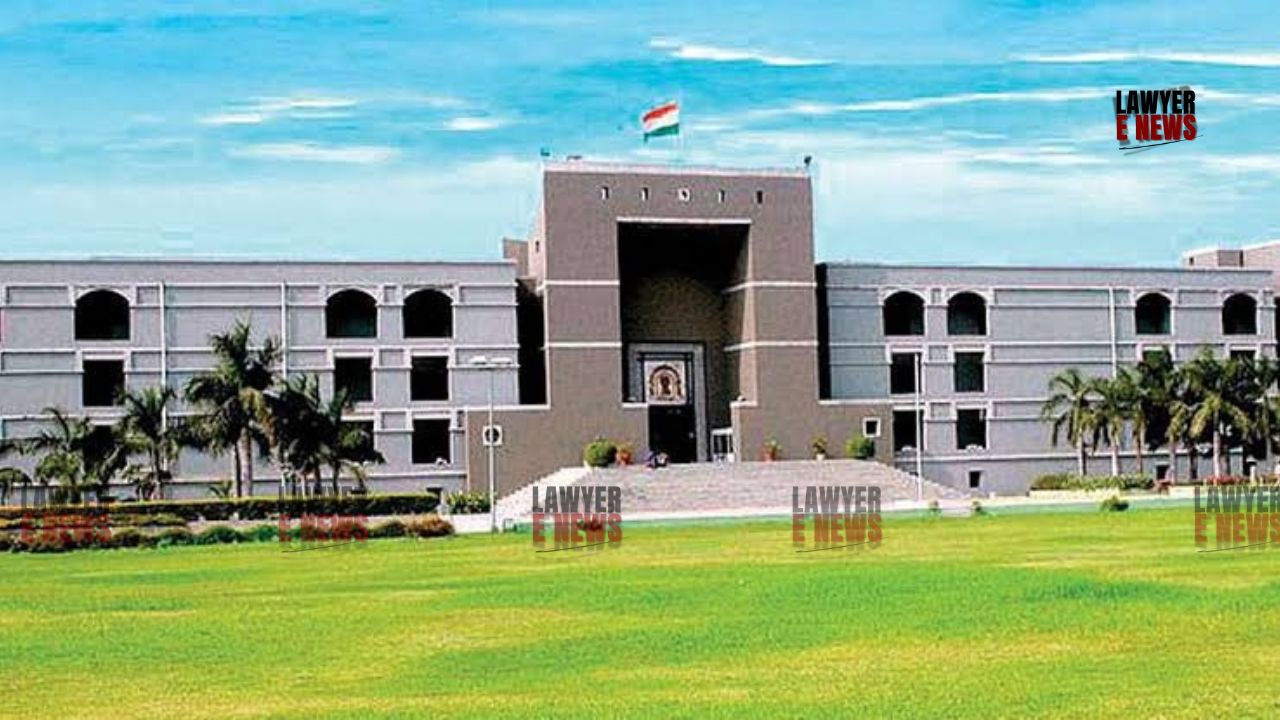
In a powerful reaffirmation of criminal jurisprudence, the Gujarat High Court overturned the convictions of three men accused of stealing ornaments and cash from a Jain temple in Mansa, holding that the prosecution failed to establish a complete chain of circumstantial evidence and relied on inadmissible police confessions. The Division Bench comprising Justice Ilesh J. Vora and Justice Sandeep N. Bhatt held that:
“There can be no conviction on the basis of surmises and conjectures or suspicion, howsoever grave it may be.”
The acquittal came in State of Gujarat v. Vishnubhai @ Gabbar Prahladbhai Dantani & Ors., where the trial court had previously sentenced the accused under Sections 457, 380, 413, and 114 of the IPC. The State, on the other hand, had filed an appeal for sentence enhancement.
“Discovery Must Be Credible, Not Coerced — Mere Recovery Doesn’t Prove Guilt”
The case centered on a theft that took place on the night of December 23, 2009, when gold, silver, and cash worth over ₹4 lakhs were stolen from the Mansa Jain Temple. While the police claimed recovery of a melted ignot based on a disclosure statement under Section 27 of the Evidence Act, the High Court found serious defects in the prosecution's story. Notably, the key witness to the alleged recovery, the son of accused No. 3, deposed that:
“Under pressure of police, he purchased the ignot from the market and produced it… by selling his house.”
The Court noted that this recovery was not natural or voluntary but borne out of duress, thereby nullifying its evidentiary value. The Bench ruled that:
“The entire recovery appears to be nothing but concocted story of police... the prosecution story is highly unnatural and improbable.”
Procedural Lapses Fatal to Prosecution — Confessions Made in Custody Have No Evidentiary Value
The judgment categorically rejected the trial court’s reliance on confessions made to police while in custody, reminding that:
“A confession made to a police officer is prohibited and cannot be admitted in evidence.”
The Court cited precedents including Major Singh v. State of Punjab and the Supreme Court decision in Digambar Vaishnav v. State of Chhattisgarh to reiterate that no conviction can be sustained unless each link in the chain of circumstantial evidence is proved beyond doubt, and every hypothesis of innocence is ruled out.
“The past criminal history of the accused may be relevant in investigation, but it cannot replace proof required in a court of law.”
Acquittal Ordered — Conviction Based on “Conjectures” Set Aside
Holding that the prosecution failed to meet the standard of proof required to sustain a conviction in a serious criminal case, the Gujarat High Court acquitted all the accused and dismissed the State’s plea for enhanced sentencing as infructuous. It found that not only was the recovery suspect, but even the so-called eye-witnesses turned hostile, and the confession to police, unsupported by credible discovery or independent corroboration, was legally inadmissible.
“The judgment of conviction and order of sentence… is not sustainable in law and accordingly deserves to be set aside.”
Date of Judgment: 09 May 2025