-
by sayum
05 August 2026 3:07 PM







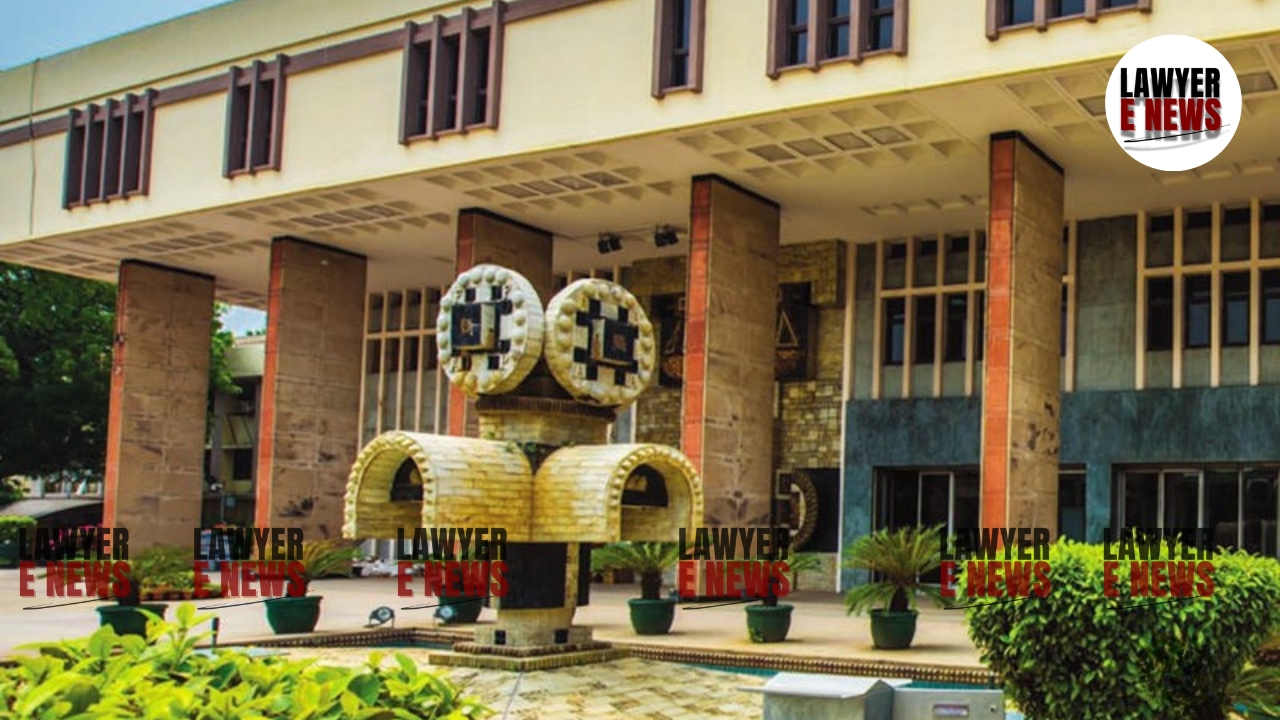
“If this is allowed, then the very purpose and object of the Arbitration Act will be rendered infructuous”: Delhi High Court Dismisses MMTC’s ₹1000 Cr Suit Challenging Arbitral Award Already Upheld by Supreme Court. Delivering a scathing indictment of litigation strategy aimed at subverting arbitral finality, the Delhi High Court dismissed a high-stakes civil suit filed by MMTC Limited against Anglo-American Metallurgical Pty Ltd. & Others, holding that the entire action amounted to an “abuse of the process of law”.
Justice Jasmeet Singh categorically held: “If this is allowed, then the very purpose and object of the Arbitration and Conciliation Act, 1996 will be rendered infructuous/otiose.”
The Court was called upon to decide whether a civil suit filed in 2024, alleging fraud in the execution of Addendum No. 2 to a coal supply agreement and seeking to declare an ICC Arbitral Award dated 12.05.2014 as void, was maintainable after the award had already been upheld by the Supreme Court.
“A Classic Case of Abuse of Process” – MMTC’s Allegation: Addendum Procured by Fraud, Award Built on It
MMTC, a central public sector enterprise, had entered into a Long-Term Agreement (LTA) in 2003 for the supply of coking coal. The crux of the dispute stemmed from Addendum No. 2, signed in November 2008, which fixed the price at USD 300 per MT, despite a global crash in coal prices.
The plaintiff alleged that the addendum was procured through collusion and corruption between its own former officers (Defendants Nos. 4–7) and the supplier, amounting to a fraudulent conspiracy that caused a wrongful loss to MMTC and the public exchequer.
It sought, among other reliefs, a declaration that the award was void, recovery of ₹8.95 crores, and a permanent injunction restraining reliance on the addendum or the award.
Court’s Rebuttal: “Fraud Inter Se Among Parties Is Not Sufficient To Bypass the Statutory Bar”
Justice Jasmeet Singh decisively rejected the maintainability of the suit:
“The fraud alleged is not upon the Arbitral Tribunal or the Court, but inter se among the parties. There is a clear distinction. This cannot be a basis to re-litigate settled issues.”
He further held that:
“Section 34 offers an exhaustive and exclusive remedy to contest an Arbitral Award. By using the word ‘only’ twice, Section 34 makes it clear that no challenge can be launched outside of it.”
The Court dismissed the plaintiff’s argument that a new cause of action arose in 2022 after a CBI complaint was filed and internal inquiries revealed wrongdoing. It held:
“Mere filing of a CBI complaint in 2022 won’t revive a dormant claim. The suit, filed in 2024, is hopelessly time barred.”
“Clever Drafting Cannot Circumvent Statutory Limitations” – Court Invokes Order VII Rule 11 CPC
In rejecting MMTC’s contention that some prayers (like recovery and injunction) were independently maintainable, the Court observed:
“All reliefs are intrinsically linked to the setting aside of the Arbitral Award. Without first invalidating the award—which this Court cannot do—none of the reliefs can be granted.”
The plaint was dismissed under Order VII Rule 11(d) of the CPC, which mandates rejection where the suit is barred by law. The Court declared:
“If clever drafting has created the illusion of a cause of action, nip it in the bud at the first hearing.”
Quoting the Supreme Court’s ruling in Dahiben v. Arvindbhai Kalyanji Bhanusali, the Court reaffirmed that:
“The whole purpose of conferment of such powers [under Order VII Rule 11] is to ensure that a litigation which is meaningless, and bound to prove abortive, should not be permitted to waste the judicial time of the court.”
“Civil Suit Is Nothing but a Collateral Challenge to an Arbitral Award”
The Court held that MMTC’s attempt to nullify the award—while shrouded as a declaratory and injunctive suit—was in effect an impermissible collateral attack on an arbitral decision which had already withstood challenge under Sections 34 and 37 of the Arbitration Act, and had been affirmed by the Hon’ble Supreme Court.
Justice Singh declared: “The civil court cannot be a forum for backdoor challenges to arbitral awards already tested and upheld through the designated statutory remedies.”
Relying on the Supreme Court’s Constitution Bench ruling in Interplay Between Arbitration Agreements & Stamp Act, the Court emphasized the non-obstante clause of Section 5 of the Arbitration Act:
“Section 5... limits judicial intervention to circumstances expressly provided for. Civil court’s jurisdiction is impliedly barred once the statute prescribes an exclusive mechanism.”
On Arbitrability of Fraud – “This Is Not a Case of Non-Arbitrable Dispute”
MMTC had argued that the fraud and corruption involved were so egregious that the entire agreement was void under Section 23 of the Indian Contract Act, and that such questions must be decided by a civil court.
Rejecting this, the Court stated: “Where fraud does not permeate the arbitration agreement itself, but only affects performance or internal corporate conduct, the dispute remains arbitrable.”
Citing Rashid Raza v. Sadaf Akhtar and Amrish Gupta v. Gurchait Singh Chima, the Court explained that:
“There is no challenge to the LTA or its arbitration clause. Dispute relates only to Addendum No. 2. The arbitration clause survives.”
“If Allowed, No Arbitral Award Will Ever Be Final”: Court Warns Against Precedent of Endless Challenges
Justice Singh concluded with a note of caution for the future of arbitration:
“If the present suit is allowed, then no Arbitral Award, after being upheld by the Hon’ble Supreme Court, will ever be executed.”
He termed MMTC’s suit an “irresponsible lawsuit” that, if entertained, would:
“Render the 1996 Act nugatory, undermine public confidence in arbitration, and transform arbitration into a never-ending cycle of challenges.”
The Delhi High Court dismissed the suit in its entirety under Order VII Rule 11 CPC, finding it barred by Section 5 and Section 34 of the Arbitration and Conciliation Act, 1996, time-barred, and an abuse of judicial process.
“This is not merely a procedural issue—it is about upholding the sanctity, finality, and efficiency of arbitration as a parallel dispute resolution mechanism.”
Date of Decision: 29 July 2025