-
by sayum
22 November 2026 4:03 PM







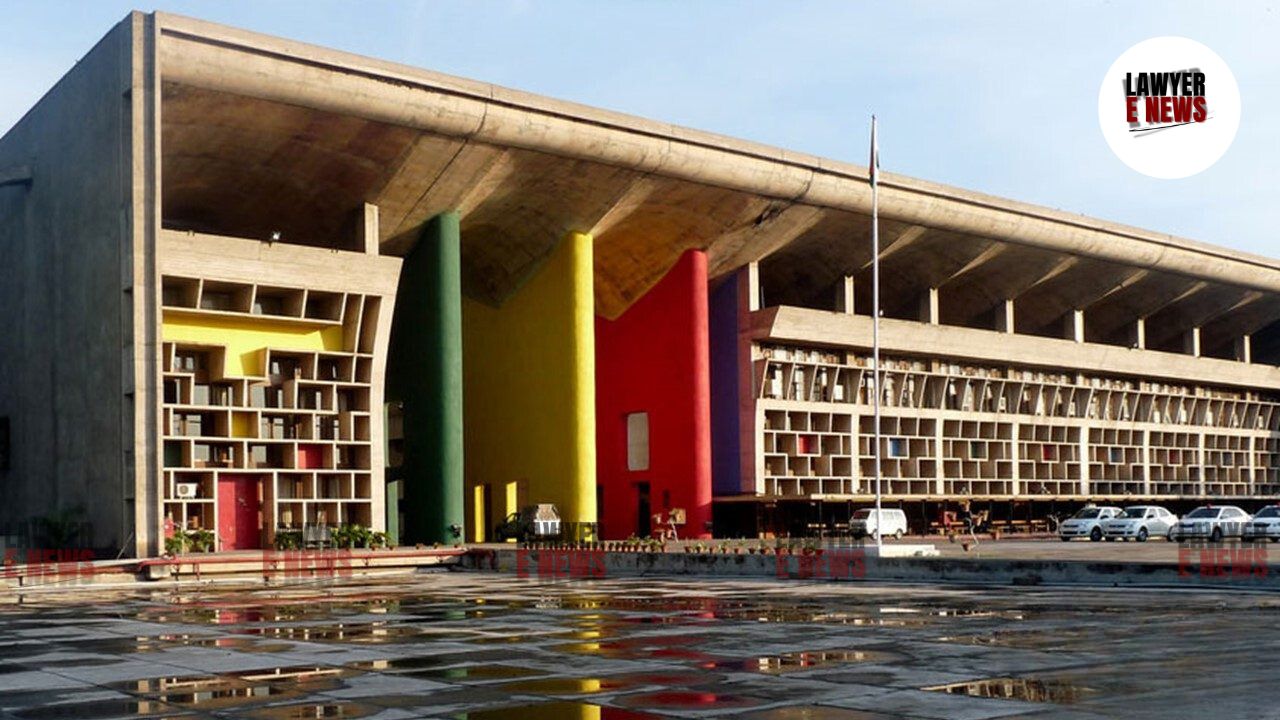
CHANDIGARH: The Punjab and Haryana High Court on October 14, 2026, held that an industrial settlement arrived at under Section 18 of the Industrial Disputes Act, 1947 does not automatically terminate pending disciplinary proceedings or confer immunity upon delinquent workmen unless the agreement explicitly or by necessary implication condones the misconduct or mandates withdrawal of such actions. Justice Kirti Singh ruled that supervisory jurisdiction under Articles 226 and 227 of the Constitution cannot be exercised to re-appreciate factual findings recorded in a validly held domestic enquiry.
The petitioners, employed by the management of respondent establishment, faced domestic disciplinary inquiries over grave misconduct committed between August 2000 and January 2001, including abusive language, threatening contractor staff and apprentices, and halting the production line. Although an industrial agitation in the factory culminated in a Memorandum of Settlement dated January 8, 2001, charge-sheets previously framed were served on the workmen post-settlement, alongside a subsequent charge-sheet for post-settlement indiscipline. The domestic enquiries culminated in their dismissal from service, which the Industrial Tribunal-cum-Labour Court-I, Gurgaon upheld on preliminary enquiry issues and on merits under Section 10(1)(c) of the Industrial Disputes Act, prompting the writ petitions.
Whether an industrial settlement under Section 18 of the Industrial Disputes Act, 1947 operates as an automatic bar against initiating or concluding disciplinary proceedings for past misconduct when the settlement does not contain an express clause granting immunity or mandating withdrawal?
Whether the non-issuance of a second show-cause notice proposing the quantum of punishment vitiates the dismissal order in the absence of a specific stipulation in the Certified Standing Orders?
Whether the Industrial Tribunal failed to properly exercise its discretionary powers under Section 11-A of the Industrial Disputes Act, 1947 by refusing to interfere with the penalty of dismissal?
Terms of settlement cannot be expanded to import blanket immunity
The High Court observed that while the statutory binding force of a settlement under Section 18 of the Industrial Disputes Act is incontrovertible, the legal consequences flowing from such an accord must strictly be traced to its explicit terms. The Court emphasized that an employer's right to discipline cannot be extinguished by implication.
"The binding character of the settlement does not permit either party to disregard its terms. Equally, its scope cannot be enlarged by importing a condition which the parties did not agree upon. In the absence of a term expressly or by necessary implication requiring the proceedings against the petitioners to be withdrawn, the learned Tribunal cannot be faulted for declining to treat the settlement as an automatic bar to the disciplinary action," the Court observed.
Natural justice is satisfied once enquiry reports are furnished for representation
Addressing the contention regarding the absence of a second show-cause notice regarding punishment, the bench held that compliance with the rule laid down in Managing Director, ECIL, Hyderabad v. B. Karunakar was fully met once the enquiry reports were supplied and the workmen were permitted to file representations against the findings.
The Court noted that unless the Certified Standing Orders statutorily mandate a distinct show-cause notice solely directed at the quantum of punishment, failure to serve one does not vitiate the termination where no prejudice is shown. Since the workmen were provided the enquiry officer's findings and submitted detailed replies prior to the dismissal orders, procedural fairness stood satisfied.
Non-examination of Enquiry Officer does not invalidate proceedings where participation is admitted
The bench rejected the challenge grounded on the non-examination of the Enquiry Officer before the Labour Court, noting that the workmen had unequivocally admitted their participation in the domestic enquiry proceedings. The management had examined supervisory witnesses who directly observed the disruptive acts, and their testimonies remained unshattered under cross-examination.
"The absence of testimony from every person allegedly present does not render the testimony of the officers legally incapable of supporting the findings," the Court noted, affirming that technical evidentiary omissions cannot vitiate a domestic enquiry if foundational evidence survives scrutiny.
Discretion under Section 11-A is guided by gravity of indiscipline
Evaluating the proportionality of dismissal under Section 11-A of the Industrial Disputes Act, the High Court held that the Labour Court's power to substitute punishment is discretionary and cannot be exercised merely because a lesser penalty could theoretically be conceived.
"The assessment of proportionality must take account of the nature and gravity of the misconduct, the circumstances in which it occurred and its impact upon industrial discipline. The acts found proved in the present petitions involved indiscipline, abusive and threatening conduct and interference with the work of others, with resultant stoppage of the line," the bench remarked, holding that absence of prior blemishes does not condone acts severely impairing industrial discipline.
The High Court dismissed both writ petitions, affirming the Tribunal awards and holding that the domestic enquiries were fair, the dismissals were proportionate, and no error of law apparent on the face of the record warranted supervisory interference.
Date of Decision: October 14, 2026