-
by sayum
14 August 2026 3:21 PM







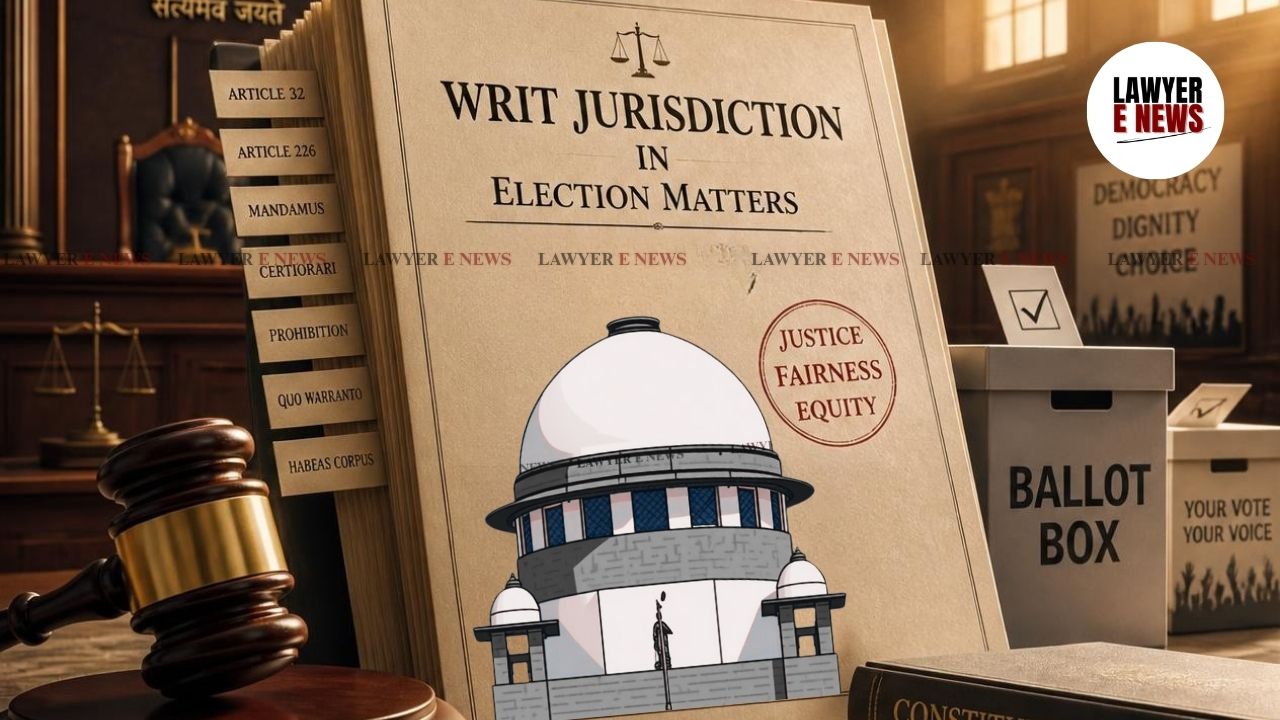
"The principles laid down by this Court in N.P. Ponnuswami v. Returning Officer (supra) does not lay down an absolute bar against judicial review in every matter having some nexus with elections." Supreme Court of India, in a significant ruling dated July 16, 2026, clarified the scope of judicial interference in electoral matters, holding that the existence of an alternative statutory remedy does not strictly preclude the exercise of writ jurisdiction when the remedy is ineffective or involves a pure question of law.
A bench comprising Chief Justice of India Surya Kant, Justice Joymalya Bagchi, and Justice Vipul M. Pancholi observed that a challenge to the foundational legality of an electoral roll, which goes to the root of the electoral college's composition rather than the conduct of the election itself, can be entertained under Article 226 of the Constitution.
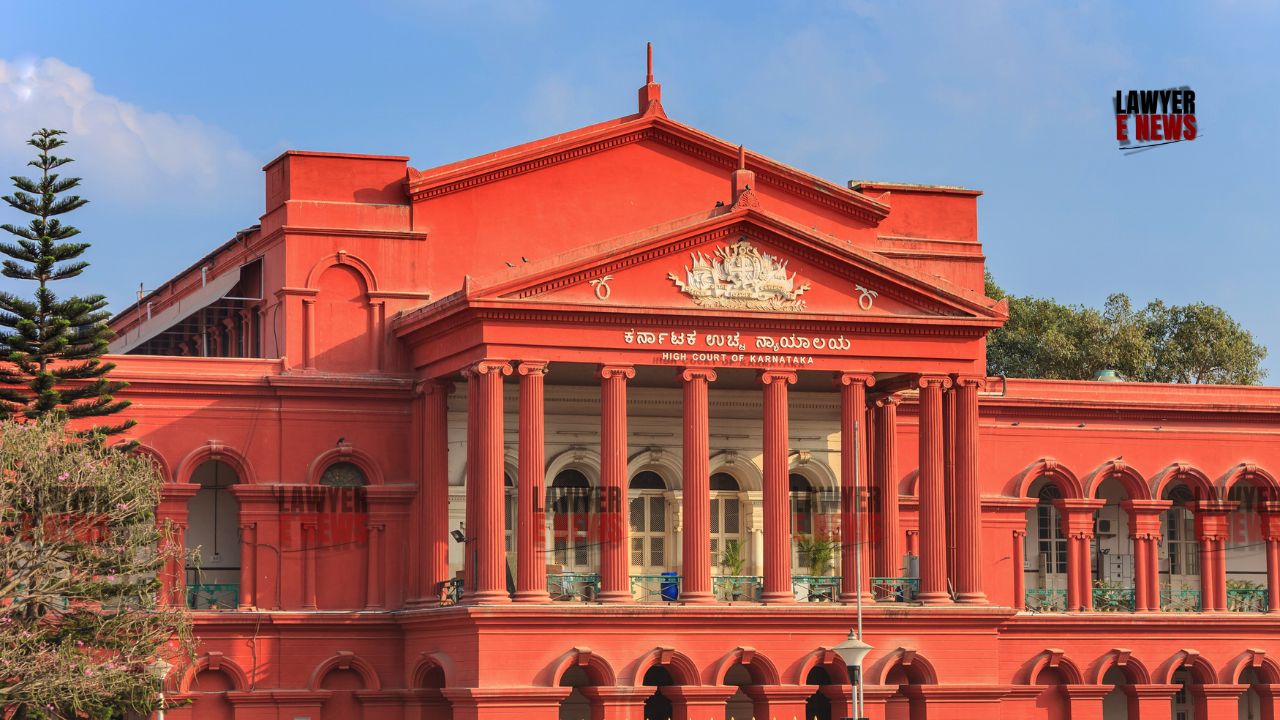
The dispute arose from the Karnataka Legislative Council elections from the 12-Chikkamagaluru Local Authorities Constituency, where the appellant won by a narrow margin of six votes. Prior to the election, writ petitions were filed before the High Court challenging the inclusion of twelve nominated members of Town Panchayats in the electoral roll. The High Court declared their inclusion unconstitutional and ordered the segregation of their votes, prompting the elected candidate and the Union of India to approach the Supreme Court.
The preliminary question before the court was whether writ petitions challenging the inclusion of voters in an electoral roll are maintainable despite the statutory remedies available under the Representation of the People Acts. The substantive issue was whether nominated members of Town Panchayats are legally entitled to vote in elections to the State Legislative Council.
Challenge To Electoral Roll Not A Challenge To Election Process
Addressing the preliminary objection regarding maintainability, the Supreme Court noted that the writ petitions were filed before the election took place and did not challenge the actual conduct of the polls. The bench emphasised that the challenge was directed solely at the legality of including nominated members in the electoral rolls prepared for the Local Authorities' Constituency. The court observed that this issue "went to the root of the composition of the electoral college and not merely to the validity of the election result."
Statutory Remedies Found Illusory
The court examined Section 27 of the Representation of the People Act, 1950, which governs the preparation of electoral rolls for Legislative Council constituencies. The bench concurred with the High Court's finding that the statute did not provide an effective mechanism for adjudicating the fundamental legality of including nominated members. The judges noted that the controversy "involved a pure question of constitutional and statutory interpretation" and did not require the determination of any disputed questions of fact.
No Absolute Bar Under N.P. Ponnuswami Principle
The appellants heavily relied on the landmark judgment in N.P. Ponnuswami v. Returning Officer to argue that courts cannot interfere in electoral matters once the process begins. Rejecting this blanket application, the Supreme Court clarified the boundaries of this precedent. The court stated that the Ponnuswami doctrine does not operate as an impenetrable shield against judicial review in all election-related matters.
"Existence of an alternative remedy does not preclude exercise of writ jurisdiction, where the remedy is ineffective or where the controversy involves a pure question of law."
Writ Jurisdiction Maintainable For Pure Legal Questions
Relying on decisions like Dhampur Sugar Mills Ltd. v. State of U.P. and Ram & Shyam Co. v. State of Haryana, the bench reaffirmed that the exhaustion of alternative remedies is a rule of convenience and discretion rather than a rigid rule of law. The court quoted extensively from the Ram & Shyam Co. judgment, highlighting that an appeal cannot be considered an effective remedy in all situations. Consequently, the bench upheld the High Court's decision to entertain the writ petitions under Article 226 of the Constitution.
Nominated Members Cannot Vote In Legislative Council Elections
Moving to the substantive issue, the court analysed the constitutional transformation brought about by the Constitution (Seventy-Fourth Amendment) Act, 1992, specifically Article 243-R. The bench observed that the Constitution makes a conscious distinction between elected representatives who possess a democratic mandate and nominated members who are inducted for their special knowledge. Pointing to the proviso in Article 243-R and Section 352 of the Karnataka Municipalities Act, 1964, the court noted that nominated members do not have the right to vote in municipal meetings.
Electoral Roll Finality Cannot Override Constitutional Scheme
The court ruled that if nominated members cannot vote in their own municipal decision-making processes, allowing them to vote for the Legislative Council would create a constitutional contradiction. The bench held that the phrase "every member" in Section 27(2)(b) of the 1950 Act must be interpreted harmoniously with the Constitution to mean only elected members. Rejecting the argument based on Shyamdeo Pd. Singh v. Nawal Kishore Yadav that finalized electoral rolls cannot be questioned, the court stated that while finality ensures stability, "it cannot override the Constitution" or validate the participation of constitutionally ineligible persons.
The Supreme Court ultimately dismissed the appeals, upholding the High Court's direction to segregate and exclude the votes cast by the 12 nominated members. The Registry was directed to transmit the revised election results in a sealed cover to the High Court of Karnataka to take appropriate steps in the pending election petitions.
Date of Decision: 16 July 2026