-
by sayum
14 August 2026 8:36 AM







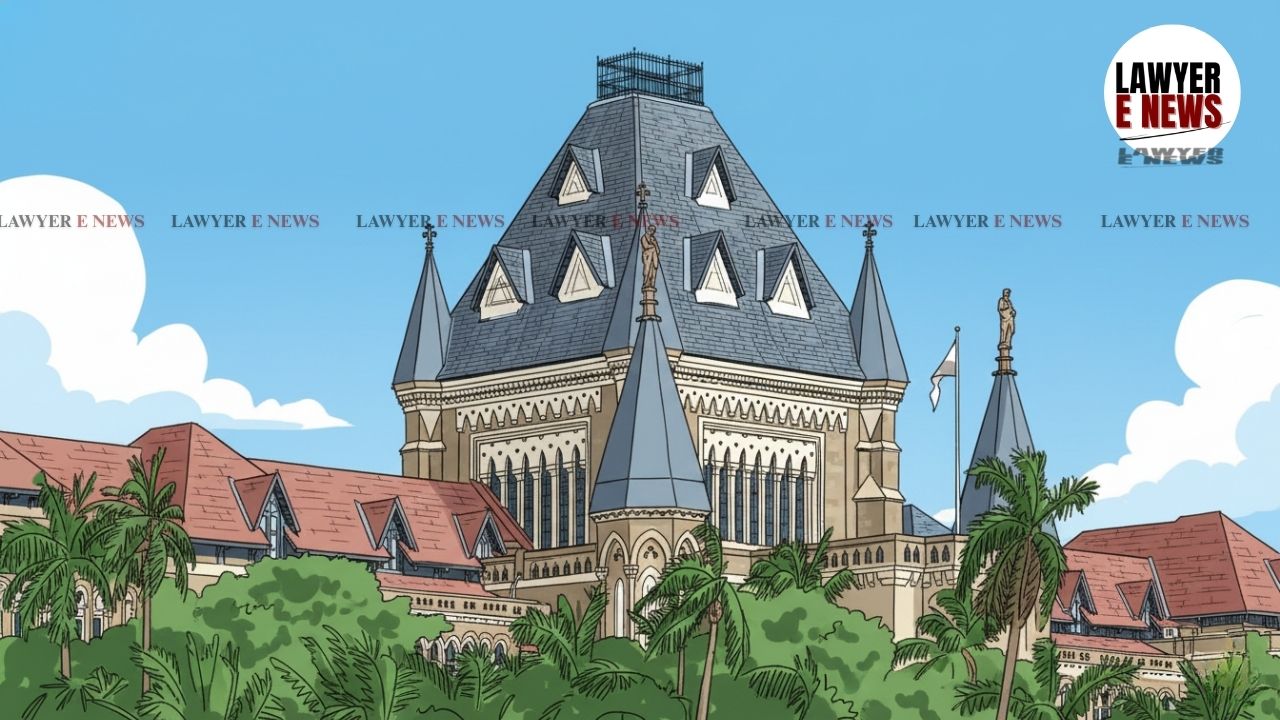
"Taking refuge under natural justice in every case, as a sheet anchor would not justify filing of a Writ Petition under Art 226, sans justification in the manner the law mandates." Bombay High Court, in a significant ruling, sharply criticised the growing trend of litigants bypassing statutory appellate remedies by directly filing writ petitions under Article 226 of the Constitution, particularly in Goods and Services Tax (GST) matters.
A bench of Justices Suman Shyam and Advait M. Sethna observed that taking "refuge under natural justice in every case, as a sheet anchor would not justify filing of a Writ Petition under Art 226, sans justification in the manner the law mandates."
The Petitioner, Mahapuja Ltd., approached the High Court challenging an Order-In-Original dated March 17, 2026, passed by the Additional Commissioner of CGST, Central Excise, Mumbai, which disallowed Input Tax Credit and levied significant tax and penalty. The Petitioner contended that the impugned order violated principles of natural justice, alleging that seized documents relevant for their defence were not provided. The Respondent-Department, however, raised a preliminary objection regarding the maintainability of the writ petition, citing the availability of an alternative statutory remedy under Section 107 of the Central Goods and Service Tax Act, 2017 (CGST Act).
The primary question before the court was whether a writ petition under Article 226 of the Constitution is maintainable when an alternative statutory remedy, specifically an appeal under Section 107 of the CGST Act, 2017, is available. The court was also called upon to determine if the Impugned Order was passed in contravention of principles of natural justice due to the alleged non-supply of seized documents.
Writ Petition Not Maintainable When Statutory Remedy Exists
At the outset, the High Court noted that the impugned Order-In-Original was appealable before the Appellate Authority, the Commissioner (Appeals) – II, as prescribed under Section 107 of the CGST Act. The bench emphasised that judicial precedent strongly discourages the entertainment of writ petitions when an alternate and efficacious remedy under the statute is available.
Petitioner's Natural Justice Claim Debunked
The court found that the Petitioner’s primary grievance regarding the non-supply of seized documents was duly addressed in the impugned order itself. Specifically, paragraph 24 of the impugned order categorically stated that the Show Cause Notice and relied upon documents were forwarded to the Petitioner's registered email address on the GST portal on June 28, 2025, and again on February 4, 2026, at the Petitioner's request.
Bald Assertions Without Specifics Fail
The bench found "substance in the submission" of the respondent's counsel that the Petitioner had made "bald assertions" without detailing which specific documents were not supplied or how such non-supply caused prejudice. The court stated that in the absence of proper pleadings or material to contradict the factual findings in the impugned order, it was not persuaded to accept the Petitioner's stand.
No Exceptional Case to Bypass Statutory Appeal
Referring to the Supreme Court's decision in Rikhab Chand Jain Vs. Union of India And Ors., the High Court reiterated that petitioners must make out an exceptional case, supported by proper pleadings and material, to deviate from the normal practice of exhausting alternative remedies. The court found that no such exceptional case was made out by Mahapuja Ltd.
"We find it pertinent to note that, there is a growing tendency in matters before us, to surpass the appellate statutory remedy by directly approaching the Writ Court. It is possible that such recourse is at times, taken routinely, without the gravitas it would so warrant, with a view to circumvent the mandatory pre-deposit under the statute."
Growing Tendency to Circumvent Pre-Deposit through Writs
The bench expressed concern over a "growing tendency" of litigants to bypass statutory appellate remedies by directly approaching the writ court. The court highlighted that such a recourse might be taken routinely "with a view to circumvent the mandatory pre-deposit under the statute," an observation fortified by previous decisions of the High Court in Ascensia Diabetes Care India Pvt. Ltd. Vs. Union of India and Nikhil Garg S/o Vishnu Prasad Garg Vs. Union of India And Anr.
Natural Justice Not a Blanket Sheet Anchor
The court firmly stated that "taking refuge under natural justice in every case, as a sheet anchor would not justify filing of a Writ Petition under Art 226, sans justification in the manner the law mandates." It emphasised that where a statute clearly provides for appealable orders, the court must "separate the ‘grain from the chaff’" and judiciously exercise its extraordinary discretion under Article 226 of the Constitution only in exceptional and compelling circumstances.
Upholding Legislative Intent of CGST Act
The High Court cautioned against adopting a course that would "water down the legislative intent, purport and purpose" of Section 107 of the CGST Act, which prescribes an appellate remedy. The bench referenced the Supreme Court's ruling in Shaik Arif Vs. Commissioner of Customs and Ors., where even claims of natural justice violation and jurisdictional error did not deter the apex court from directing petitioners to file a statutory appeal under the pari materia provisions of the Customs Act.
The High Court ultimately held that the writ petition was not maintainable, finding no exceptional circumstances to warrant the exercise of its extraordinary jurisdiction under Article 226. While dismissing the petition, the court, in the interest of justice, granted liberty to Mahapuja Ltd. to approach the Appellate Authority under Section 107 of the CGST Act within four weeks, subject to compliance with all statutory requirements, including the mandatory pre-deposit. The court clarified that it had not delved into the merits of the rival contentions, leaving them open for consideration in the appropriate proceedings.
Date of Decision: 05 August 2026