-
by sayum
28 August 2026 12:24 PM







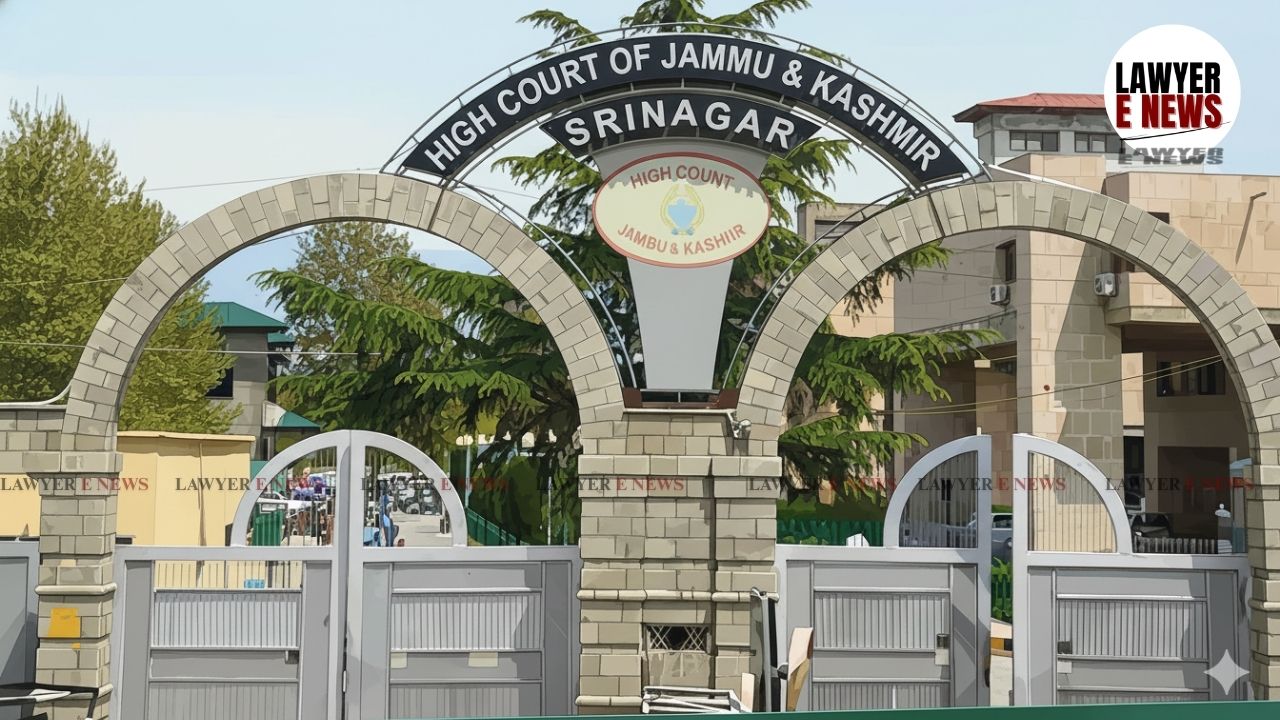
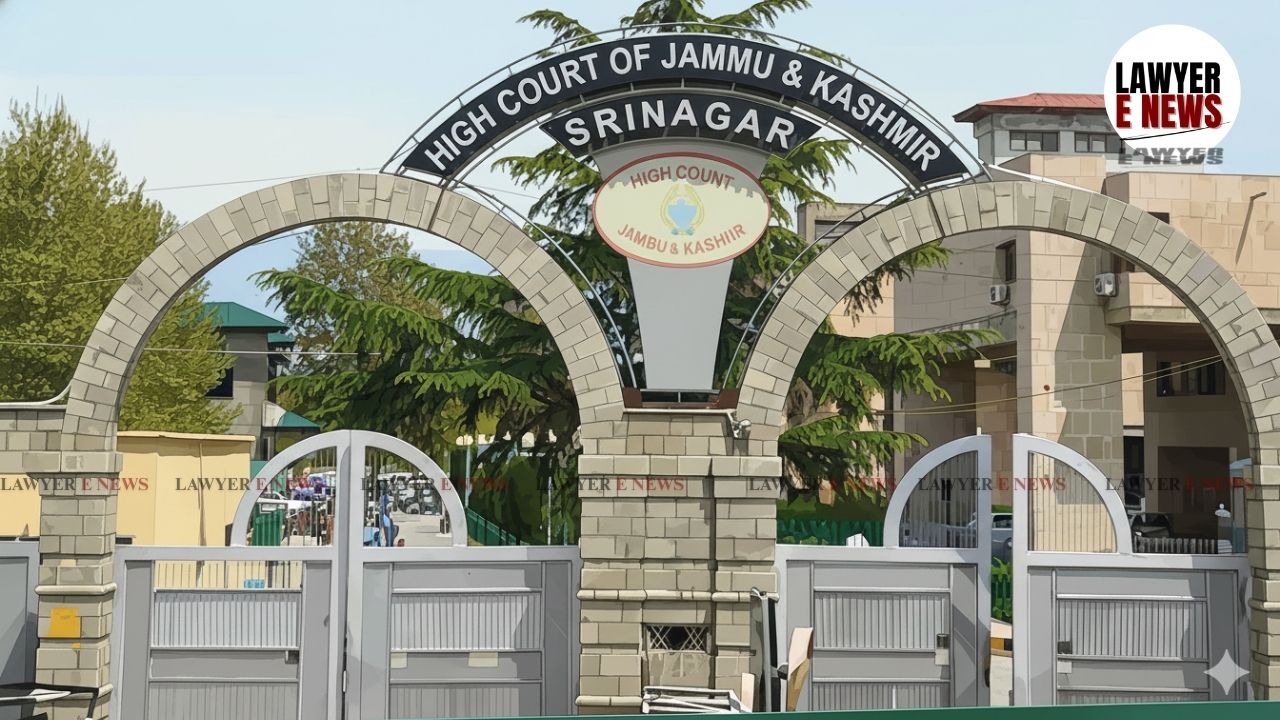
"High Court normally will not permit, by entertaining a petition under article 226 of the Constitution, the machinery created under the statute to be by-passed, and will leave the party applying to it to seek resort to the machinery so set up," High Court of Jammu & Kashmir and Ladakh, in a significant judgment, held that writ jurisdiction cannot be invoked to bypass the efficacious alternate statutory remedies provided under the J&K Municipal Corporation Act, 2000.
Justice Wasim Sadiq Nargal observed that when a statute provides a complete mechanism for the redressal of grievances, such as the power of revision under Section 403, the High Court must refrain from exercising its extraordinary jurisdiction under Article 226 of the Constitution.
The court further emphasized that the determination of whether building deviations are minor or major involves complex factual and technical questions that are best left to the specialized statutory authorities and the Special Tribunal rather than a writ court.
The petitioner, a resident of Srinagar, challenged a revised building permission order issued by the Srinagar Municipal Corporation (SMC) in favour of his neighbor, private respondent No. 8. The petitioner alleged that the respondent had committed substantial and non-compoundable deviations from the original sanctioned plan, which the SMC had illegally regularized through a revised order after a demolition notice had initially been issued.
The matter had previously reached the J&K Special Tribunal, which directed the SMC to re-examine the issue. Following this re-examination, the SMC invoked the Srinagar Building Bye-laws, 2011, to compound the deviations, prompting the petitioner to approach the High Court directly via a writ petition and a contempt petition.
The primary question before the court was whether a writ petition is maintainable when an alternate statutory remedy of revision exists under Section 403 of the J&K Municipal Corporation Act, 2000. The court also considered whether it could adjudicate disputed technical questions regarding the nature and extent of building deviations in exercise of its writ jurisdiction.
Availability Of Efficacious Alternate Remedy Under Section 403
The Court noted that Section 403 of the J&K Municipal Corporation Act provides a robust power of revision to the Government (exercisable by the Special Tribunal) to satisfy itself as to the correctness, legality, and propriety of any order passed by a Municipal officer. The bench observed that the petitioner had failed to avail this statutory remedy before approaching the High Court.
Citing the Supreme Court's decision in Thansingh Nathmal v. A. Mazid, the court reiterated that Article 226 is not intended as an alternative remedy for relief which can be obtained through modes prescribed by statute. The High Court does not act as a court of appeal to correct errors of fact when a specialized machinery is already in place.
Court Refuses To Bypass Statutory Mechanism
"Permitting such course would amount to bypassing the statutory mechanism specifically created under the Act for adjudication of such disputes," the bench remarked.
Writ Court Cannot Adjudicate Disputed Factual And Technical Questions
Justice Nargal held that the controversy primarily involved the determination of the extent of deviations, measurements, and the applicability of technical building parameters. Such issues require a roving enquiry and factual verification on the spot, which the High Court is not equipped to perform under writ jurisdiction.
The Court placed reliance on its previous ruling in BOCA v. Nageen Ara, noting that the Tribunal is the final arbiter on questions of fact regarding whether a construction violation is minor or major. The bench clarified that it cannot assume the role of an appellate authority to re-appreciate evidence or technical reports.
Tribunal Is Final Arbiter On Nature Of Deviations
"The High Court does not have any mechanism or yardstick to go into the question of fact by conducting a roving enquiry with respect to the fact whether there is any minor or major violation," the Court observed.
Individual Disputes Cannot Be Masked As Public Interest Litigations
The Court observed that the litigation appeared to be rooted in "personal vindicta" between neighbors. It held that merely referring to Master Plans or municipal laws does not convert a private individual dispute into a matter of public interest. The bench noted that no other residents of the locality had approached the authorities, suggesting the grievance was individual in nature.
The Court emphasized that even if a matter involves public rights, a petitioner appearing in an individual capacity must still adhere to the statutory framework and the remedies provided therein rather than jumping directly to the High Court.
No Case For Contempt Established
Regarding the contempt petition, the Court found no material to establish any willful or deliberate disobedience of any specific judicial order. It noted that the respondents had acted pursuant to a revised permission granted by the competent authority following the directions of the Special Tribunal.
The bench held that the contempt jurisdiction is limited and cannot be used to adjudicate the legality of administrative actions that require independent examination on merits. Since the revised permission was a fresh statutory act, its validity could not be questioned through a contempt proceeding.
Contempt Jurisdiction Cannot Travel Beyond Original Order
"The contempt court is only required to examine whether there exists deliberate and willful disobedience of a clear and unequivocal direction issued by the Court," the bench clarified.
The Court concluded that the writ petition was not maintainable due to the existence of an efficacious alternate remedy. While dismissing the petition, the Court clarified that this would not preclude the petitioner from approaching the competent statutory forum to avail the remedies available under the law. Both the writ petition and the connected contempt petition were accordingly dismissed.
Date of Decision: 02 June 2026