-
by sayum
29 August 2026 9:28 AM







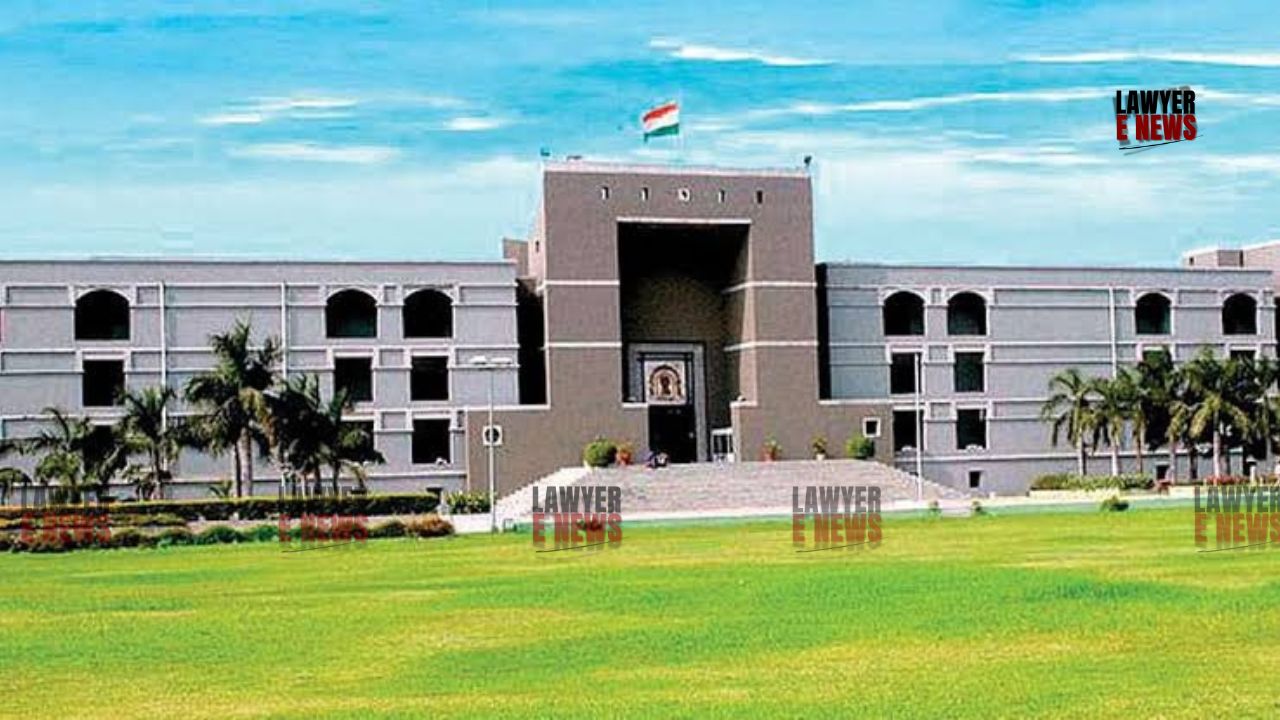
“A word uttered in a fit of anger or emotion without intending the consequences to actually follow cannot be said to be instigation.” - With this central observation, the Gujarat High Court acquitted a husband who was earlier convicted of cruelty and abetment of suicide of his wife, holding that the prosecution had failed to establish intentional instigation or persistent cruelty necessary to uphold conviction under Sections 498A and 306 of the Indian Penal Code (IPC).
The ruling was pronounced by Justice Gita Gopi, setting aside the 2007 judgment of conviction passed by the Additional Sessions Judge, Fast Track Court No. 2, Bhavnagar.
“Complaint Made Before Police Immediately After Incident Qualifies as Dying Declaration”
The Court drew a critical distinction between two statements made by the deceased — Exh. 55, a complaint made to a police constable (PW-12) shortly after the incident, and Exh. 34, a so-called dying declaration recorded later the same day by an Executive Magistrate.
Justice Gita Gopi found Exh. 55 to be “more spontaneous, immediate, and credible,” observing:
“The complaint before the police was recorded at the hospital immediately after the deceased was admitted, in the absence of any family member, and without any apparent opportunity for tutoring. It clearly explains the cause of the incident, and therefore qualifies as a dying declaration under Section 32(1) of the Indian Evidence Act.”
In contrast, Exh. 34, the declaration before the Executive Magistrate, was viewed with deep suspicion:
“The declaration was recorded mechanically on a cyclostyle form, with no reliable identification of thumb impression or proof of the mental fitness of the declarant. The Magistrate could not identify the certifying doctor, nor was the doctor examined during trial. This raises serious doubts on its evidentiary value.”
“Cruelty Not Proved in Law: No Evidence of Persistent Harassment or Dowry Demand”
The Court noted that under Section 498A IPC, cruelty must involve either wilful conduct likely to drive the woman to commit suicide, or harassment with a view to coercing dowry demands.
The Court observed:
“The prosecution has not proved any persistent pattern of abuse. The alleged incident arose from a one-off domestic dispute. Neighbours turned hostile. No relative of the deceased or the accused corroborated any claim of ongoing cruelty.”
It further found that the complaint itself, which could be treated as a dying declaration, did not mention regular beatings or demands for dowry, stating instead that the quarrel was over the husband’s refusal to bring household items.
“Instigation Requires Mens Rea – Words in Quarrel Don’t Suffice”
The pivotal legal issue in the case was whether the husband’s words to his wife — “If you want to die, burn yourself” — could amount to instigation to commit suicide.
Justice Gita Gopi held: “A word uttered in anger during a domestic quarrel, without any intention to provoke suicide, cannot amount to abetment under Section 306 IPC.”
Court reiterated the settled position: “Presence of mens rea is the necessary concomitant of instigation. Mere words spoken in a heated moment cannot be considered sufficient for the offence of abetment unless they are accompanied by intention and action directed to incite suicide.”
“Second Dying Declaration Fails on Procedure and Substance”
The Court dissected the flaws in the second declaration (Exh. 34) recorded by the Executive Magistrate:
It was recorded on a cyclostyle form within 13 minutes, raising doubts on deliberation and care.
The doctor’s endorsement of fitness was not handwritten, and the doctor was never examined.
The Magistrate could not recall the doctor's name, nor verify critical procedural safeguards.
Crucially, Exh. 34 failed to mention the immediate provocation on the day of the incident, and instead made general allegations of daily beatings, which were not corroborated by any witnesses.
“The lack of detail in the second dying declaration about the actual trigger for suicide on that day weakens its reliability. Without procedural integrity or independent corroboration, such a statement cannot form the sole basis of conviction.”
“Standard of Proof in Criminal Law Remains High Even in 498A Cases”
The Court emphasized that proof beyond reasonable doubt remains the bedrock of criminal trials, even in sensitive cases involving domestic violence and suicide.
Quoting State of West Bengal v. Orilal Jaiswal (1994) 1 SCC 73, the judgment observed:
“The degree of proof in a criminal case must be stringent. The conscience of the court must be satisfied beyond all reasonable doubt, and cannot be based on surmises or conjectures.”
Concluding that neither the offence of cruelty under Section 498A nor abetment under Section 306 IPC was proved, the Court allowed the appeal:
“The statements of the deceased do not establish a consistent case of cruelty or instigation. The complaint before the police constitutes the only reliable dying declaration and indicates a one-off domestic quarrel.”
“The evidence does not prove the charges beyond reasonable doubt. The conviction is not sustainable.”
Accordingly, the Court set aside the conviction and sentence passed by the trial court and ordered:
“The accused is acquitted of all charges. The judgment and order dated 21.03.2007 passed by the Additional Sessions Judge, Fast Track Court No. 2, Bhavnagar, is hereby set aside. The record and proceedings be returned to the trial court forthwith.”
Date of Judgment: 25 August 2025